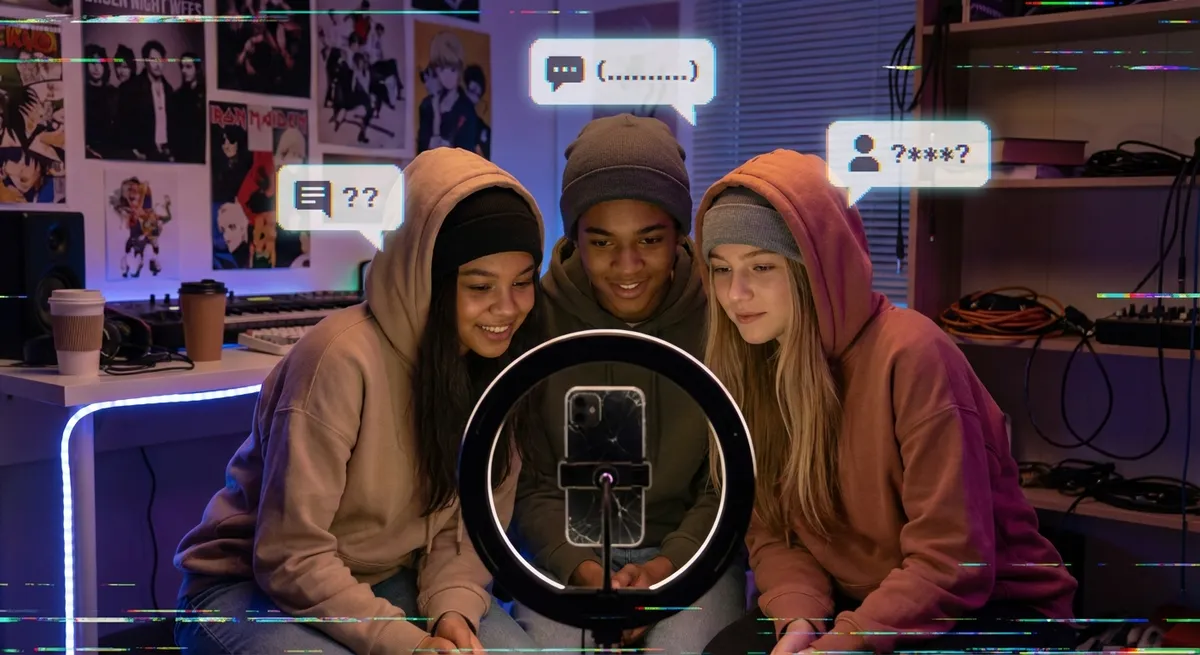
The wildest thing about the internet right now? You can film something in your bedroom, upload it in sweatpants, and wake up to a million strangers quoting you, remixing you, and turning you into a global inside joke. Viral videos aren’t just “funny clips” anymore—they’re mini cultural events that rewrite careers, trends, and even the way brands talk. If you’ve ever wondered why that random video is all over your feed while others flop in silence, this is your playbook.
Below are five viral-ready shifts powering the clips everyone’s sharing, stitching, and saving right now—aka the stuff you’ll see all over TikTok, Reels, and YouTube Shorts before the week is over.
Raw > Perfect: Why Unpolished Clips Win the Internet
The era of hyper-polished, ad-agency-level content dominating your feed is fading fast. The videos people are sharing most right now look like they were shot on impulse: shaky phone angles, chaotic backgrounds, and zero “production value.” That’s not a flaw—it’s the feature.
Audiences are gravitating toward content that feels like a friend hit record, not a brand planning a campaign. You can see it in viral GRWMs where the creator is half-dressed, ranting about life; in unedited storytimes where people ramble, backtrack, and overshare; and in real-time reactions filmed seconds after something wild happens. Viewers don’t just want entertainment—they want access.
What’s actually going viral is the moment, not the aesthetic. A raw laugh, a visible eye-roll, a shocked silence, a slip-up left in the final cut—those tiny imperfections make a clip feel “real” enough to share.
And because platforms like TikTok and Instagram Reels reward watch time and replays, that authenticity keeps attention longer than a super-produced ad. People don’t just watch; they tag friends with “this is SO you” and instantly spread it.
Micro-Moments, Mega Reach: The Power of 3–8 Second Hooks
You know that split-second when you decide whether to scroll or stay? Viral creators are obsessed with that exact moment—and they’re weaponizing it.
Right now, the most shareable videos lock you in within the first 3–8 seconds. Maybe it’s a bold on-screen text like “I accidentally exposed my boss on Zoom—here’s what happened,” a shocking visual (a suitcase opening to something unexpected), or an oddly specific statement like “If your toxic trait is rereading old texts, watch this.” The hook doesn’t tell the whole story—it teases it.
Even longer viral videos are structured around mini “micro-moments” you can clip and share: a single quote, a facial expression, a twist reveal, or that one line that ends up becoming the sound everyone uses. That’s why short-form clips of podcasts, interviews, and livestreams explode—someone grabs one sharp, emotional, or chaotic moment and turns it into its own snackable video.
The algorithm rewards this structure. If people don’t swipe away in the first seconds and instead watch to see the payoff, that tells the platform: “Hey, this one’s binge-worthy.” Suddenly your once-random video is getting tossed into For You Pages across the globe.
Sounds First, Video Second: When Audio Becomes the Main Character
If you’re not thinking about audio, you’re skipping the cheat code of viral videos.
On every major platform, sounds are the secret conveyor belt that carries content from niche to mainstream. A single line—funny, dramatic, unhinged, or painfully relatable—can turn into a viral audio that thousands of people reuse. That’s when a video stops being just “a clip” and becomes “a trend.”
Sometimes the audio comes from a creator’s original rant, a leaked moment from a stream, or a throwaway line from a podcast. The internet grabs that sound, slaps it onto completely different visuals, and suddenly you’ve got a global in-joke. Other times, a sped-up song, a slowed-down track, or a heavily edited mashup sets off a new wave of dance, transition, or POV videos.
What makes an audio go viral now?
- It’s specific enough to be funny, but flexible enough to fit different scenarios.
- It captures a big feeling in a short line—embarrassment, delusion, petty revenge, chaotic confidence.
- It works with visual exaggeration: text overlays, lip-syncs, or over-the-top acting.
Once a sound takes off, creators use it as a template. You don’t need to invent the format; you just plug your life into it—and that plug-and-play formula is exactly what encourages mass participation and shareability.
Relatable Chaos: When Oversharing Turns Into Engagement Gold
If polished “aspirational” content defined the last decade, this one is powered by “I probably shouldn’t say this, but…” energy.
Viral videos right now lean into hyper-specific, painfully honest, sometimes mildly embarrassing stories. Not broad, generic “I was sad once” storytelling—but the oddly detailed kind: your strangely dramatic Uber ride, your ex’s weird hobby, the bizarre thing your teacher said in 9th grade that you never forgot. The more people can see themselves or someone they know in it, the more they share.
These clips often follow a pattern:
- A hook that screams overshare (“I ghosted him for three months and then married him—storytime”)
- A chaotic, conversational delivery that feels like gossip at 2 a.m.
- A payoff that hits emotional, funny, or shock value territory
- A comment section full of “NO WAY,” “this exact thing happened to me,” and “storytime part 2 PLEASE”
The real magic? Comments drive the next video. Creators answer questions, read “duet this” reactions, clarify plot holes, and drop updates. Suddenly one viral clip becomes a mini-series, and each new part gets boosted by people invested in the storyline.
Relatable chaos doesn’t just get views—it builds fandoms. People stop being passive viewers and start acting like co-writers and co-directors in the creator’s life saga.
Fandom-Style Editing: Turning Everyday People Into Main Characters
The same editing energy once reserved for celebrities is now being applied to regular people—and it’s catapulting videos into viral territory.
Fan-style edits—fast cuts, dramatic music, close-ups, cinematic text, and over-the-top transitions—are no longer just for K-pop idols or movie characters. Viewers are turning their friends, partners, random internet personalities, and even total strangers from viral clips into “main characters” with entire fan-cam-style videos.
This trend is super shareable because:
- It turns a simple clip (someone laughing, dancing, or just existing) into a hyper-dramatic moment.
- It creates “internet lore”: recurring characters, ships, iconic expressions that people recognize across videos.
- It gives communities a way to rally around someone—whether it’s a wholesome grandma, a chaotic gamer, a brutally honest reviewer, or an unbothered commuter caught on camera.
The editing doesn’t even have to be professional. Jump cuts, zoom-ins on facial reactions, syncs to beat drops, and creative text overlays can transform a completely normal interaction into something that feels legendary.
Once people start remixing and re-editing a person or moment, it stops being “a clip” and becomes “a character arc”—and the internet loves following a story.
Conclusion
Viral videos aren’t random accidents anymore—they’re perfectly chaotic storms built from raw moments, ruthless hooks, iconic sounds, overshared stories, and fan-level edits. The stuff that travels has one thing in common: it makes people feel something fast enough that they want to drag their friends into the experience.
Whether you’re creating or just endlessly scrolling, understanding these patterns is like putting on viral x-ray glasses. You’ll start recognizing which clip is about to blow up before it actually does—and maybe, just maybe, you’ll be the one posting the next video everyone can’t stop stitching, quoting, and saving.
Sources
- [TikTok: How TikTok Recommends Videos #ForYou](https://newsroom.tiktok.com/en-us/how-tiktok-recommends-videos-for-you) - Official breakdown of how TikTok’s recommendation system surfaces viral content
- [YouTube Official Blog: Making Shorts a Better Place for Creators and Viewers](https://blog.youtube/news-and-events/making-youtube-shorts-better-for-creators-and-viewers/) - Explains how YouTube Shorts prioritizes short-form, engaging videos
- [Pew Research Center: Teens, Social Media and Technology 2022](https://www.pewresearch.org/internet/2022/08/10/teens-social-media-and-technology-2022/) - Data on how younger audiences are using platforms and consuming video
- [Meta: Recommendations on Instagram Explained](https://about.instagram.com/blog/announcements/recommendations-on-instagram-explained) - Insight into how Instagram pushes Reels and recommended video content
- [MIT Technology Review: The Secret to TikTok's Success](https://www.technologyreview.com/2021/09/03/1033725/the-secret-of-tiktoks-success/) - Analysis of TikTok’s algorithm and the mechanics behind viral clips
Key Takeaway
The most important thing to remember from this article is that this information can change how you think about Viral Videos.