The internet is moving faster than ever—and somehow, we’re all keeping up. Your feed isn’t just photos and memes anymore; it’s a wild mashup of mini-TV shows, AI experiments, hyper-niche fandoms, and “did-that-just-happen?” livestream moments. If your screen time is up and your attention span is down, welcome to the club.
This isn’t just what’s trending—these are the internet’s new comfort zones, chaos zones, and clout factories. Here are five massive trend waves taking over every feed right now, and why your next share, stitch, or story might be part of them.
Micro-Video Marathons: The Never-Ending “Just One More” Scroll
The short video era didn’t just arrive—it fully took over. TikTok, Instagram Reels, and YouTube Shorts have hacked our brains into binge-watching 7-second clips like they’re full episodes.
What’s wild is how micro everything’s getting. The hook has to land in the first second. Creators are trimming intros, skipping context, and going straight for the “wait, WHAT?” moment. Recipe? Cut to the final shot first. Storytime? Start at the twist. Advice? Hit the takeaway before the explanation.
The big unlock: people now watch lots of tiny things instead of one long thing. That’s why:
- Long YouTube videos are being repackaged into vertical highlight reels
- TV shows and movies are getting chopped into mini “episodes” for TikTok
- Musicians are writing songs with “TikTok-ready” hooks made for 15 seconds of fame
If you want to ride this wave, think like a trailer editor, not a filmmaker. Put the punchline, glow-up, reveal, or chaos first, then let viewers decide if they want the full story in part 2 (and 3, and 4…).
AI Remix Culture: When Your Feed Feels Like a Sci‑Fi Collab
AI isn’t just a tech buzzword anymore—it’s officially a content partner. Your scroll is now filled with AI voiceovers, AI filters, AI-generated art, and “I made this in 5 minutes with a tool you’ve never heard of” flexes.
What’s catching fire:
- AI voice clones reading breakup texts, fanfic, or fake movie trailers
- AI art remixes turning selfies into anime, Renaissance portraits, or vaporwave posters
- AI script helpers writing hooks, captions, or sketch ideas creators then act out
- AI subtitles and auto-edits making even chaotic footage look polished and timed to the beat
The twist: the internet isn’t replacing creators with AI—it’s rewarding creators who play with AI. The most shareable content mixes human chaos (messy rooms, real voices, awkward laughs) with AI polish (cinematic edits, surreal visuals, clean captions).
The new flex isn’t “AI did this for me.” It’s “I used AI as my toy box and made something nobody else thought of.”
Cozy Chaos Streams: Real Life, Unfiltered, in the Background of Your Day
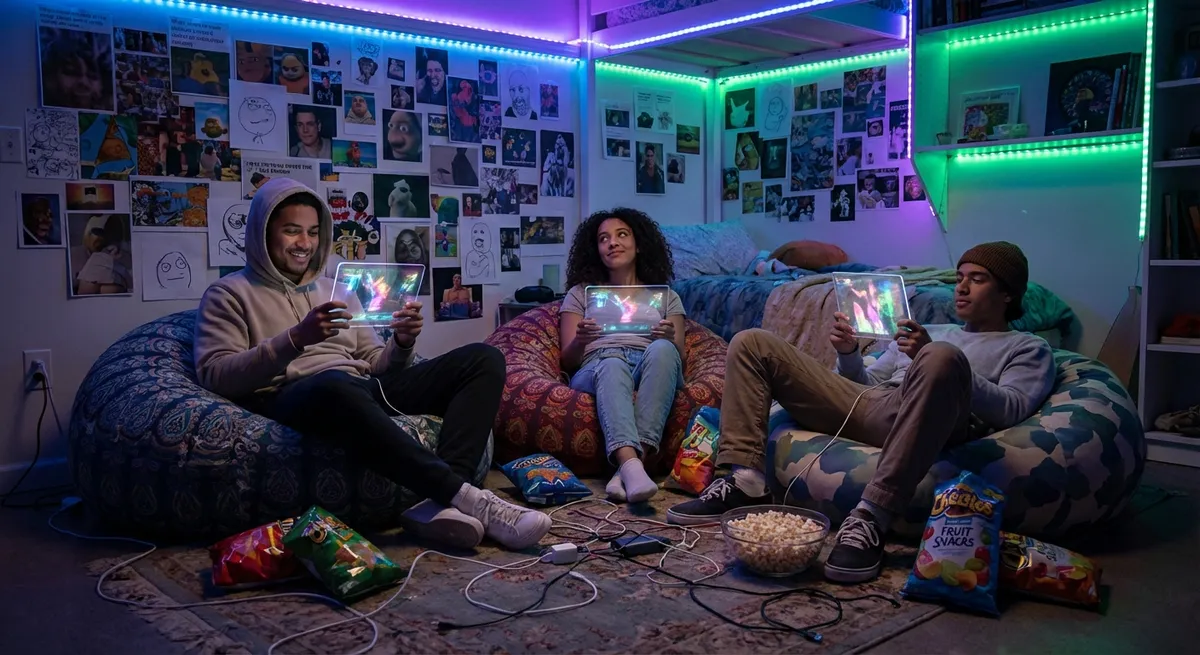
Livestreaming has quietly morphed into the internet’s version of background noise—and it’s exploding. People aren’t just tuning in for big events; they’re watching creators do normal things in real time, like studying, gaming, cooking, commuting, or just…existing.
Why it’s viral-worthy:
- Viewers can chat in real time, turning random moments into group events
- Streams create a sense of “digital hanging out”—perfect for lonely nights or boring tasks
- Clips pulled from streams often become mega-viral highlights later
- Long streams build parasocial comfort—you feel like you know the creator personally
Study-with-me cams, “silent livestreams,” sleep streams, and casual Q&As are becoming internet comfort TV. People leave them on while cleaning, working, or scrolling elsewhere.
The vibe has shifted from “perform for the audience” to “exist with the audience.” The less overproduced it feels, the more authentic—and the more likely chat sticks around to see what happens next.
Hyper-Niche Fandoms: The Rise of Ultra-Specific Internet Tribes
The internet used to feel like one giant crowd watching the same viral video. Now it’s a million micro-communities living in parallel, each with their own inside jokes, aesthetics, and main characters.
These hyper-niche fandoms form around:
- Brutally specific aesthetics (coastal grandma, goth cottagecore, clean girl, blokecore)
- Obscure shows, games, or even one side character
- Micro-hobbies like miniature painting, extreme organizing, hyper-detailed journaling
- Super-local scenes: regional food, small-town drama, niche sports, campus culture
What makes them trend-worthy is how loud they are online. A show doesn’t need global dominance; it just needs a fandom with memes, fancams, edits, and theories nonstop flooding a corner of TikTok or X.
The algorithm is basically a fandom matchmaker. Once you engage with one clip, it drags you deeper into that universe. Suddenly, you know the lore, the ships, the beef—and you didn’t even mean to join.
The new social flex: “I’m not just online; I’m part of a very specific corner of the internet.”
Flash-Mob Challenges: Real-World Moments Engineered for Feeds
The challenge trend has evolved from “dump ice on your head” to “stage a moment that looks impossibly cool on camera.” It’s not always about difficulty—it’s about replay value.
Today’s viral challenges and formats often revolve around:
- Synchronized group bits in public (on trains, in malls, on campus)
- Camera tricks (match cuts, forced perspective, seamless transitions) that look like editing magic
- Sound-driven trends, where everyone uses the same audio but adds a twist
- Social dares—like asking strangers questions, gifting random people items, or making bold compliments
Challenges spread faster when:
The format is easy to copy
The end result looks impressive or funny
There’s a simple way to “one-up” the previous version
The internet now treats public space like a stage. Parks, supermarkets, elevators—they’re all potential filming sets. If it looks chaotic, sweet, impossible, or cinematic, it’s challenge material.
Conclusion
The internet is no longer one big trend—it’s a storm of overlapping waves. Micro-videos are rewiring attention spans. AI is turning feeds into surreal remix laboratories. Livestreams are becoming our digital living rooms. Hyper-niche fandoms are defining identity. Flash-mob challenges are blending offline life with online clout.
If you want to ride this era instead of just watching it fly by, the move is simple: experiment. Try a 7-second story. Test an AI-enhanced edit. Pop into a livestream chat. Dive into a micro-fandom. Join (or invent) a low-effort, high-fun challenge.
The next viral moment probably won’t look like anything we’ve seen before—but it’ll definitely be short, weird, specific, and shareable. And it might just start in your camera roll.
Sources
- Pew Research Center – Social Media Fact Sheet – Data on social media usage trends and platform growth
- Ofcom – Online Nation Report – Insights into video habits, short-form content, and streaming behavior
- MIT Technology Review – How AI Is Changing Creativity – Explores how AI tools are reshaping content creation online
- Harvard Business Review – The Era of Short-Form Video – Analysis of short-form video’s impact on digital engagement
- Nielsen – Streaming and Audience Behavior – Research on streaming, background viewing, and changing media consumption habits
Key Takeaway
The most important thing to remember from this article is that this information can change how you think about Internet Trends.