Viral videos aren’t an accident anymore—they’re a formula, a vibe, and a full‑on cultural language. If your feed feels like a nonstop highlight reel of strangely specific trends that somehow all make sense, that’s not random. It’s the new viral blueprint, and creators who understand it are the ones racking up millions of views while everyone else is still stuck on “post and pray.”
Let’s break down five viral-ready trends that are currently dominating feeds—and how they actually work under the hood.
1. Micro-Story Videos: 10 Seconds, Full Emotional Damage
The era of “Hey guys, welcome back to my channel” is over. Viral videos now drop you straight into the action: a slammed door, a text bubble, a dramatic stare, a panicked “You’re not gonna believe what just happened.”
Micro-stories are tiny, self-contained plots told in under 30 seconds. There’s always a hook (something weird or urgent), a twist (the unexpected reaction), and a punchline or payoff (a reveal, reaction, or cliffhanger). Think: “POV: You catch your roommate filming a thirst trap in your funeral outfit” or “This is your sign to never let your mom borrow your phone.” It’s fast, chaotic, and wildly shareable.
Why it works: our brains are wired for stories, but social media has trained us to have the attention span of a goldfish. Micro-stories hit the dopamine button instantly. You don’t need context, lore, or backstory—you just need one strong moment that people can send to the group chat with “THIS IS SO YOU.”
Creators are leaning into this by scripting real life like a TV episode: fake arguments for the camera, exaggerated family chaos, staged “caught on camera” moments. Is it real? Is it acting? No one fully knows—and that blurred line is part of the addiction.
2. Ultra-Relatable Chaos: “This Shouldn’t Be Public, But Here We Are”
The new viral gold isn’t perfection; it’s controlled chaos that feels a little too real.
These are the videos where:
- Someone forgets they’re on mute in a Zoom class and roasts the professor
- A pet absolutely refuses to follow the “perfect trick” tutorial
- A date night vlog slowly morphs into “we’re lost, the reservation is gone, and the car won’t start”
The key isn’t just randomness—it’s relatable disaster. The kind of chaos that makes people say, “Why is this my life?” and then tag their friends who share the same main-character problems.
What’s changed is that people are now filming and posting the parts we used to hide: wardrobe malfunctions (censored, obviously), failed DIYs, awkward silences, social anxiety spirals, gym fails, and cooking attempts that look nothing like the Pinterest inspo. The mess is the content.
Why it goes viral: it kills the illusion that everyone else is living a flawless, aesthetic life. Watching someone else’s chaos lets us laugh at our own. And in the comments, strangers turn into a support group of “no because SAME.”
3. Sound-First Content: If the Audio Slaps, the Views Follow
Right now, sound is the stealth algorithm overlord. Most viral videos are built around the audio, not the other way around.
Here’s how it spreads:
- One creator posts a catchy sound—a joke, a scream, a remix, a weirdly emotional voice note
- Another creator repurposes it in a totally different context
- Then everyone starts using it for their own version of the trend: pets, couples, besties, work life, school drama
We’re seeing three sound styles go crazy:
Overly dramatic audio applied to low-stakes situations (“I lost everything” over a video of dropping your fries)
Emotional monologues turned into meme formats (deep breakup speeches used on videos of a broken phone charger)
Hyper-specific phrases that become catchphrases for entire moods
The wild part: people often recognize the sound before the creator. The audio becomes its own celebrity. That’s why brands, influencers, and even politicians are jumping on trending sounds—because if your audio hits, people will remake your idea for free, turning it into an organic content machine.
Want in? Scroll the “use this sound” suggestions, find an audio that already has traction, then twist it with your own ultra-specific angle. The more “this is oddly specific but accurate,” the better.
4. Tiny Flexes and Low-Key Luxury: Soft Bragging Is the New “Look at Me”
Gone are the days of loud flexes with money stacks and supercars (okay, not gone, but definitely background noise). The current viral aesthetic is subtle, almost accidental flexing—tiny details that hint at a lifestyle without screaming it.
Think:
- A casual “morning routine” where the background just happens to include designer furniture
- A chaotic travel vlog with multiple airport clips, luggage stacks, and hotel views with no explicit bragging
- “Day in my life as a [job]” where the office window view does all the talking
Viewers don’t want to be told “I’m rich.” They want to feel like they stumbled into someone’s life and noticed the soft signals: the nice coffee machine, the skincare lineup, the stable job routine, the city skyline outside the window. It’s aspirational, but coated in “I’m just like you, except my Uber rides keep showing downtown skylines.”
This angle works because it lets viewers project themselves into that life. It’s not “I’m better than you,” it’s “this could be you”—and that emotional gap is what keeps people watching, saving, and commenting things like “manifesting this life.”
5. Fast-Edit Reality: Life Cut Like a Music Video
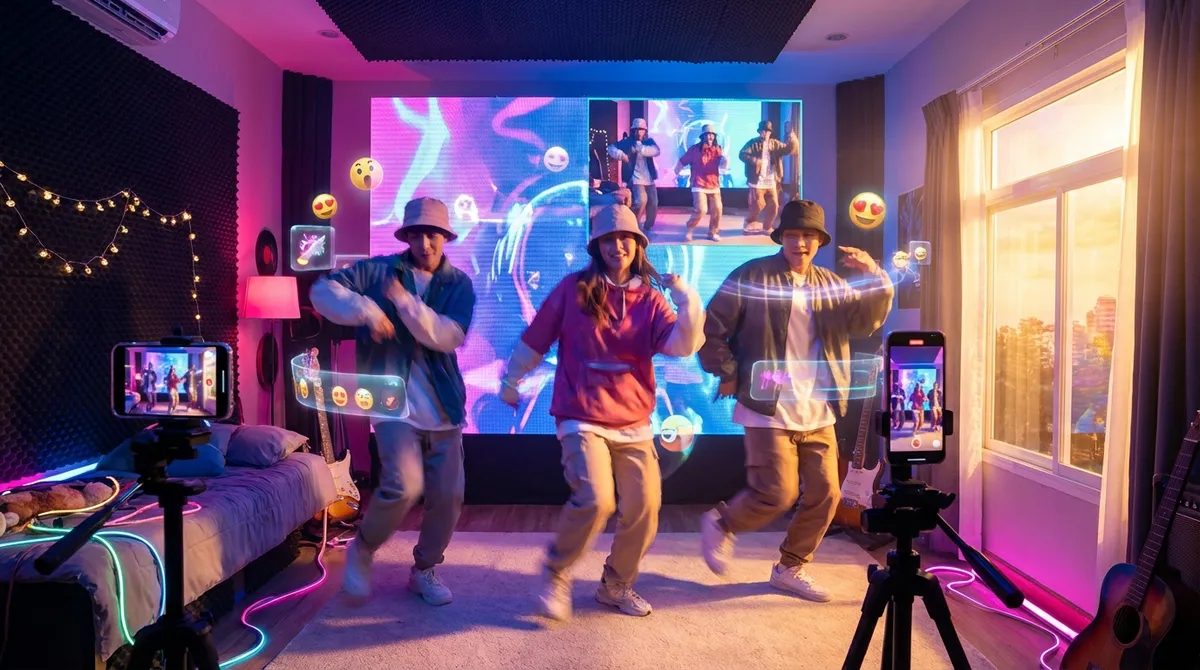
If your video feels slow, it dies. The most viral clips tap into music video energy: fast cuts, quick zooms, jump transitions, and tiny visual surprises every second or two.
Watch any trending montage and you’ll see:
- Rapid scene switches with the beat
- Text overlays that only stay on screen for a blink (forcing rewatches)
- Quick reaction shots spliced into the main moment
- Tiny visual gags in the background that reward people who rewatch and pause
We’re not watching life in real time anymore; we’re watching highlight reels that feel like trailers for a movie that doesn’t exist—but we’re still emotionally invested.
This style taps into how we actually scroll: half-watching, half-distracted. Fast edits hijack your attention by constantly throwing something new at your brain: a new angle, a zoom, a facial expression, a caption punchline.
The result? Videos that are almost impossible to watch just once. You miss something, you rewatch. That rewatch boosts the average view duration. The algorithm eats that up—and suddenly you’re on a For You page in a country you’ve never even visited.
Conclusion
Viral videos in 2026 aren’t just about “being funny” or “getting lucky.” They’re a full ecosystem of micro-stories, shared chaos, sound-first creativity, soft flexes, and hyper-edited reality. The clips that blow up are the ones that feel:
- Instantly understandable
- Weirdly personal
- Accidentally iconic
Whether you’re creating or just consuming, understanding these trends changes how you see your feed. Every “random” viral clip is part of a bigger pattern—and once you see the blueprint, you can’t unsee it.
Tag a friend who “would totally go viral for this” and start paying attention to which of these five energy types shows up in your For You page the most. Your next scroll might just be your next idea.
Sources
- Pew Research Center – Social Media and Video Trends - Data on how people use social media and video platforms
- TikTok Newsroom – Trend Reports - Official updates and insights on emerging TikTok trends and creator behavior
- YouTube Official Blog – Culture & Trends - Analysis of viral video formats and viewing habits on YouTube
- Harvard Business Review – The Science Behind Viral Content - Breakdown of emotional and psychological drivers of shareable content
- MIT Technology Review – How Algorithms Shape What You See - Explores how recommendation systems push certain videos to go viral
Key Takeaway
The most important thing to remember from this article is that this information can change how you think about Viral Videos.