The internet has officially moved on from just “being delulu” about your crush and manifesting via Pinterest boards. Social media energy in 2025 is louder, smarter, and way more self-aware. People aren’t just posting to flex anymore—they’re building mini-worlds, micro-fandoms, and entire storylines from their camera rolls. If your feed’s been feeling different lately, it’s not just you. The vibes really did shift.
Here are five new social media trends that are quietly taking over your FYP, For You Page, and group chats—and yes, you’re absolutely going to recognize yourself in at least one of them.
1. Documentary Mode: Turning Normal Days Into Mini “Soft Docs”
No more chaotic jump cuts for the sake of it—everyone’s suddenly in “low-budget documentary” mode.
People are filming their lives like calm, aesthetic mini-docs: long shots of them commuting, voiceovers about burnout, soft background music, subtle text on screen. It’s not about being perfect; it’s about feeling cinematic but honest. Think grocery trips framed like indie films, or late-night desk sessions narrated like a Netflix true-crime intro, minus the crime.
Why it hits so hard: it makes boring days feel meaningful without pretending everything is aspirational. It’s cozy, it’s vulnerable, and it’s weirdly rewatchable. Brands, creators, and even teachers are leaning into this style for explainer videos and day-in-the-life content because people actually stay to the end. The message: your life doesn’t have to be “epic” to be content—it just has to feel true and a little bit curated.
2. Group Chat Energy: Posting Like You’re Talking to 7 Friends, Not 7,000 Followers
Feeds are starting to feel less like billboards and more like inside jokes from your favorite group chat.
Captions are getting messier (in a good way): typos on purpose, chaotic punctuation, lowercase rambles, unfiltered opinions. People are ditching “polished influencer voice” and talking the way they actually text—unhinged, shorthand, and extremely specific. Instead of “Had an amazing brunch today! 🥐✨,” it’s “me pretending avocado toast will heal my personality disorders.”
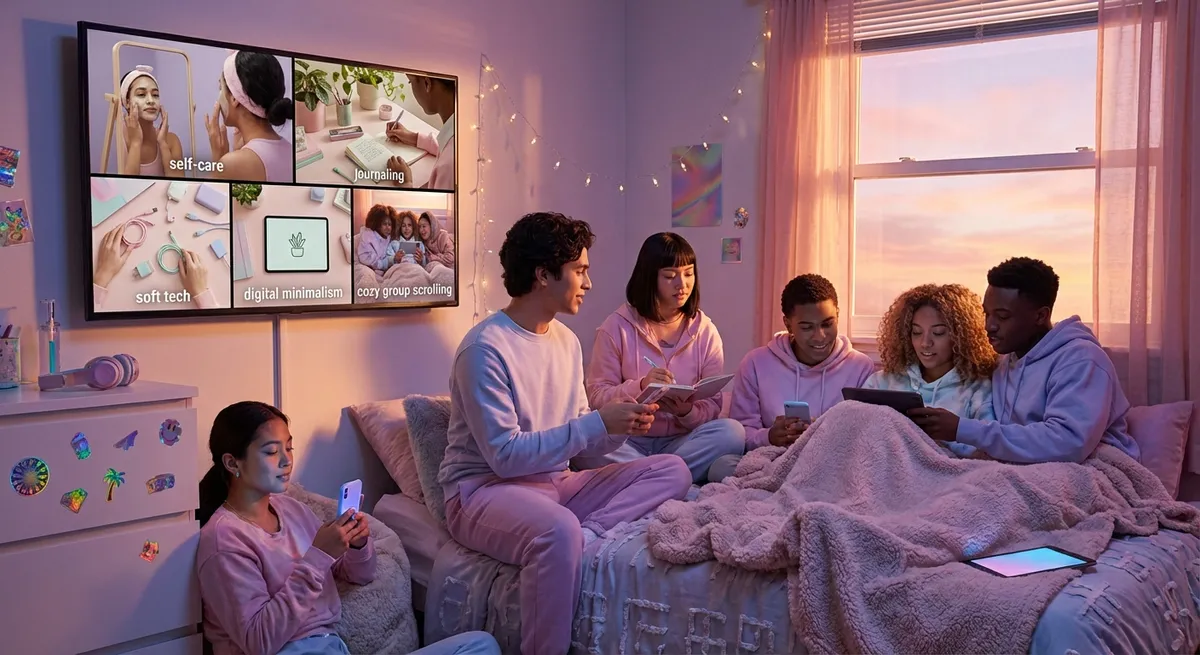
This “group chat energy” makes posts feel less like a performance and more like a screenshot of your brain. It builds parasocial friendships faster because people feel like you’re confiding in them, not pitching to them. The creators winning right now? The ones who sound like that one friend who roasts you and gives you life advice in the same sentence.
3. Comment Section Takeovers: The Real Show Is Under the Post
You’re not just scrolling posts anymore—you’re scrolling comments like it’s the main timeline.
The comments have become the new content layer: strangers building whole storylines, remixing jokes, dropping lore, and doing call-and-response bits under viral clips. Sometimes the comments are funnier, more emotional, and more insightful than the original video. People even comment with timestamps and quotes so you can navigate the chaos like chapters in a book.
Platforms have noticed: recommendation algorithms now surface comment-heavy posts more often, and creators deliberately bait comments with questions, prompts, or controversial takes. Users, on the other hand, are treating the comment section like a live group watch of the entire internet: react, overanalyze, and then come back later to see how the plot evolved. If you’re not reading the comments, you’re missing half the show.
4. Hyper-Niche Flexing: Being “Weirdly Good” at One Thing as a Personality
The new clout isn’t being generically cool—it’s being freakishly specific.
Instead of broad “fitness” or “travel” creators, your feed is now full of people who specialize in super-narrow skills: “guy who can guess your zodiac sign from your playlist,” “girl who only reviews iced chai in airports,” “designer who writes breakup letters in perfect fonts,” “barista who rates customers’ vibes by their coffee order.” It’s oddly satisfying and wildly shareable.
Hyper-niche flexing works because it makes everyone feel like their oddly specific obsession or skill is valid content. It also gives followers a super easy way to explain you to friends: “You know that account that only ranks restaurants by napkin quality? Yeah, them.” In a crowded internet, being weirdly good at one thing is more memorable than being decent at everything.
5. Reality-Check Posting: Aesthetic, But Make It Emotionally Brutal
We’ve hit a point where “toxic positivity” is out and “pretty but painfully honest” is in.
People are pairing gorgeous visuals—sunsets, cityscapes, mirror selfies—with captions that are emotionally raw: burnout confessions, loneliness in friendships, money stress, identity crises. It’s not trauma dumping; it’s more like, “I look put together, but here’s the real monologue behind this photo.” It hits especially hard because the contrast feels so real: we all know the gap between what we post and what we feel.
This reality-check posting is reshaping wellness and mental health narratives online. Instead of pretending everything is fine, creators openly credit therapy, community, meds, or boundaries as part of their “glow up.” More people are saving and sharing this kind of content because it feels like a lifeline, not a lecture. The vibe now: soft lighting, harsh truths.
Conclusion
Social media in 2025 isn’t just about trends—it’s about tones. We’re moving from loud, chaotic, and performative to intentional, hyper-specific, and emotionally self-aware. Documentary-style days, group chat-style captions, comment section chaos, niche flexing, and reality-check posting are all part of the same shift: people want to feel seen, not sold to.
If you’re creating right now, the move isn’t to chase every new feature—it’s to tap into these energies in a way that feels like you. Talk like a friend, film like a tiny filmmaker, and flex the weirdly specific thing that makes your corner of the internet unforgettable. The algorithm might decide who gets pushed, but the vibe is all you.
Sources
- Pew Research Center – Social Media Usage in 2024 - Data on how and where people are actually spending time online
- MIT Technology Review – How TikTok’s Algorithm Figures You Out - Explains why certain content styles and comment-heavy posts go viral
- Harvard Business Review – The Power of Niche Communities - Breaks down why hyper-niche creators and micro-communities are so sticky
- American Psychological Association – Social Media and Mental Health - Context for why “reality-check” posting and emotional honesty resonate
- BBC Worklife – Why Authenticity Is the New Online Currency - Explores the shift from polished perfection to more genuine, messy content
Key Takeaway
The most important thing to remember from this article is that this information can change how you think about Social Media.