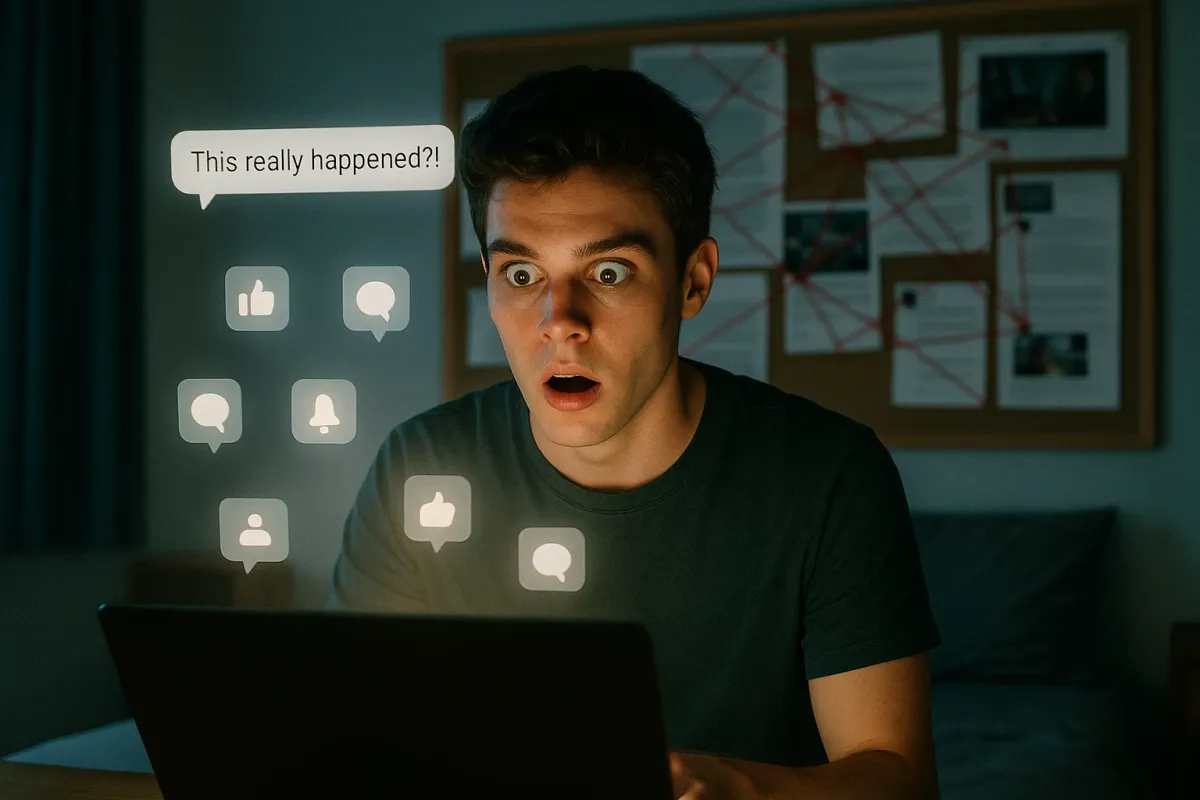
Some days, the internet feels like one big group chat screaming, “Pics or it didn’t happen.” But right now, one of the hottest trends online is the exact opposite: people are sharing stories that sound 100% made up… and then proving they’re absolutely, painfully true.
Inspired by a newly viral roundup of posts where strangers tried to call out “liars” online — only to discover the stories actually checked out — social feeds are flooded with “This sounds fake but…” moments. From insane coincidences to “no way this happened IRL” screenshots, the line between reality and fanfic is officially broken.
Here’s how this chaotic “too wild to be fake” trend is taking over the internet today.
The “This Sounds Fake But It’s True” Screenshot Flex
Right now, Reddit threads, X posts, and TikTok stitches are stacked with people posting their most unbelievable life moments — and then dropping hard receipts. Think email chains, doctor notes, CCTV grabs, school records, and decades‑old photos dug out just to prove, “No, really, this did happen.”
The spark? A fresh viral collection of posts where users were accused of lying online, only for random strangers, friends, or even news articles to back them up. That format is now everywhere: someone shares a story (“I met my birth mom at my job by accident,” “I survived getting struck by lightning twice”), the comments scream “fake,” and then the OP calmly returns with screenshots, documents, and sometimes full news clippings. It’s the internet equivalent of dropping your entire Google Drive on the table.
What makes it spread: people love the twist. The arc from “no way” to “oh my god, wait, it’s real” is pure viral fuel. Watch for more creators turning this into series — “Stories You’d Swear Were Lies (But Aren’t)” is basically a YouTube and TikTok goldmine now.
Fact-Check Culture vs. Storytime TikTok
We’re in a weird moment where the internet is both obsessed with storytelling and allergic to being fooled. On one side, Storytime TikTok, long Twitter threads, and Reddit confessions are thriving. On the other, everyone has become a mini fact‑checker, ready to yell “AI,” “copypasta,” or “this is fake” on sight.
This new trend sits exactly in the middle: creators know they’ll be accused of lying, so they build that into the content. They lean hard into receipts — screen recordings instead of screenshots, live scroll-throughs of chat logs, even side‑by‑side shots with old Facebook posts that match the story. It’s reality TV energy with a paper trail.
The internet’s trust issues are basically part of the entertainment now. The tension — is this real, is it fake, will they prove it — keeps people watching to the very last second. Every accusation in the comments is just more engagement for the algorithm to eat up.
“Unbelievable But True” Is the New Viral Genre
Move over, “oddly satisfying” and “day in my life” — the new genre everyone’s saving and sharing is “Unbelievable But 100% Real.” That recently viral compilation of times people were called out for lying, but turned out to be telling the truth, has tapped into something deeper: people want to be shocked and reassured that the world is still weirder than the internet.
Creators are now labeling content with hooks like:
- “I know this sounds fake, but stay with me.”
- “The wildest thing that’s ever happened to me (proof included).”
- “The story no one believes until I show this video.”
Once one of these blows up, duets and stitches swarm in: someone else adds their own unbelievable story, another person fact‑checks via Google, someone else reveals they were actually there when it happened. Whole micro-communities form around niche believable/ unbelievable experiences — weird jobs, medical anomalies, family coincidences, you name it.
These aren’t just posts; they’re franchise‑ready formats. Expect podcasts, YouTube channels, and even streamers building entire shows around “the craziest true stories the internet didn’t believe.”
The New Internet Currency: Receipts, Or It Didn’t Happen
Screenshots have always been powerful, but in this trend, they’re the main character. The cultural shift is clear: storytelling is cool, but documented storytelling is viral. That means:
- Full email headers instead of cropped lines
- Dashcam footage and Ring doorbell clips
- Old Instagram posts used as accidental time capsules
- Archived web pages pulled from the Wayback Machine to prove “I’ve been saying this since 2013”
The viral compilation of “called out but actually true” posts highlights something wild: half the time, defenders are strangers who independently confirm stories. “I worked at that hospital, this is real,” or “I was in that class, this actually happened.” The crowd-sourced verification itself becomes part of the spectacle.
For creators, that means the smartest move right now is to anticipate disbelief. They’re building “proof beats” directly into the video — tell the story, pause for receipts, then continue. The more the audience doubts, the bigger the payoff when the proof lands.
Why We’re So Hooked On Stories No One Believes
The real reason this trend is everywhere right now? It hits three big internet cravings at once: drama, validation, and a tiny bit of hope.
Drama: These stories are naturally high‑stakes — near‑miss disasters, insane coincidences, once‑in‑a‑lifetime meetings. They feel like movie plots, but messier and more human.
Validation: Everyone has at least one story they’re tired of explaining because “no one ever believes me.” Seeing other people finally vindicated online is weirdly cathartic. There’s a shared satisfaction in watching someone go from “you’re lying” to “I owe you an apology.”
Hope: In a feed full of AI fakes and staged pranks, finding out that reality can still out‑weird fiction is… kind of comforting. It’s proof that the world is still unpredictable in ways the algorithm can’t fully script. That’s why the new viral aesthetic isn’t glossy perfection — it’s grainy screenshots, awkward angles, and unpolished timelines that are too messy not to be real.
Conclusion
The latest internet obsession isn’t just about who can tell the wildest story — it’s about who can prove their wildest story actually happened. From that viral roundup of “actually true” posts to new TikTok and Reddit formats spinning out of it, the culture has shifted: unbelievable doesn’t mean unverified anymore.
If you’ve got a story no one ever believes, this is your moment. Dig up the receipts, dust off those ancient screenshots, and let the internet do what it does best: doubt you, then make you go viral for being right all along.
Key Takeaway
The most important thing to remember from this article is that this information can change how you think about Internet Trends.