The feed is different this year—and not just because of new filters and another round of app redesigns. Social media isn’t just about posting anymore; it’s about energy: how your content feels, how your community reacts, and how you show up online without burning out. If you’ve been sensing that “perfect aesthetic” is losing to “real but interesting,” you’re not imagining it. Let’s break down the five trending shifts that are quietly reshaping how people post, flex, and build their online vibe… and why these are exactly the kind of ideas people love to share.
The Rise of “Effortless Chaos” Over Perfect Curation
The clean, hyper-curated grid is officially getting side-eyed. The new flex is “effortless chaos”: posts that feel like a camera roll dump, but with just enough intention to still look cool.
Creators and everyday users are leaning into blurry pics, unposed moments, random screenshots, and half-finished thoughts. It’s not that people stopped caring how their feed looks; it’s that overscripting your life on camera feels old. Studies on social media and mental health have linked highly filtered, idealized images with anxiety and low self-esteem, which is one reason “messy but real” now feels refreshing—and more trustworthy. Instead of hiding bad lighting and weird angles, people are posting them on purpose to show the full story: the outfit that didn’t hit, the night out that was mid, or the behind-the-scenes before the “perfect” shot.
The result? Feeds feel more like real-life group chats and less like magazine layouts. That vibe makes content easier to relate to, easier to comment on, and way more shareable—because if your post feels human, people want to pass it on to their humans.
Micro-Stories: Short Posts, Big Personality
Attention spans are short, but personalities are loud. Instead of long captions nobody reads, micro-stories are taking over: quick, punchy posts that tell a whole story in a sentence or two, a single frame, or a 5–10 second clip.
Think: “Tried to be productive, accidentally took a 3-hour ‘thinking break’” over a photo of a messy desk. Or a three-frame story showing “expectation → reality → chaos.” Short-form story formats (Reels, Shorts, TikToks) are built for this style—fast, emotional, and loopable. Research on digital attention shows people decide in seconds whether to keep watching or scroll, which is why creators are front-loading their best moment at the start instead of saving it for the end.
The new posting rule: don’t just show your life—drop tiny narratives your audience can recognize themselves in. Micro-stories get quoted in DMs, screenshotted to group chats, and stitched or duetted by other creators. The quicker someone can “get” your post and feel something, the more likely it is to travel.
Comment Section Culture: Where the Real Show Happens
Right now, the comment section is often better than the content—and people know it. We’ve shifted from “post and peace out” to “post and host,” where creators treat the comments like a live event, not an afterthought.
Brands, influencers, and regular users are jumping into their own comment sections with witty replies, extra context, and inside jokes. Some even plan posts around the comments they hope to get: “Wrong answers only,” “Tell me you’re X without saying you’re X,” or “Reply with your most unhinged opinion.” This turns your audience from silent scrollers into co-creators. Studies show that posts with active creator interaction in the comments tend to see higher engagement and stronger community building, because people feel seen and more likely to return.
Comment section culture is also where memes are born. A single hilarious reply can get more likes than the original post, get screenshotted, reposted, and suddenly the comment becomes the content. If you’re only focusing on what you post and ignoring how people react, you’re missing the part of social media that’s quietly going viral every day.
Quiet Flexing: Soft Status Over Loud Bragging
We’ve entered the era of the soft flex: subtle signals that say “I’m doing well” without screaming it in all caps. Instead of a hard brag about a luxury trip, someone might casually show a morning coffee with a skyline view. Instead of posting a full-blown announcement about a career win, they’ll share a behind-the-scenes of their workspace with a tiny caption like “busy season.”
Why? People are increasingly sensitive to tone online. Loud bragging feels out of place when your feed is also full of news, global issues, and mental health conversations. Social comparison on social media has been linked to stress and lower mood, so users are experimenting with ways to share their wins without triggering that heavy, “everyone is ahead of me” feeling. Quiet flexing lets you celebrate your life in a more grounded way—no fake humility, no overexplaining, just soft confidence.
This kind of content is ultra-shareable because it feels aspirational but not aggressive. It inspires “I want that energy” instead of “I could never have that.” People send it to friends with captions like “This is the vibe for us next year” or “This is exactly how I want my life to feel.”
“Main Character” Energy, But With Community
The “main character” era isn’t over—but it has evolved. The newest wave is “main character with supporting cast”: posts that center your life while highlighting the people, places, and communities that shape it.
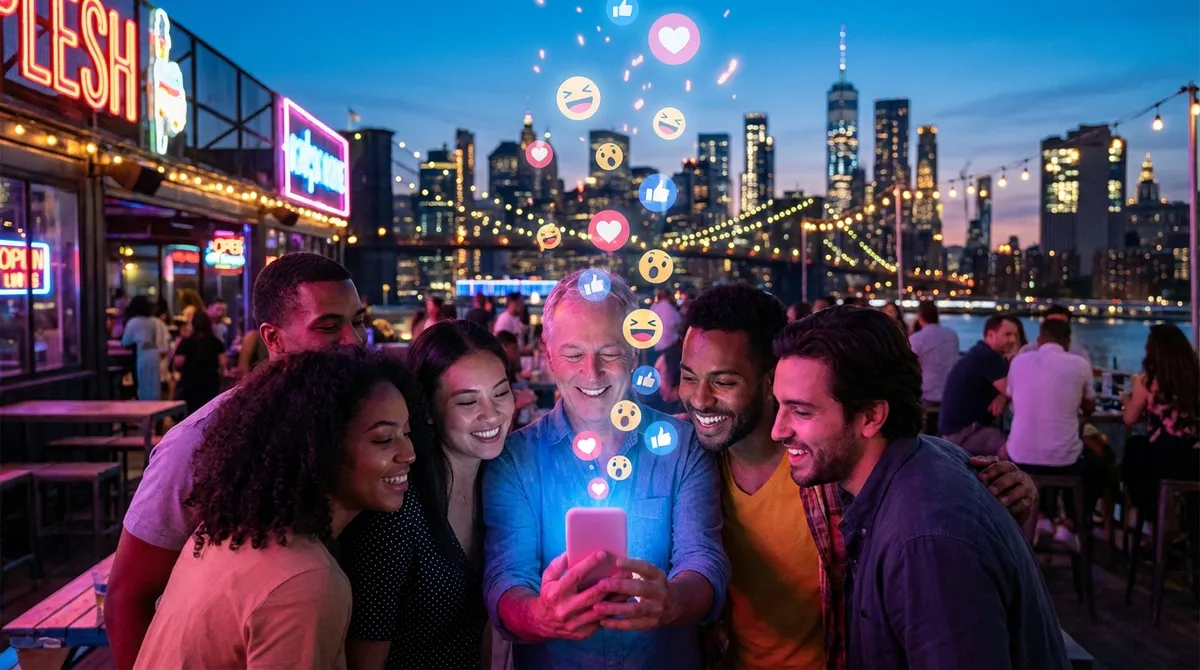
Instead of solo selfie after solo selfie, people are posting mini-montages of friend groups, local spots they love, small creators they follow, and niche communities they belong to. Social media research shows that users who feel part of a community online tend to report more positive experiences than those who use it purely for passive scrolling. So the glow-up now is not just “look at me,” but “look at us” and “look at what we’re building together.”
You’ll see this in posts that tag creators with small followings, shout-out local businesses, or celebrate mutuals who hit milestones. That mix of self-focus and community love is highly shareable because it feels generous. People want to amplify content that doesn’t just boost one person’s ego, but makes everyone involved feel like a character in a bigger story.
Conclusion
Social media isn’t getting less intense—it’s getting more intentional. The new wave is about messy authenticity that’s still creative, micro-stories that hit fast, comment sections that feel like group chats, quiet flexing that doesn’t drag anyone down, and main-character energy that includes the whole cast. If you’re trying to upgrade your online presence this year, start by tuning into how your posts feel, not just how they look.
The accounts that win now aren’t always the ones with the wildest edits or the biggest budgets—they’re the ones that make people say: “Wait, I’ve been there,” “I needed to see this,” or “I’m sending this to someone right now.” That’s the real viral currency. And it starts with how you show up in your corner of the feed.
Sources
- Pew Research Center – Social Media and Teens’ Mental Health – Data on how social media use and different types of content relate to teens’ experiences and well-being
- American Psychological Association – Social Media and Mental Health – Overview of research linking idealized images, comparison, and online behavior to mental health outcomes
- Harvard School of Public Health – Social Media Use and Well-Being – Explores how different patterns of social media use affect connection, comparison, and life satisfaction
- NIH / NCBI – Effects of Social Network Sites on Users’ Well-Being – Research review on active vs. passive engagement, social comparison, and online interaction
- MIT Sloan Management Review – How Brands Can Build Stronger Online Communities – Insights into engagement, community-building, and why interaction (like comments) matters for long-term connection
Key Takeaway
The most important thing to remember from this article is that this information can change how you think about Social Media.