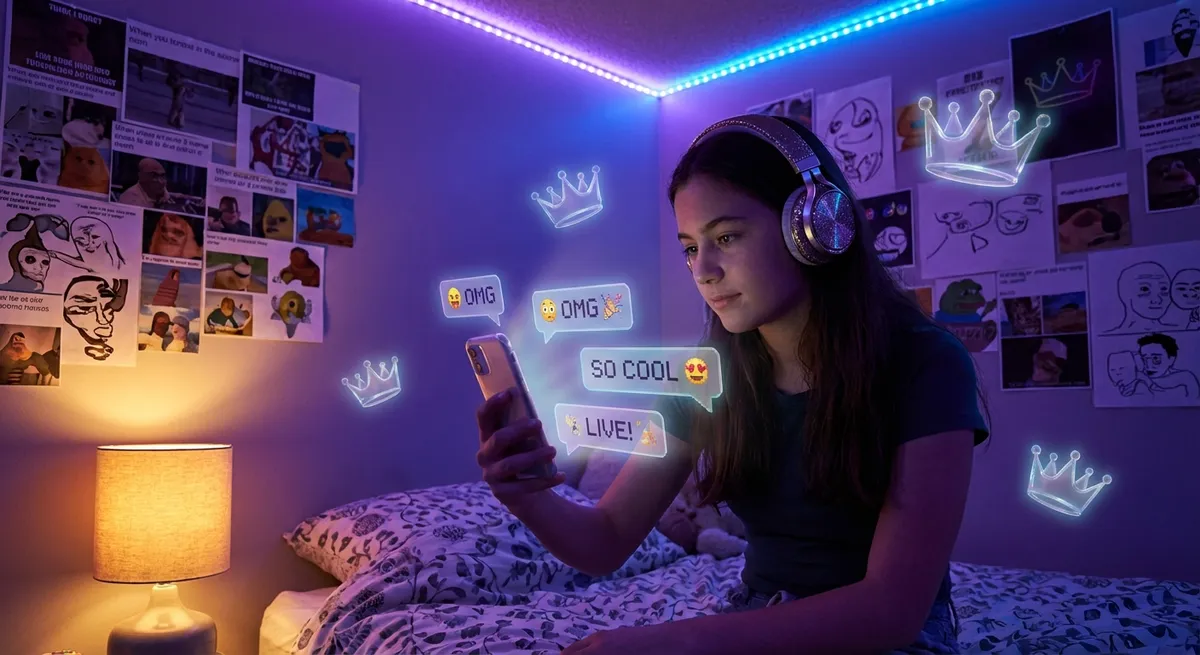
Everyone online is secretly auditioning to be the “main character” — and social media is the stage. From chaotic photo dumps to POV storytelling, the way we post has shifted from polished perfection to cinematic, messy, ultra-personal vibes. This isn’t just about clout anymore; it’s about curating a whole aesthetic life arc your followers can binge like a series.
Let’s break down the five big trends powering this “main character energy” era — the ones people are saving, sharing, and low‑key copying right now.
The Era of “Soft Flexing” Is Replacing Loud Clout
The days of screaming “look how rich I am” are fading; now it’s all about the soft flex — subtle, effortless, and just aspirational enough.
Soft flexing looks like:
- Casual mirror pic, but the background is a five-star hotel.
- “Just chilling” post with a laptop… on a flight.
- A random story shot of a coffee cup… on a designer table.
What makes it viral is the believability. It feels real, not staged within an inch of its life. Gen Z in particular is rejecting hard-sell flexing, which they associate with cringe influencer culture and inauthentic ads. Brands are catching on, too: less glossy campaign shoots, more “I just filmed this on my phone in my kitchen” vibe.
This shift is driven by a mix of ad fatigue, economic stress, and a craving for relatability. People want to feel like they’re watching someone live a cool life, not perform it. On TikTok and Instagram Reels, the videos that quietly showcase a lifestyle — instead of yelling about it — are the ones getting saved to “inspo” folders and replayed on loop.
Photo Dumps: The Anti-Perfect Aesthetic That Still Looks Perfect
Photo dumps are the new highlight reel — except they’re designed to look like they don’t care. The formula: 8–10 random-looking pics that somehow tell a full story of your week, trip, or mini era.
You’ll see:
- Blurry nights out + half-eaten food + random screenshot.
- A “bad” selfie next to a gorgeous sunset.
- A messy room, then a glam fit check, then a pet close‑up.
- They keep people swiping through multiple slides (hello, engagement).
- They feel low-effort and intimate, like flipping through a friend’s camera roll.
- They make real life look cinematic without being overproduced.
The genius? Photo dumps hack the algorithm and the vibe:
This trend is a response to old-school Instagram perfection. Instead of posting one manicured shot, you’re dropping a whole collage that says, “My life is chaotic but aesthetic, and you’re invited.” People share them because they feel like memories — and memories are inherently shareable.
Storytelling Captions Are Beating One-Word Emoji Posts
Short captions still work, but the elite move right now is mini storytelling. Users are turning captions into diary entries, plot twists, or mini essays — and people are actually reading them.
Think:
- “I thought this trip would fix everything. Spoiler: it didn’t. But here’s what I learned…”
- “The day I realized I was living my 2016 Pinterest board without noticing.”
- “This was the night everything changed and none of us knew it yet.”
- They stop the scroll — a real story feels rare in an ocean of surface-level posts.
- They build emotional connection, which drives comments, shares, and saves.
- They tap into the “authenticity” economy, where honesty is its own kind of flex.
Longer, vulnerable captions are doing numbers because:
On TikTok, you see the same energy in POV videos: creators walk viewers through a breakup, burnout, glow‑up, or moving-to-a-new-city arc. It’s not about perfect production; it’s about feeling like you’re watching character development in real time. That narrative hook is why people send these posts in group chats and say, “This is SO me.”
Private Communities Are Where the Real Chaos Lives
Public feeds are just the trailer; the full movie lives in group chats, Close Friends stories, private Discords, and finstas. The hottest social currency right now isn’t likes — it’s access.
Here’s what’s happening:
- People post the “clean” version on public feeds and the unhinged version on Close Friends.
- Screenshots from wild private stories leak their way to TikTok and Twitter/X, go viral, and start trends.
- Group chats act as mini algorithms, deciding which videos are worth sending and re-sending until they go platform-wide.
Psychologically, users are burned out on always being “on” in public. Private spaces feel safer, funnier, and more honest — which ironically creates the exact kind of content people end up wanting to share. Some of the biggest memes and sound bites start inside small circles before exploding outward.
For creators and brands, the takeaway is huge: intimacy scales. Building smaller, tight-knit communities (subscriber stories, close-friends style content, micro Discord servers) can spark the kind of loyalty and word-of-mouth that no boosted post can buy.
“Micro-Documentaries” Are Turning Everyday Life Into Viral Content
People are turning their lives into short, bingeable series — not with fancy cameras, but with phones, subtitles, and smart editing. The vibe: 30–90 second “micro‑documentaries” that make tiny moments feel huge.
Examples you’ve definitely seen:
- “Day in my life as a barista in a tiny city” — with aesthetic shots of coffee, streets, and quiet thoughts.
- “How I accidentally soft-launched my relationship” — with text on screen explaining each clip.
- “What it’s really like to work night shifts at a hospital” — candid, raw, and addictive.
- Short‑form video is dominant, but audiences are craving substance inside those seconds.
- People feel more comfortable sharing real experiences when they can lightly edit, narrate, and control the story.
- It hits both sides of the main character fantasy: viewers imagine themselves in that life, and creators feel seen for their reality.
Why this works right now:
This micro‑doc format blends TikTok’s chaotic cuts with YouTube’s storytelling tradition. It’s the perfect sweet spot between punchy and meaningful — and that’s exactly what gets sent around, duetted, stitched, and copied into new trends.
Conclusion
Social media has officially moved from “look at this one perfect moment” to “watch my whole character arc.” Soft flexing, photo dumps, long-form captions, private chaos, and mini-documentary vibes all point to the same shift: people want to feel something when they scroll — not just see something.
If you treat your feed like a movie instead of a billboard, you’re already ahead. The plot, the imperfections, the behind-the-scenes mess? That’s the content people are saving, remixing, and passing around like digital gossip.
You’re not just posting anymore. You’re world-building.
Sources
- [Pew Research Center – Social Media Fact Sheet](https://www.pewresearch.org/internet/fact-sheet/social-media/) - Up-to-date data on who uses social media, how, and how it’s changing across generations
- [Harvard Business Review – How Social Media Shapes Identity](https://hbr.org/2022/01/how-social-media-shapes-our-identity) - Explores how online self-presentation and “main character” behavior influence real-life identity
- [NYU Stern – The Authenticity Paradox on Social Media](https://www.stern.nyu.edu/experience-stern/faculty-research/authenticity-social-media) - Analysis of why “authentic” and imperfect-feeling content performs well
- [MIT Technology Review – TikTok and the Evolution of Short-Form Video](https://www.technologyreview.com/2021/09/15/1035886/tiktok-algorithm-video-culture/) - Deep dive into how TikTok’s format and algorithm changed storytelling online
- [BBC – The Rise of Private Social Media Spaces](https://www.bbc.com/worklife/article/20210719-the-rise-of-private-social-media-groups) - Explains why users are shifting from public feeds to smaller, closed communities
Key Takeaway
The most important thing to remember from this article is that this information can change how you think about Social Media.