Social media used to be about who posted the best selfie. Now? It’s about who understands the vibe of the internet fastest. Every week, there’s a new “thing” your feed won’t shut up about—micro-trends, niche obsessions, unhinged photo dumps, and random hobbies turned into full-blown identities. If your timeline feels like pure chaos lately…that’s kind of the point.
This is your cheat sheet to what’s actually hitting right now. Five big trends, how they work, and why people can’t stop posting about them.
Hyper-Relatable Chaos: Turning Everyday Fails Into Content
Perfect feeds are out, “my life is a sitcom” energy is in.
Instead of pretending everything is aesthetic 24/7, people are making content out of half-burnt dinners, unhinged notes app rants, and gym fails caught in 4K. The more chaotic (but still relatable), the better. It’s less “influencer perfection,” more “group chat energy made public.”
This kind of content blows up because it gives people permission to be messy. It feels like scrolling through your own brain: overthinking texts, screenshotting cringe DMs, and turning awkward moments into storytime posts. Brands are even tapping into this with “we’re all a hot mess” style campaigns that lean into imperfections instead of hiding them.
On TikTok and Reels, “day in the life” has evolved into “you won’t believe what just happened” storytelling, with exaggerated captions like “POV: your life is a fanfic but badly written.” People don’t want flawless—they want funny, flawed, and a little bit too honest.
The Personality Soft-Launch: Quiet Flexing Without Saying It
Posting your whole life is out; posting just enough to make people curious is in.
Instead of hard-launching every new job, hobby, or relationship, users are teasing things in the background: a new workspace in the corner of a story, a mystery wrist in a boomerang, or a caption like “big girl decisions” with zero context. The point is to make people ask, “Wait, what’s going on?”
Soft-launching used to be about relationships, but now it’s about everything—new projects, lifestyle changes, glow-ups, even friend circles. It feels more low-key and private, while still feeding that social media need for attention and intrigue.
This works because it flips the script: instead of oversharing, you’re letting the audience do the guessing. Engagement goes up because people comment theories, send DMs, and watch your content more closely. It’s the social media version of a cliffhanger.
Digital Third Places: Turning Comment Sections Into Hangout Spots
Your favorite part of a post might not be the post—it’s the replies.
Comment sections, duets, stitches, and quote-tweets are turning random content into digital “third places”: spaces where people hang out, joke, debate, and trauma-bond with strangers. A video might go viral for the comments alone, with people saying “I’m only here for the replies” or “this comment section is a movie.”
Creators are leaning into this by asking hyper-specific questions: “Tell me your most unhinged work story,” “What’s a secret you’ve never told anyone?” or “Drop where you’re from and your red flag.” These prompts become mini-communities where people overshare, support each other, or just one-up each other’s stories.
This feels especially powerful as more people work remotely or feel less connected IRL. Hanging out in a familiar creator’s comments or joining recurring live chats becomes a ritual, like grabbing coffee at the same place every day—just online, and a lot louder.
Aesthetic Micro-Phases: Treating Your Feed Like Seasons of a Show
People aren’t just having personalities anymore—they’re having seasons.
Instead of picking one stable aesthetic, users are rotating through “phases” like they’re showrunners of their own lives. One month it’s “gym villain arc,” the next it’s “quiet library main character,” then suddenly it’s “I moved to my cooking era and now I own 12 jars of spices.”
These phases show up as themed content runs: specific color palettes, distinct music choices, fonts, and captions. Entire feeds shift vibe for a few weeks before pivoting again. It keeps things fresh and makes old content feel like previous “chapters” you can scroll back through.
This trend is shareable because it gives people language for what they’re going through—burnout, glow-ups, breakups, career pivots—without getting too serious. You’re not just tired; you’re “soft quitting my social life era.” It’s self-reinvention turned into content strategy.
Comfort Content: Low-Stakes Posts for Overstimulated Brains
Not everything has to be shocking, dramatic, or viral. Some of the most-watched content right now is…quiet.
Think: videos of someone cleaning their apartment with soft music, silent meal-prep clips, train rides filmed from the window, cozy gaming streams, or someone doing a mundane task while telling a calm story. No intense edits, no drama—just vibes.
This kind of content is a counterbalance to the constant dopamine chase. After doomscrolling news or chaotic memes, people want something that feels like a deep breath. Platforms like TikTok and YouTube have whole niches dedicated to “study with me,” “real-time cooking,” and “late-night reset” content that people play in the background like digital white noise.
Creators are realizing you don’t always need a wild hook; sometimes you just need to be consistent, calming, and real. And audiences keep coming back because comfort content feels less like performing—and more like existing together.
Conclusion
The new social media flex isn’t having the fanciest life—it’s knowing how to translate real life into scroll-stopping moments. Chaos, mystery, community, mini “eras,” and comfort vibes are all winning because they feel human in a hyper-edited world.
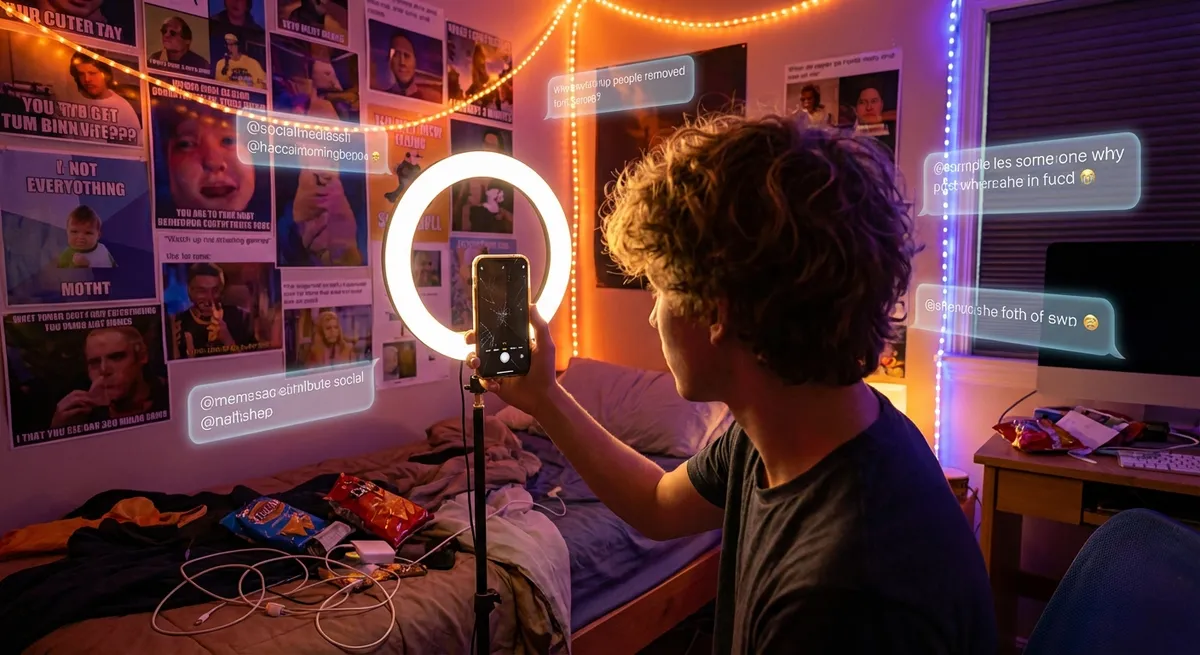
If you’re posting, you don’t need a ring light and a perfect plan. You need a point of view, a bit of self-awareness, and the courage to treat your feed less like a showroom and more like a story you’re still writing.
Screenshots ready. Your next post might not just get likes—it might get people saying, “Wait, this is so me,” and hitting share.
Sources
- [Pew Research Center – Social Media and the Attention Economy](https://www.pewresearch.org/internet/2023/07/12/teens-social-media-and-technology-2023/) - Data on how people, especially younger users, are spending time and expressing themselves online
- [NYTimes – How TikTok Became a Comfort-Food App](https://www.nytimes.com/2022/07/25/style/tiktok-comfort-food-videos.html) - Explores the rise of calming, low-stakes content and why it resonates
- [BBC – How Internet Memes and Trends Reflect Our Mental State](https://www.bbc.com/worklife/article/20211012-how-internet-memes-reflect-our-mental-health) - Looks at how online humor, chaos, and relatability connect to real emotions
- [Harvard Kennedy School – Digital Public Spaces](https://shorensteincenter.org/digital-public-space/) - Discusses how online platforms and comment sections function as modern gathering places
- [MIT Technology Review – TikTok and the Evolution of Online Culture](https://www.technologyreview.com/2021/09/16/1035886/tiktok-algorithm-online-culture/) - Breaks down how short-form video and algorithms shape new types of social media behavior
Key Takeaway
The most important thing to remember from this article is that this information can change how you think about Social Media.