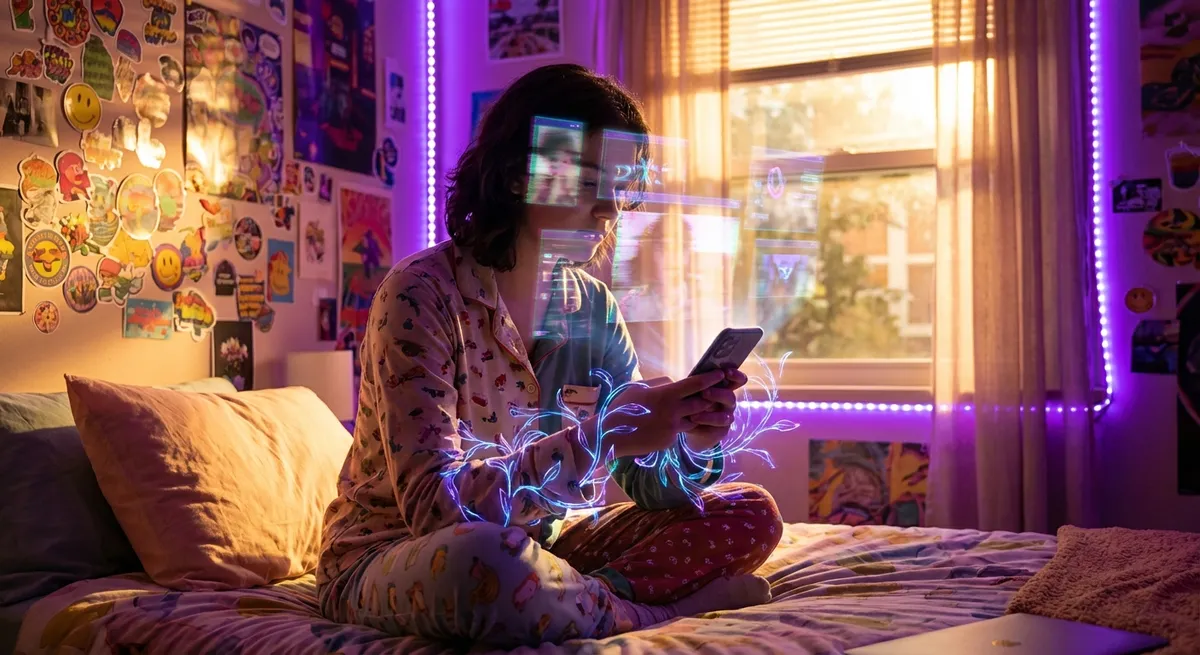
Internet culture isn’t just “changing” anymore — it’s mutating in real time. One week your feed is all dance challenges, the next it’s AI-generated boyfriend POVs, niche fandom beef, and people livestreaming themselves… doing absolutely nothing. If your timeline feels slightly unhinged but weirdly addictive, you’re not imagining it.
These are the scroll shockwaves quietly rewiring what we share, how we flex, and what actually goes viral — and they’re exactly the kind of trends your group chat will argue about for days.
1. The Rise of “Silent Flexing”: Rich Energy, Minimal Proof
The old internet flex was obvious: luxury hauls, private jets, giant “unboxing” moments. Now? The coolest people online barely show anything at all. Welcome to silent flexing — status, but soft-launched.
Instead of filming every purchase, creators are hinting at a lifestyle: a blurry photo from a boutique restaurant, a wrist with just a watch peeking out, a room corner with designer sneakers in the background. The power move isn’t shouting “I’m rich,” it’s whispering “If you know, you know.”
This shift lines up with a bigger move away from “cringe wealth” toward subtle status and “old money” vibes. Gen Z especially is calling out loud flexes as out-of-touch, performative, or just boring. Meanwhile, quiet signals like niche brands, rare collectibles, or access-only experiences are punching way harder.
We’re also seeing a crossover with “de-influencing” content — creators telling you what not to buy while still radiating a lifestyle you low-key want. The internet’s new currency isn’t just having money; it’s having taste, access, and the restraint not to overshare every receipt.
2. Hyper-Niche Feeds: Your Algorithm Now Knows Your Deepest Obsessions
If you’ve ever scrolled and thought, “How does my For You page know I’m into miniature kitchens, 1999 anime edits, and raccoon rescue videos?” — welcome to the era of hyper-niche feeds.
The big platforms are no longer just showing you what’s popular; they’re guessing what micro-obsessions you might develop. TikTok’s recommendation system, YouTube’s rabbit holes, and Instagram Reels are all designed to feed you ultra-specific corners of the internet you didn’t even know existed — like:
- Medieval armor restoration TikTok
- “Subway restaurant workers telling stories” YouTube
- Niche celebrity drama from 2014 resurfacing on Reels
- Hyper-local gossip pages that feel like reality TV
The wild part: these micro-communities can turn into massive waves overnight. A random niche — like book annotation videos or slow living cabin vlogs — can go from underground to mainstream in a matter of weeks, powered by people stitching, dueting, and remixing each other’s content.
Hyper-niche feeds are also changing how we form identity online. Instead of one big fandom or aesthetic, users now curate dozens of mini-subcultures they rotate through: cottagecore on Monday, tech reviews on Tuesday, chaotic meme edits on Wednesday. Your feed is basically your subconscious, algorithmically exposed.
3. AI Remix Culture: When Everything Is Half-Real, Half-Generated
We’ve officially entered the stage where you have to ask: “Is this real, edited, or AI?” And sometimes the answer is: all three.
AI isn’t just a tool anymore; it’s becoming a full-blown genre of content. We’re seeing:
- AI-generated songs in the style of famous artists
- Fake podcasts with imaginary celebrity pairings
- “What if this movie was an ’80s anime?” AI trailers
- AI chat screenshots turned into storytime memes
The addictive part is the remix energy. People take an AI output, then layer edits, memes, commentary, and drama on top. The original clip almost doesn’t matter — what matters is how many creators can spin it, react to it, or expose it.
But there’s a darker twist: the line between fandom fun and misinformation is getting dangerously thin. Deepfakes, AI-altered photos, and fabricated “receipts” can spread before anyone fact-checks. Creators who want to stay in the game now have to balance hype with credibility — and audiences are getting way more skeptical and investigative.
AI remix culture is turning the internet into a never-ending “What if?” machine, where any concept, aesthetic, or scenario can be simulated. It’s chaotic, it’s creative, and it’s forcing everyone to ask: How do you stay authentic when reality itself is remixable?
4. Parasocial “Soft Friendships”: You Don’t Follow Influencers, You “Know” Them
Remember when influencers felt like celebrities? Polished, distant, aspirational? That wall is basically gone. The new wave of creators isn’t trying to be untouchable — they’re trying to feel like your almost-friend.
We’re in the age of parasocial soft friendships: creators sharing “get ready with me” rants, posting notes-app confessions, going live while cooking, studying, or doomscrolling with you. The vibe isn’t “Look up to me,” it’s “Sit next to me while I panic about life.”
This format is sticky because it feels emotionally real — like you’re part of their day. Comment sections read like group chats. Viewers talk to creators as if they’ve known them for years: asking for life updates, giving advice, or defending them during drama like they’re protecting a best friend.
At the same time, there’s a growing conversation about burnout and boundaries. Constant “relatability” can mean creators feel pressured to open up about mental health, relationships, or family issues just to keep engagement. Audiences are starting to realize: if someone is your comfort creator, that doesn’t mean you’re owed every detail of their life.
The future of internet fame looks less like celebrity worship and more like a million semi-intimate connections — powerful, messy, and extremely shareable.
5. “Live Nothingness”: Watching People Exist in Real Time
If someone from 2010 saw the internet now, the wildest thing wouldn’t be the filters or the AI. It would be how many people are glued to livestreams of… pretty much nothing.
We’re talking about:
- Streamers quietly studying on camera for hours
- Sleep streams with chat roasting or protecting them
- People working remote jobs while chatting occasionally
- Low-key “hang out with me while I do chores” lives
This “live nothingness” hits because it feels like background companionship. It’s the digital version of having someone in the room while you get your life together. The chat becomes its own character: inside jokes, running gags, strangers hyping each other up.
There’s also a gamified layer: gifting, goals, subscriber milestones, and random chaotic moments that get clipped into viral highlights. One tiny unpredictable thing — a funny comment, a pet jumping in frame, a tech fail — can launch a streamer from “10 viewers” to “100,000 people watching this laundry moment.”
As attention spans supposedly shrink, we’re actually seeing the opposite in some corners: people are willing to sit through hours of slow, low-stimulation content if it feels human and unscripted. In a world of hyper-polished clips, existing in real time is becoming the new flex.
Conclusion
The internet isn’t one big culture anymore — it’s a constantly shifting swarm of micro-habits, niche obsessions, AI remixes, and almost-friend relationships. Silent flexing replaces loud wealth. Algorithms drag you into oddly specific corners of the web. AI blurs what’s real. Creators become comfort characters. Livestreams turn everyday life into content.
If your feed feels stranger than ever, that’s the point. The platforms are evolving, the users are evolving faster, and the viral moments are coming from places nobody predicted.
So next time you catch yourself watching someone clean their room on live while an AI-generated Drake cover plays in the background and a creator you “kind of know” rants in a stitched video — just remember: you’re not losing it. You’re just living through the next era of internet culture in real time.
Sources
- TikTok’s Algorithm and How It Works - New York Times breakdown of how TikTok’s recommendation system shapes hyper-niche feeds
- The Parasocial Phenomenon - BBC article on why audiences feel close to creators and the risks of parasocial relationships
- AI-Generated Content and Deepfakes Explained - Brookings Institution overview of deepfakes, AI media, and their impact on trust online
- Livestreaming’s Explosive Growth - CNBC look at why livestreaming became central to social platforms
- Gen Z, Social Media, and Online Identity - Pew Research Center data on how younger users interact with social media and shape new norms
Key Takeaway
The most important thing to remember from this article is that this information can change how you think about Internet Trends.