The internet isn’t moving fast anymore—it’s shape-shifting. Trends don’t last months; they barely last a weekend. While everyone is still arguing about the “hot new app,” the real culture is happening in tiny, chaotic waves: micro-trends that flare up, dominate your feed for 48 hours, then vanish like they never existed.
This is your cheat sheet to the scroll shockwaves actually running the internet right now—five hyper-shareable shifts that explain why your feed looks unrecognizable from last year’s. Send this to the friend who’s still quoting 2020 memes.
1. The Era of “Unpolished Flex”: Looking Effortless on Purpose
The hard-filtered, hyper-curated aesthetic is quietly getting kicked to the curb. What’s replacing it? The “unpolished flex”—content that pretends to be casual while still being insanely calculated.
Think:
- Photo dumps that look random but are perfectly sequenced
- Blurry mirror selfies with luxury items casually in frame
- “Accidental” screenshots that conveniently show blue check DMs or crazy follower counts
Creators are leaning into chaos as a strategy. The goal is to look like you’re not trying, even though every frame is engineered to feel relatable and aspirational at the same time.
This is why you’re seeing:
- Messy bed backgrounds but perfectly styled outfits
- Vlog-style vertical videos that feel like FaceTime, not studio shoots
- Captions that say “idk what this is” on posts that clearly took 2 hours to edit
It works because audiences are tired of perfection, but they’re not over status. The unpolished flex says: “I’m successful, I’m interesting, but I’m still just like you.” And the algorithm eats that authenticity theater right up.
2. Hyper-Niche Communities: Tiny Corners, Massive Influence
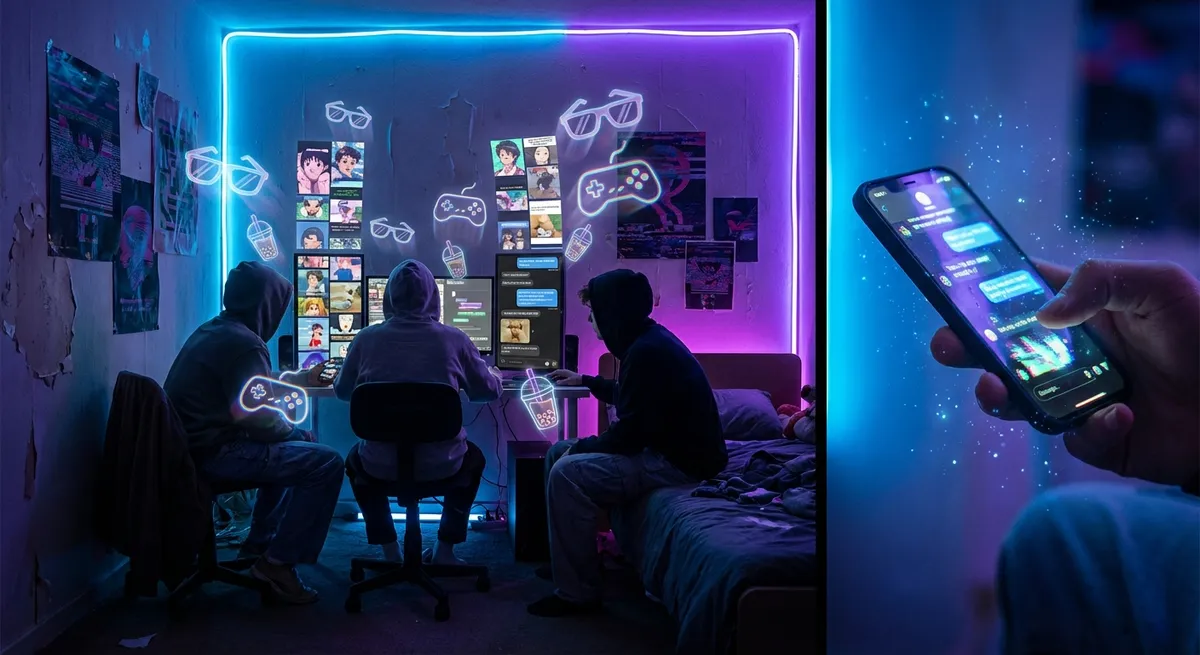
The loudest voices online aren’t always the biggest accounts anymore—they’re the tiny, hyper-specific communities that are weirdly powerful.
We’re talking about:
- BookTok niches that can move thousands of copies overnight
- Micro hobby groups (like mushroom foraging, niche skincare, obscure indie games) that drive entire product sellouts
- Hyper-local meme pages that shape the vibe of entire cities or campuses
The new flex isn’t “I’m viral everywhere,” it’s “I own this one little corner of the internet completely.”
Why it matters for your feed:
- Algorithms push you into these rabbit holes, then double down
- Brands are chasing these micro-communities because they convert better than generic viral hits
- Entire aesthetics now launch from tiny Discord servers, subreddit threads, or fan accounts—then break mainstream
If your feed suddenly becomes 80% mushroom recipes or 2010s nostalgia edits, it’s not random. You’ve been claimed by a micro-community. And logging off won’t save you—those trends leak into music, fashion, slang, and even how news gets framed.
3. Screenshot Culture: Why Your Camera Roll Is the New Timeline
Your camera roll is quietly becoming its own social network. The most shared content on group chats right now? Screenshots—of everything.
People are screen-grabbing:
- Wild comment-section fights
- Unhinged app notifications
- DM conversations (with names cropped… or not)
- Chaotic dating app bios
- Unreleased posts they’ll probably never actually publish
Screenshots feel “off the record,” even when they spread faster than a regular post. They’re the slang of the internet—fast, messy, and incredibly context-dependent.
This shift does three big things:
- Makes content portable: Any platform’s drama can hop to another via a single screenshot.
- Supercharges virality: A tweet can die on Twitter but live forever in group chats and IG stories.
- Blurs privacy lines: Everyone is posting with an invisible audience in mind: not just followers, but people who might see their words out of context as a screenshot.
If it feels like nothing ever really disappears anymore, you’re not wrong. The screenshot is now the internet’s permanent record—and its favorite gossip vehicle.
4. Real-Time Remixing: The Rise of “Instant Collab Culture”
The internet used to be: see content, maybe like it, move on. Now it’s: see content, remix it. The baseline expectation on most major platforms is participation, not just viewing.
You’re seeing this everywhere:
- Duets, stitches, and side-by-side reactions as the default response format
- People slapping new audio, captions, and edits over old clips to spin new narratives
- Trend sounds that live ten different lives in ten different subcultures
The magic isn’t the original post—it’s the chain reaction that follows. The real flex is how cleverly you can flip someone else’s content into your own thing.
That means:
- A single 5-second clip can become a skincare joke, a political statement, a relationship meme, and a sports reaction template all in the same week
- Creators who design content with remixability in mind win more (clear audio, simple framing, strong facial expressions, and open-ended scenarios)
- “Collab culture” doesn’t need contracts; it’s built into the buttons on your screen
The internet isn’t a stage anymore; it’s a massive, never-ending group project. And your “For You” page is just the highlight reel.
5. The New Flex: “Low-Key Offline, High-Key Extremely Online”
Here’s the paradox running your feed: everyone’s posting about “touching grass” while clearly still glued to their phones. The new status symbol is managing to look detached from the internet while being deeply wired into it.
You’ll spot it through:
- Posts from “digital detox” vacations that are suspiciously well-documented
- Captions like “barely online lately” attached to accounts posting daily
- IRL friend pics that are obviously curated to say “we’re living life, not content”
- Publicly: “I’m not that online, I’m just chilling.”
- Privately: Knows every meme, every micro-drama, every trending sound within 48 hours.
- Online burnout is real, and people don’t want to admit how much they still care
- Algorithms reward consistent posting, even as users try to signal they’re above the chaos
- Being “too online” reads as cringe; being “strategically, ironically online” reads as cool
This is the new internet identity:
Why this is blowing up now:
So your feed is full of people soft-launching their detachment from the internet… on the internet. It’s not hypocrisy—it’s the performance of balance in a culture where being totally offline is almost impossible.
Conclusion
The big secret of the modern internet? The game isn’t just going viral—it’s understanding the tiny, fast-moving currents that actually shape what goes viral in the first place.
From unpolished flexing and hyper-niche communities to screenshot gossip, remix culture, and the performance of being “barely online,” your feed is less random than it looks. These micro-trends decide which jokes land, which creators blow up, which brands feel relevant, and which moments become screenshots in someone else’s camera roll.
Stay watching, stay weird—and maybe think twice before posting something you wouldn’t want bouncing around in a thousand group chats by tomorrow morning.
Sources
- [Pew Research Center – Social Media Fact Sheet](https://www.pewresearch.org/internet/fact-sheet/social-media/) - Data on how people are using social platforms and how habits are shifting over time.
- [MIT Technology Review – How TikTok Became a Cultural Juggernaut](https://www.technologyreview.com/2021/09/16/1035841/how-tiktok-algorithm-made-it-a-culturally-dominant-app/) - Explains algorithm-driven virality and remix culture.
- [Harvard Business Review – The Age of Social Media Is Ending](https://hbr.org/2022/01/the-age-of-social-media-is-ending) - Context on how social platforms are evolving and fragmenting into niche spaces.
- [BBC Future – The Psychology of Social Media](https://www.bbc.com/future/article/20180104-the-psychology-of-social-media) - Insights into why authenticity, performance, and online identity are so powerful.
- [NYTimes – How Screenshots Became the Internet’s Newest Weapon](https://www.nytimes.com/2019/11/02/style/screenshots-text-messages-tweets.html) - A look at screenshot culture, privacy, and how content escapes its original platform.
Key Takeaway
The most important thing to remember from this article is that this information can change how you think about Internet Trends.