Everybody’s scrolling, but not everybody’s seeing the same internet anymore. Your feed doesn’t just know what you like—it’s starting to feel like it knows who you are, who you want to be, and who you’re pretending to be online. Welcome to Scroll Culture 2.0, where vibes are data, aesthetics are algorithms, and trends move faster than you can say “refresh.”
Here are five internet vibes dominating screens right now—the stuff people don’t just double‑tap, but adopt as a lifestyle.
The “Soft Surveillance” Era: When Watching Becomes a Social Skill
You’re not just online—you’re observing. Quietly.
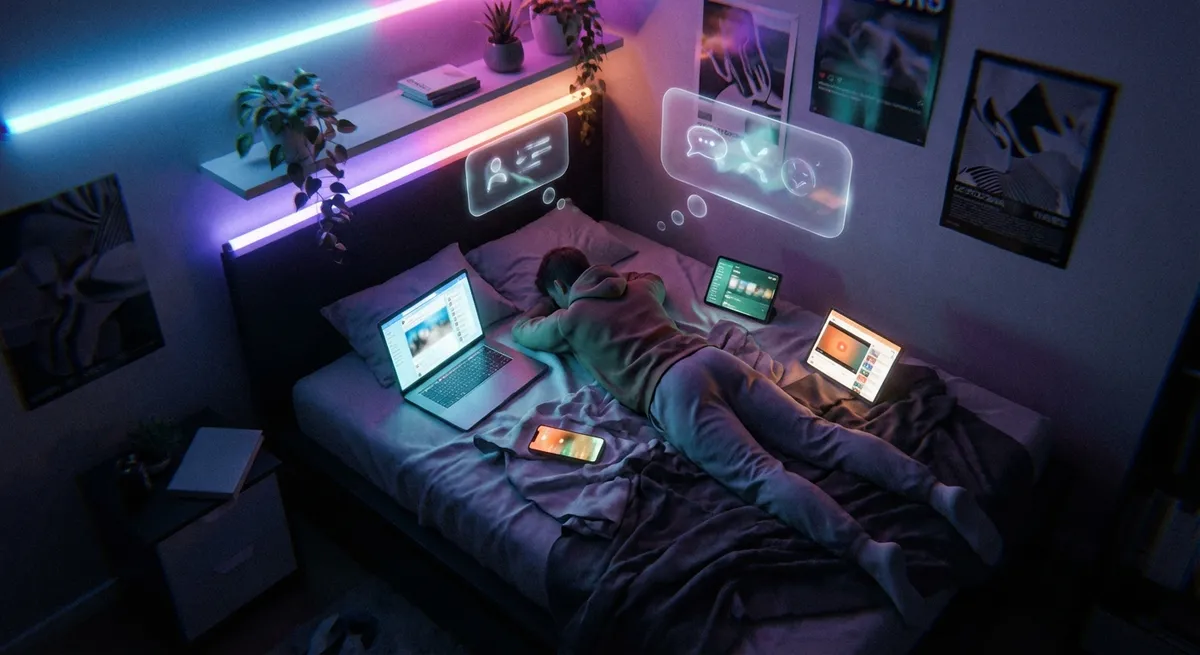
People are posting less, lurking more, and treating the internet like a live documentary. Story views are up. Public posts are down. Close friends lists are the new VIP rooms of the web, while main feeds are starting to feel like billboards nobody wants to pay for.
The hottest flex isn’t oversharing; it’s knowing without being seen. “Soft surveillance” shows up as:
- Checking someone’s TikTok likes to decode their personality
- Watching stories religiously but never reacting
- Deep-diving LinkedIn or Twitter/X when you’re “just curious”
- Using alt accounts to test how you want to show up online
The wild part? Platforms are rewarding this quiet behavior. Recommendation systems track every hover, replay, and pause. Even if you never drop a comment, your silent attention is feeding the machine and shaping what goes viral next.
To live in this era is to accept one truth: your scroll is a confession—even if you never hit “post.”
The “Hyper-Niche Hangouts” Takeover: Micro-Communities > Massive Followings
The public timeline is chaos; the group chat is peace. That’s the energy right now.
Instead of chasing huge audiences, people are building tiny, intense communities around strangely specific interests: “day-in-the-life of med students,” “people who color-code their Notion,” “fans of 2000s rom-com fonts,” “frog-core cottage garden inspo.” If it exists, there’s a Discord, subreddit, WhatsApp group, private IG page, or TikTok subculture for it.
This shift looks like:
- Moving from public threads to invite-only servers and group chats
- Treating follower count as less important than comment quality
- Hosting live streams or AMAs for 50 people instead of 50k
- Using niche hashtags not to go viral, but to find “your people”
Platforms are noticing. TikTok’s “For You Page,” Reddit’s community push, and Instagram Channels all revolve around micro-interest groups. The future of “viral” might not be one clip everyone sees—it might be a hundred smaller moments lighting up inside ultra-specific circles.
In Scroll Culture 2.0, the algorithm finds you followers. You find your community.
The “Playable Personality” Trend: Filters, AI, and the New Identity Remix
The internet used to ask, “Is this really you?” Now the better question is, “Which version of you is this today?”
From AI filters that age you, de-age you, and anime-fy you, to AI chatbots that copy your texting style, identity online has gone fully remixable. Instead of choosing one aesthetic, people are building rotating identities: one for the main, one for the alt, one for private stories, one for their AI-generated avatar.
You see this everywhere:
- TikTok filters that become mini personality tests (“Which main character are you?”)
- AI image tools turning selfies into movie posters, album covers, and game characters
- VTubers and virtual influencers redefining what a “real” creator is
- People building AI versions of themselves to auto-reply, auto-flirt, or auto-hustle
It’s less about faking it and more about playing with it. Online, you’re not locked into one self; you’re beta-testing multiple timelines. The line between “authentic” and “curated” isn’t just blurred—it’s being treated like a creative medium.
In this trend, your identity isn’t a bio. It’s a playlist.
The “Slow Flex” Shift: When Quiet Consistency Beats Loud Virality
Virality still hits—but the internet is getting tired of one-hit wonders. The new status symbol? Consistency.
Creators and casual users alike are embracing the “slow flex”: posting the process, not just the highlight reel. We’re talking daily study logs, gym journeys, language-learning streaks, side hustle updates, book recaps, financial progress charts—content that builds a story over months, not 24 hours.
Here’s how the slow flex shows up:
- Time-lapse videos of skills improving instead of instant “before and after”
- Long-form content making a comeback via YouTube, podcasts, and newsletters
- “Day 1 vs Day 100” trends putting the focus on effort, not raw talent
- Followers sticking around because they’re invested in the storyline
Algorithms are adapting too. Platforms like YouTube, TikTok, and Instagram increasingly reward creators who post regularly and hold attention over time, not just those who go nuclear once.
In other words: the clout is cool, but the timeline is cooler. Being watchable for a week is nice; being bingeable for a year is iconic.
The “Reality Remix” Wave: When Offline Life Is Just Another Content Layer
The biggest plot twist of the modern internet? The real world is trending again—just heavily edited.
Instead of disappearing into hyper-digital worlds, users are remixing reality: local adventures, outfit walks, cafe crawls, solo dates, cooking experiments, thrift flips, and “come with me to do absolutely nothing” vlogs. Offline life is the raw material; online is the remastered version.
You can spot this wave by:
- “Romanticize your life” edits turning bus rides and grocery runs into movie scenes
- Geo-tagged micro-travel content spotlighting small towns and random corners of big cities
- IRL meetups and creator pop-ups becoming as important as follower counts
- Short-form “lo-fi” vlogs with minimal talking, aesthetic sounds, and “you’re here with me” energy
This is the antidote to doomscrolling: content that doesn’t escape reality, but reframes it. People aren’t logging off—they’re logging life and giving it a soundtrack.
In Scroll Culture 2.0, your offline moments aren’t a break from the internet; they’re the main chapter.
Conclusion
The internet used to feel like one big room where everyone saw the same things. Now it’s a layered, twisted, deeply personalized universe where your scroll says more about you than your bio ever could.
Soft surveillance. Hyper-niche hangouts. Playable personalities. Slow flexes. Reality remixes.
These aren’t just trends; they’re new habits, new social rules, and new ways of being seen (or not) online. Screens aren’t just showing us the world—they’re showing us who we’re becoming.
Share this with the person who “never posts,” the friend lost in eight Discords, or the one rebuilding their entire identity via TikTok edits. You’re not just scrolling a feed—you’re living inside a culture shift.
Sources
- Pew Research Center – Social Media Fact Sheet - Data on how people actually use different platforms and how behavior is changing
- MIT Technology Review – How TikTok Reads Your Mind - Explains how recommendation systems track subtle user actions to shape feeds
- Harvard Business Review – The Era of Antisocial Social Media - Discusses the shift from public posting to more private, intimate online spaces
- NYU Center for Social Media and Politics - Research hub exploring how social media behavior and trends are evolving
- Wired – The Internet Is Splintering Into Micro-Communities - Looks at how people are moving from mass audiences to niche, tight-knit groups
Key Takeaway
The most important thing to remember from this article is that this information can change how you think about Internet Trends.