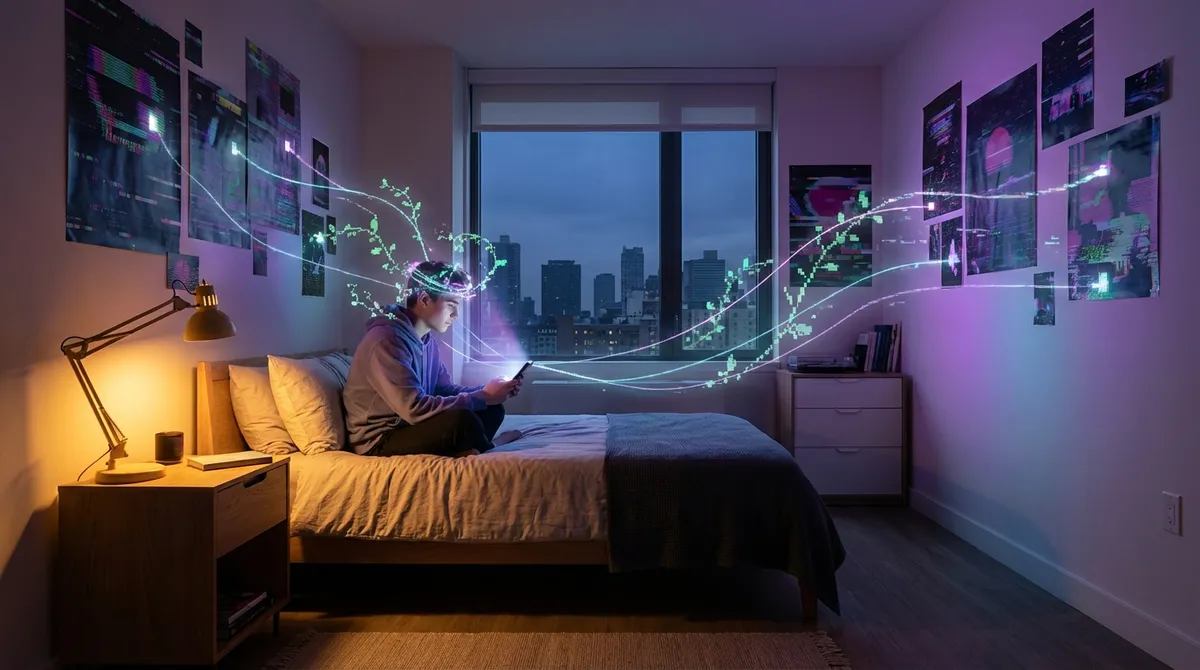
The internet isn’t just where we hang out anymore—it’s where we live. Every scroll, like, and share is shaping what we think is normal, what we care about, and even how our brains work. We’ve moved past “What’s trending?” into “How are trends literally training us?”
Welcome to Scroll Culture 2.0: the new era where micro-habits, algorithm tricks, and unspoken rules of the feed are quietly rewriting our daily lives. These five trending shifts aren’t just viral—they’re changing how we think, talk, and flex online.
Point 1: The Rise of the 1.5x Life – Living Everything on Fast-Forward
You’re not imagining it: everything feels faster because… it is. People are speed-watching entire shows at 1.25x or 1.5x, skipping through podcasts, and double-tapping past anything that doesn’t hook them in under three seconds. Our attention spans are being trained like algorithms: harsh, ruthless, and always ready to skip.
This “fast-forward mindset” doesn’t stay on your phone. It bleeds into real life—conversations feel too slow, movies feel “draggy,” and even cooking videos are better when they’re sped up. Psychologists are already warning that this constant high-speed input might be rewiring how we process information, making patience feel outdated and silence feel uncomfortable.
At the same time, creators are adapting. Hooks are hitting earlier, edits are tighter, and entire story arcs are being compressed into bite-sized, blink-and-you-miss-it content. The internet isn’t just entertaining you—it’s training you to crave speed.
Point 2: Screenshot Culture – Private Moments as Public Currency
The group chat has quietly become one of the most powerful places on the internet. Screenshots of tweets, texts, posts, and comments are now a kind of social currency: proof you were there first, you saw it before it blew up, or you caught someone being iconic (or chaotic) in the wild.
This “screenshot culture” also changes how people behave online. We’re all low-key performing for an invisible audience beyond our followers, because any post, DM, or comment might be screenshotted and sent somewhere else. That creates a strange mix of authenticity and paranoia: we want to be real, but we also know nothing ever truly stays private.
It’s not just drama fuel, either. Screenshots spread activism threads, emergency news, and niche memes at light speed—bouncing from public timelines to private chats and back again. A post doesn’t have to go viral in the traditional sense to change the discourse; it just needs to dominate enough group chats.
Point 3: Aesthetic Algorithms – When Your Personality Becomes a “Vibe”
The internet used to be about what you like. Now it’s about what you look like you like. Aesthetics have become mini-identities—“clean girl,” “coquette,” “cottagecore,” “gonk,” “chaotic neutral desk,” “techcore”—and algorithms are pushing curated vibes as if they’re entire lifestyles you can subscribe to.
Instead of saying “this is who I am,” people are building moodboards and feeds that say “this is the version of me I want the algorithm to believe.” Your room decor, lockscreen, daily outfits, even your water bottle can end up curated to match an online aesthetic that feels shoppable and shareable.
This hasn’t gone unnoticed by brands. Fashion, beauty, and even food companies now design campaigns around aesthetics instead of demographics. It’s less “18–24-year-olds” and more “people who live on their For You Page in beige neutrals and matcha foam.” The wild part? These aesthetics spread globally—someone in Tokyo, Paris, and São Paulo can be living the exact same vibe without ever speaking the same language.
Point 4: The Soft Launch Era – Posting Without Really Posting
The new flex isn’t oversharing—it’s under-sharing with precision. “Soft launching” (and “soft quitting,” “soft flexing,” “soft everything”) has turned the internet into a game of guessing what’s really going on. A blurry hand in a photo, a second coffee cup, a new city background, a half-captioned burnout joke—users are saying a lot without officially announcing anything.
This trend is powered by a mix of privacy anxiety and performance. People want to feel mysterious but still visible. They’re curating what gets confirmed and what stays as speculation, especially when it comes to relationships, jobs, mental health, and money.
The result: engagement goes through the roof. Cryptic posts invite comments, DMs, and story replies. Audiences lean in, trying to decode clues. The internet has turned everyday life milestones into episodic storylines, where the “hard launch” (the full reveal) is almost less exciting than the soft, subtle buildup.
Point 5: The New Authenticity Test – “Unpolished but Still Perfect”
The era of perfectly filtered, hyper-posed content has cracked—but it didn’t disappear. It just evolved. Now the trend is “casually curated”: photos that look messy but are actually planned, “photo dumps” that are secretly edited, and “oops” moments that took ten takes to get right.
People want to seem real: unfiltered selfies, random fridge pics, blurry club shots, crying on camera, “get ready with me even though my room is a disaster.” But underneath that, there’s still pressure to be aesthetically pleasing, relatable, and algorithm-friendly. Authenticity itself has become a kind of performance.
This new standard hits creators and everyday users alike. Post too polished and it feels fake. Post too raw and it feels uncomfortable or risky. Everyone’s trying to hit this sweet spot where you look like you don’t care… but you obviously cared enough to think about it. It’s the new internet tension: how real can you be when the entire world is watching?
Conclusion
The wildest part about internet trends right now isn’t any single meme, challenge, or viral sound—it’s the way our habits are shifting under the surface. We’re consuming everything faster, treating screenshots like receipts, living through aesthetics, soft-launching our lives, and performing authenticity in real time.
Scroll Culture 2.0 isn’t just what’s on your feed. It’s how your brain, routine, and relationships quietly adapt to the unspoken rules of being online. And as platforms keep changing, one thing’s guaranteed: the internet will always find a new way to turn your daily life into content.
Sources
- [Pew Research Center – Social Media Fact Sheet](https://www.pewresearch.org/internet/fact-sheet/social-media/) - Data on how people use social media across platforms and age groups
- [American Psychological Association – How Social Media Affects Our Mental Health](https://www.apa.org/monitor/2019/10/cover-social-media) - Explores the psychological impacts of online behavior and attention
- [Harvard Business Review – How the Attention Economy Shapes Our Lives](https://hbr.org/2022/01/how-the-attention-economy-is-shaping-our-lives) - Discusses speed, engagement, and the value of attention online
- [MIT Technology Review – Algorithms and the Aesthetics of the Feed](https://www.technologyreview.com/2021/07/07/1027925/how-tiktok-algorithm-works/) - Breaks down how recommendation systems shape content and aesthetics
- [BBC Future – Are We Losing the Ability to Focus?](https://www.bbc.com/future/article/20210107-how-social-media-is-affecting-our-attention) - Looks at how constant scrolling and fast content affect focus and cognition
Key Takeaway
The most important thing to remember from this article is that this information can change how you think about Internet Trends.