The future looks… retro. While everyone’s busy arguing about AI filters and the latest TikTok update, one viral project just dragged the internet straight back to the 1980s—and Gen Z is loving it. A series from graphic designer Luli Kibudi, imagining how today’s biggest apps would look if they’d launched in the VHS era, is blowing up across social feeds and perfectly tapping into the “vintage internet” aesthetic.
From chunky Walkman-style Spotify mockups to cassette-tape Netflix concepts, the posts are exploding on Instagram, X, and Pinterest—and they’re doing way more than just hitting nostalgia buttons. They’re exposing exactly how obsessed we’ve become with our apps, our aesthetics, and our screens.
Let’s break down why 80s-style apps are suddenly the it trend online right now.
1. The ‘Analog Aesthetic’ Is The New Flex
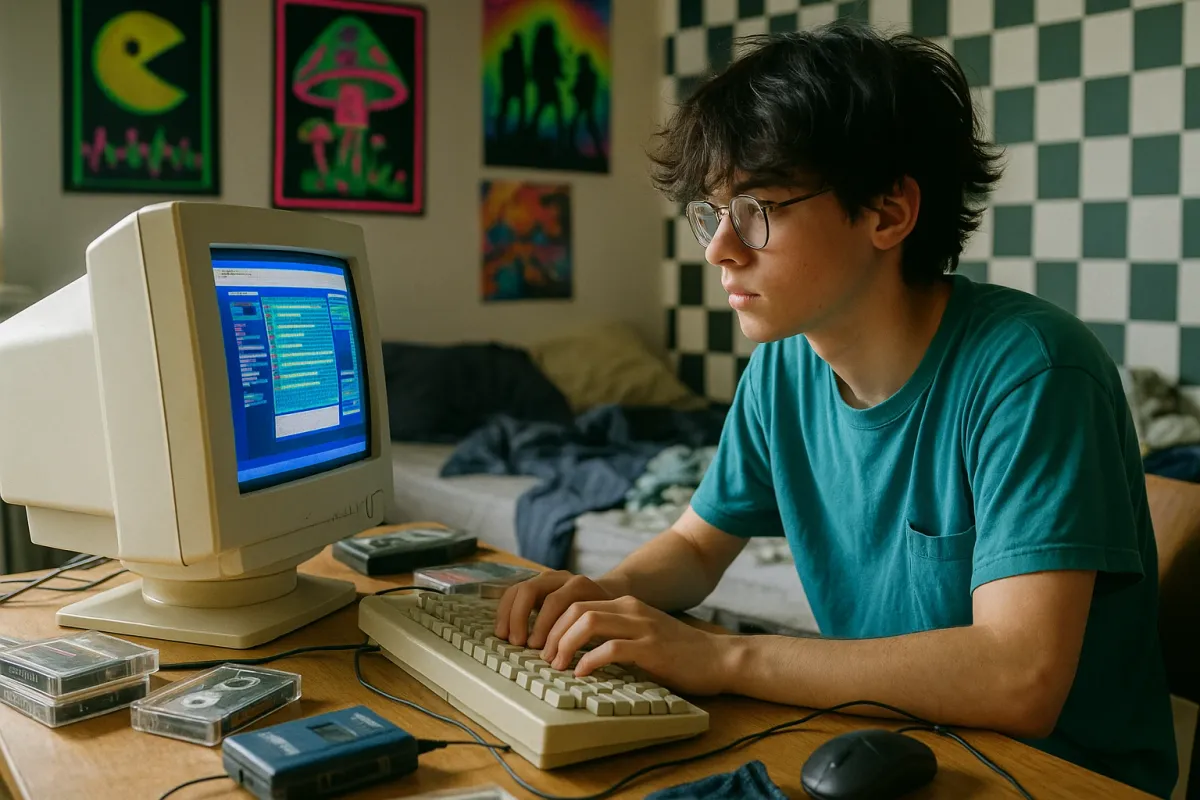
Digital minimalism? Out. Retro maximalism? Very in. Kibudi’s “Once Appon a Time” series (the one reimagining apps like Instagram, WhatsApp, and Netflix as 80s gadgets) is riding a much bigger wave: the rise of the analog aesthetic. Think grainy filters, fake VHS glitches, CRT-screen frames, and fonts that look like they were ripped straight off an arcade cabinet.
On TikTok, searches for “retro tech aesthetic” and “80s computer core” have been quietly climbing, as creators skin their feeds with neon grids, static noise, and fake DOS-style pop-ups. These 80s app edits hit that same sweet spot—modern logos, but wrapped in plastic, metal, and clicky buttons instead of glowing glass. It’s the opposite of Apple’s clean white world, and people are sharing it because it visually screams, “I’m online, but not like everyone else.” Posting a retro app mockup has basically become the new “I’m not addicted to my phone, I’m ironically addicted to my phone.”
2. Screenshots of “What If” Designs Are Taking Over Feeds
The internet has discovered its new favorite format: fake, but could be real screenshots. Kibudi’s 1980s app mockups look like they were pulled from actual old catalogues or user manuals, and that’s exactly why they’re going viral—they sit perfectly in that uncanny “what if this actually existed?” zone that social media loves.
We’ve already seen this trend with fake Windows 95 versions of TikTok, mock Game Boy Netflix cartridges, and AI-generated “early Facebook” login screens. Now the 80s twist is turning that niche design meme into a mainstream shareable moment. People are quote-posting the images with takes like “I would 100% buy 80s Spotify” or “Tell me this isn’t cooler than my actual phone,” and suddenly your entire feed is a parallel timeline where Mark Zuckerberg ships floppy disks instead of apps. It’s fan fiction—but for UI design.
3. Nostalgia Hits Even If You Weren’t There
Here’s the wild part: most of the people sharing these posts never touched a real Walkman, never blew on a game cartridge, and definitely never had to rewind a VHS. But online nostalgia doesn’t care if you were actually there—it cares if the vibe is strong enough. The 80s aesthetic is already trending thanks to shows like Stranger Things, synthwave playlists on YouTube, and TikTok edits dripping in neon.
Kibudi’s retro apps are plugging straight into that energy. They mash up two types of comfort content: old-school tech that feels “slow and safe,” and modern apps that feel familiar and essential. So even if your childhood was more iPod Nano than tape deck, your brain still registers, “This is cozy. This is slower. This looks like it smells like warm plastic and dust.” That emotional hit is what makes posts shareable—people pass them around not just because they look cool, but because they feel like scrolling through a timeline that never stressed you out.
4. Designers Are Treating Social Media Like a Time Machine
Another reason this trend is exploding: it’s catnip for designers and creative nerds. Kibudi’s project is being stitched, dueted, and remixed by UI designers, motion artists, and 3D creators who are jumping in with their own “if X existed in Y era” takes. We’re seeing Spotify as a 70s hi-fi system, Discord as a 90s LAN party interface, and even BeReal as disposable camera packaging.
Social media has quietly become a massive playground for speculative design—no pitching clients, no brand decks, just “what if this app was born in another decade?” And that’s extremely shareable, because it gives people a way to argue, dream, and joke together in the comments. “No way 80s Netflix would even load” vs. “I’d wait three hours for Stranger Things on VHS” is exactly the kind of low-stakes debate people love when their real feeds are full of doomscrolling. Time-travel UI is basically escapism with a like button.
5. Everyone’s Low-Key Craving ‘Offline Energy’
The deeper layer here: these retro app designs are trending because they hint at something a lot of people are quietly craving—offline energy. The 80s-style versions of Instagram, TikTok, or WhatsApp look like objects you’d touch, keep, maybe break and repair. There’s something weirdly calming about seeing your most addictive app turned into a clunky gadget you could actually put down.
In comments under Kibudi’s posts, you’ll see people saying things like “This makes me want to log off and play a tape” or “Imagine if Netflix was just a shelf and not an endless scroll.” The posts aren’t just cool visuals; they’re soft critiques of always-on culture that still feel fun and non-preachy. Sharing them is a way of saying, “Yeah, I live on my phone, but I also kind of wish I didn’t.” It’s digital self-awareness, but with pastel plastics and floppy disks instead of lectures.
Conclusion
The internet loves a good time loop, and right now, 1980s-style apps are the main character. Thanks to creators like Luli Kibudi and the viral momentum of her “Once Appon a Time” series, our feeds are filling up with alternate-universe versions of the apps we use every single day—chunkier, noisier, and somehow way more charming.
Retro internet isn’t just a look; it’s a mood. It’s nostalgia for a world where tech felt magical instead of exhausting, where you pressed a button and heard a click instead of a ping. And if the current wave of shares, stitches, and remixes is anything to go by, the next big internet trend might not be the future at all—it might be the past, reinstalled with a fresh aesthetic and a whole lot of neon.
Key Takeaway
The most important thing to remember from this article is that this information can change how you think about Internet Trends.