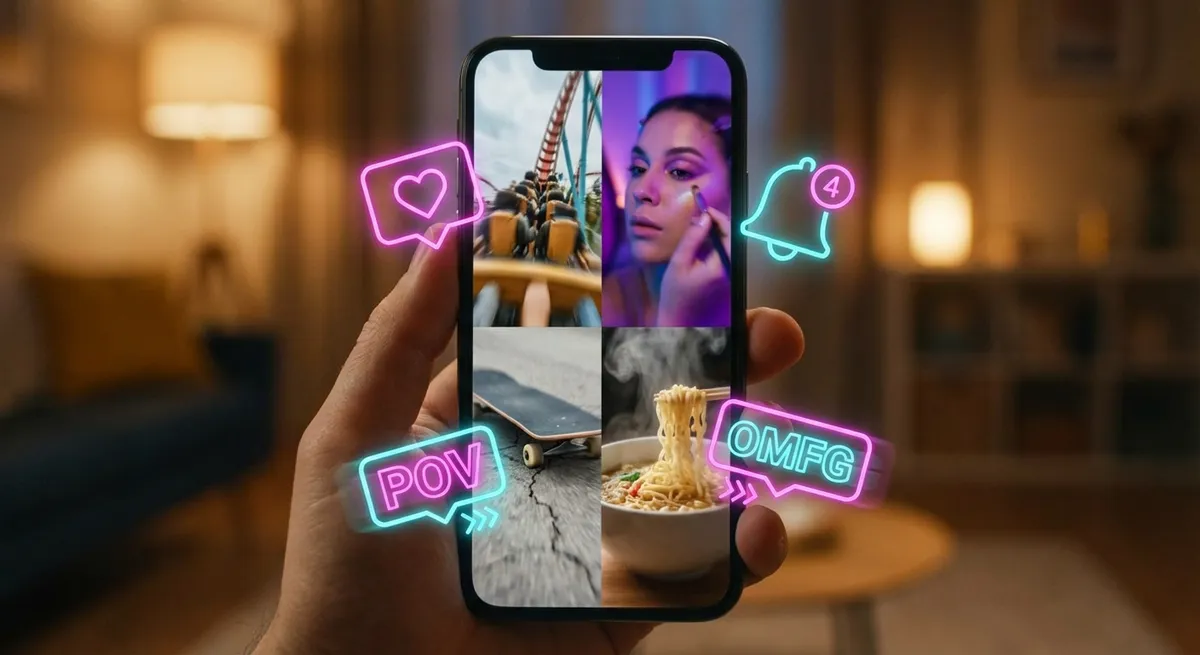
POV videos went from “random TikTok trend” to “you literally can’t open an app without seeing one” in record time. From “POV: you’re my crush in math class” to wild travel shots and chaotic workplace clips, first‑person content has become the language of the internet. But what’s actually fueling this wave—and why do these clips go viral faster than anything else?
Let’s break down how POV culture hijacked your feed and the 5 trending things that make these videos impossible to scroll past.
Why POV Videos Hit So Hard
POV (“point of view”) content feels less like you’re watching a video and more like you’re inside it. That’s the magic. Instead of a creator just talking at you, POV flips the script: you’re the main character, even if you never hit record.
TikTok, Instagram Reels, and YouTube Shorts all reward content that hooks you in the first seconds and keeps you locked in. POV formats are perfect for that. They drop you in the middle of a moment—no long setup, no explanation—just instant context and emotion.
Creators use text overlays, eye contact, acting, and sound design to pull you into their world: awkward dates, airport chaos, retail nightmares, gamer rage, dream vacations, and everything in between. Each clip becomes its own tiny universe, and that “you had to be there” energy is exactly what makes people smash share, duet, and remix.
1. The Main Character Effect: Making Viewers Feel Like the Star
The biggest power move of POV videos? They weaponize main‑character energy.
Instead of telling a story about themselves, creators frame the scene as you:
- “POV: you just got the text you were waiting for”
- “POV: you’re the friend everyone low‑key relies on”
- “POV: your boss ‘needs to talk’ at 4:59pm”
Suddenly, the video isn’t about a random stranger online—it’s about your life, your anxiety, your drama. That personalization, even when generic, makes the clip insanely shareable:
- Friends tag each other: “this is literally you”
- People save it because “wow, I felt this”
- Viewers repost with captions like “I’ve never been more called out”
Psychologists call this “self‑referencing”—we remember and react more strongly to stuff that feels like it’s about us. Platforms love that because emotional engagement = longer watch time = more reach. POV creators have basically cracked the algorithm’s love language.
2. Hyper‑Relatable Micro Moments: Viral in Under 10 Seconds
POV creators have mastered the art of zooming into tiny, painfully specific moments—what we can call “micro vibes.”
Think:
- That second you pretend you didn’t see someone you know in public
- The 0.3 seconds of panic when a teacher calls your name and you weren’t listening
- The fake “I’m fine” smile when your card gets declined
These micro moments hit because they’re universal yet rarely described. When a creator nails it with the right expression, sound, and timing, it feels like the internet just read your brain.
Why these blow up:
- They’re fast – No one has time for backstory; the situation is instantly clear.
- They’re easy to loop – Short scenes that people rewatch, boosting completion rate.
- They’re perfect for comments – Everyone piles in with “HOW IS THIS SO ACCURATE?”
That combination—instant recognition + emotional punch + repeatable format—is the perfect recipe for viral growth.
3. Sound First, Story Second: POVs Built Around Audio
In POV culture, audio isn’t background—it’s the entire blueprint.
Creators hunt for:
- Dramatic audio clips (“you don’t really love me, you just hate being alone”)
- Funny voiceovers, misheard lyrics, or movie lines
- Trending sounds from TikTok’s commercial music library (or platform‑safe remixes)
Once a sound starts gaining momentum, POV creators rush to map scenarios onto it. A single line of audio can spawn thousands of different story angles:
- Romance POVs
- Work horror stories
- Family drama
- School chaos
If the sound is flexible enough to be used in multiple contexts, it becomes a POV goldmine. And because platforms like TikTok literally show you “Use this sound” buttons and audio pages with top clips, every new video is standing on top of the previous ones’ momentum.
The loop goes like this:
- Sound trends.
- A creator drops a killer POV using it.
- Others copy the structure or twist it.
- The audio + POV format explode together.
It’s collaborative storytelling at algorithm speed.
4. DIY Cinematic Feels: POV as Low‑Budget Mini Movies
POV culture also unlocked an unexpected lane: “cinematic but low effort” storytelling.
You’ll see creators using:
- Simple camera tricks (handheld shots, quick zooms, lens smudges)
- Natural light + everyday locations (cars, bedrooms, locker rooms, office cubicles)
- Outfits or props that suggest a whole character with almost no dialogue
Instead of polished, high‑budget shoots, these clips feel like raw scenes ripped out of a movie or TV show—just enough detail for your brain to fill in the rest.
Why it works:
- No expensive gear needed – A phone and decent lighting is enough.
- Mystery hooks viewers – You’re dropped into the middle of the scene and want to know what happened before and after.
- It fits vertical screens – Tight framing and close‑ups feel intense and intimate.
This DIY cinematic style makes everything feel more dramatic, more emotional, and way more bingeable. People end up scrolling an entire account because each POV feels like a different episode from the same chaotic universe.
5. Interactive Storylines: POV as a Two‑Way Game
The most addictive twist on POV culture is when creators turn their videos into interactive storylines.
You’ll see:
- “Comment A or B for what happens next”
- “Like for Part 2” cliffhangers
- Alternate endings based on top comments
- Duets and stitches where viewers literally insert themselves into the story
Instead of passive watching, viewers become co‑writers. They:
- Suggest plot twists
- Role‑play in the comments
- Create response POVs from the other character’s side
Platforms boost this kind of content because it sparks layers of engagement: views, likes, comments, duets, stitches, and shares. POV isn’t just a video; it becomes a mini fandom, with inside jokes and recurring characters.
The result? A simple “POV: you’re dating the quiet kid” turns into a whole cinematic universe with sequels, spinoffs, and rival POV creators adding their own versions. It’s fan fiction, improv theater, and short‑form video all rolled into one.
Conclusion
POV culture didn’t just sneak into your feed—it rewired how creators and viewers tell stories online. By putting the audience in the center of the scene, POV videos hit emotional nerves faster than any other format.
They make you the main character.
They turn tiny, awkward moments into viral currency.
They hijack trending sounds, look like tiny movies, and turn comment sections into writers’ rooms.
If you’re a creator, ignoring POV is like ignoring subtitles on Netflix: technically possible, but you’re missing how everyone’s actually watching. And if you’re just here to scroll? Get ready—somewhere on your For You Page, there’s a POV waiting that feels a little too accurate… and you’re absolutely sending it to the group chat.
Sources
- TikTok: How to Shoot POV Videos - TikTok’s own explainer on POV formats and why they resonate on the platform
- Pew Research Center – Social Media and Video Content - Data on how people consume and engage with short‑form video online
- MIT Sloan – The Psychology Behind Viral Content - Breaks down emotional triggers and sharing behavior that drive virality
- Harvard Business Review – Why People Share What They Share - Insights into why certain formats and stories are more likely to be reposted
- YouTube Official Blog – The Rise of Short‑Form Video - Overview of how short, vertical storytelling has changed creator strategies and viewer habits
Key Takeaway
The most important thing to remember from this article is that this information can change how you think about Viral Videos.