The internet has officially entered chaos mode—and everyone’s in on it. Feeds are louder, faster, more unhinged, and somehow more creative than ever. From “blink and you missed it” micro-trends to AI-fueled everything, online culture is mutating in real time. If it feels like your timeline is a living organism with its own mood swings… you’re not wrong.
Let’s dive into the 5 biggest internet shifts powering the current era of scroll chaos—the stuff people can’t stop sharing, stitching, and screen-recording.
1. Micro-Moments: Trends That Live and Die in 48 Hours
Blink and a whole era of the internet just happened without you. Trends are no longer lasting weeks—they’re burning out in days, sometimes hours, and that speed is rewiring how we post.
Creators now optimize for hyper-current relevance:
- Posting reactions within minutes of a meme dropping
- Filming “same day” commentary on celebrity drama, TV episodes, or news
- Recycling their own formats weekly because last week already feels ancient
Forget FOMO—this is FOBO (Fear of Being Old). Even platforms are shifting to match the pace. TikTok, Instagram Reels, and YouTube Shorts all push bite-sized, vertical content designed for fast turnover and endless remixing. The result: content isn’t built to be timeless; it’s built to be right now.
This micro-moment culture also explains why people bookmark more than they actually watch. We don’t just scroll; we collect the internet, hoping to catch up with yesterday’s content tomorrow… even though tomorrow has already moved on.
2. The Grueling Rise of “Background Content”
If you’ve started playing videos “just for noise,” you’re part of one of the biggest under-the-radar trends online: background content. We used to sit down to watch things. Now we press play and barely look at the screen.
Think:
- 2-hour “study with me” or “work with me” sessions
- Eight-hour chill lo-fi streams on loop
- Silent vlogs, restocking videos, and fridge organization clips
- Cozy creators cleaning, cooking, or walking with minimal talking
- People watch longer
- Engagement builds slowly but steadily
- Viewers become loyal because creators literally “live” in their rooms all day
This type of content doesn’t demand your full attention—it just exists with you. Algorithms love it because:
It’s the opposite of viral chaos: soft, slow, ambient internet that always has a tab open in the background. And in a feed full of sensory overload, calm content has turned into a power move.
3. AI-Enhanced Everything: Filters, Fakeouts, and Franken-Clips
We’re now in the era where you can’t always tell if you’re watching real life, an edit, or a full-on AI hallucination—and that’s fueling a whole new style of viral content.
Common AI-fueled internet moves:
- AI voiceovers turning inside jokes into cinematic trailers
- Face filters so realistic they blur the line between enhancement and deception
- AI clones of celebrities saying things they never actually said
- AI-assisted editing making amateur creators look like full production studios
Some of the most shared clips online now are basically digital illusions. That makes content more spectacular—but also more suspicious. We’ve officially entered the “double take” internet, where people watch videos twice: once for the vibes, once to figure out if it’s fake.
Governments, platforms, and brands are scrambling to catch up with deepfake policies and detection tools, but the culture is already ahead. The new flex isn’t just looking good on camera—it’s making people wonder, “Wait… is this even real?”
4. Comment Sections as the New Group Chat
The main character isn’t always the person in the video anymore. Sometimes it’s the comments.
People now:
- Race to drop the funniest first reply
- Screenshot top comments and repost them as their own content
- Treat replies like mini-stand-up sets or hot-take threads
- Follow random commenters across platforms because they’re consistently hilarious
- Strangers write running commentary like sports announcers
- In-jokes and one-liners become new micro-memes
- Creators pin fan comments, turning viewers into co-stars
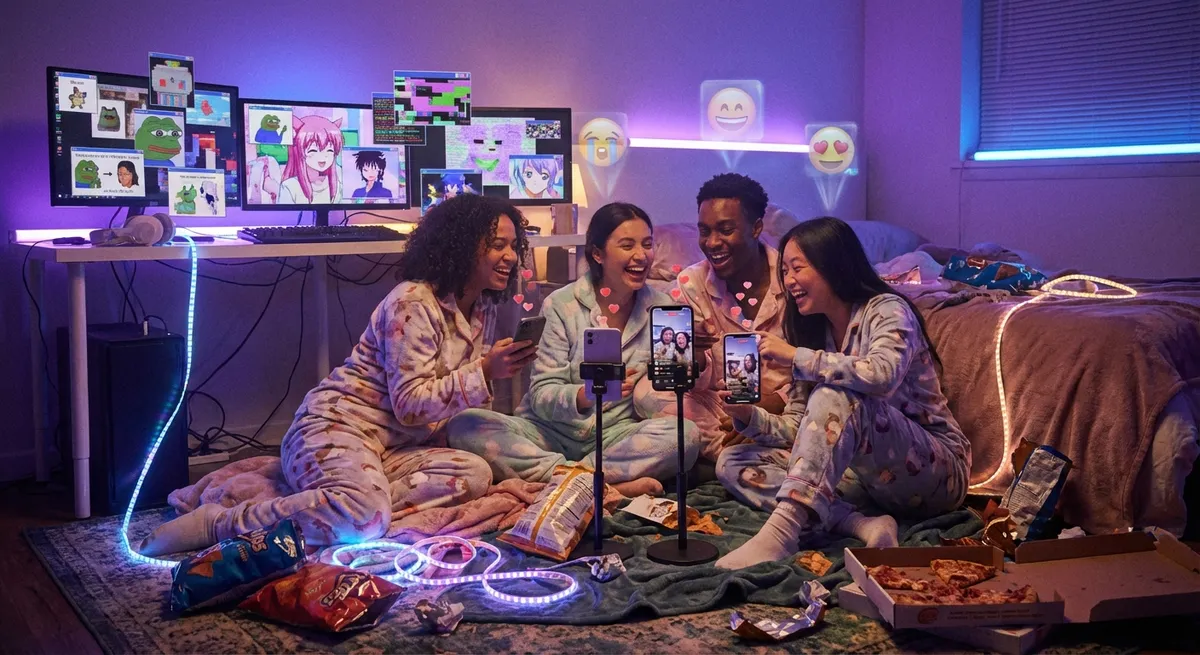
The comments under a viral clip can feel like a live watch party:
This transforms content into interactive culture, not just passive viewing. Comment sections have turned into chaotic digital town squares—and a lot of people scroll them more than the actual video.
5. The “Soft Flex” Era: Showing Off Without Looking Like You’re Showing Off
Nobody wants to look like they’re trying too hard—but everyone wants to look like they’re winning. Enter the soft flex: subtle, casual, “oh this old thing?” style bragging that feels aspirational but unbothered.
You see it in:
- “Day in my life” videos that just happen to include luxury cars, designer bags, or insane apartments
- “I’m so tired” posts filmed on private balconies with postcard views
- “What I ate today” clips that double as restaurant flexes
- “Work from home” vlogs featuring multiple screens, perfect setups, and aesthetic everything
- Aesthetic backgrounds
- Hyper-organized spaces
- Effortlessly put-together outfits
- Subtle product placement of high-end brands
Instead of outright bragging, people build vibes-based status:
The message is: I’m not showing off, I’m just living like this. And because it’s delivered in a soft, relatable package, viewers share it as “inspo” instead of “flex”—even though it’s both.
Conclusion
The internet in 2025 isn’t just about going viral—it’s about surviving the chaos and surfing it with style. Micro-moments come and go in hours. Background content lives with us all day. AI illusions blur reality. Comment sections feel like live shows. And soft flex culture turns everyday posts into aspirational moodboards.
If you want to thrive in this era, don’t just chase trends—watch how people are using them. The real power moves are hidden in how we scroll, comment, fake, flex, and vibe online. The feeds aren’t just changing what we watch—they’re changing how we live.
Sources
- Pew Research Center – Social Media Fact Sheet – Data on how people use major social platforms and how behavior is shifting over time
- MIT Technology Review – Deepfakes and the Infocalypse – Explores the rise of AI-generated media and its impact on trust and online content
- Harvard Business Review – How Social Media Shapes Our Identity – Analysis of how posting styles, flexing, and self-presentation evolve on social platforms
- BBC Future – The Rise of Ambient Media – Discusses “background” and ambient-style content and why viewers gravitate toward it
- Stanford University – The Psychology of Internet Comment Sections – Research on how comments influence perception of content and shape online interaction
Key Takeaway
The most important thing to remember from this article is that this information can change how you think about Internet Trends.