Gen Z isn’t just using the internet—they’re quietly rewriting its rules. Algorithms are confused, brands are scrambling, and feeds are starting to feel less like polished billboards and more like chaotic group chats.
If your For You Page feels unhinged, oddly wholesome, and weirdly educational all at once… that’s not an accident. That’s Gen Z turning the internet into their own main-character movie—with a twist.
Let’s break down five internet shifts that are blowing up feeds right now (and why everyone keeps sharing them).
1. The Rise of the “Side Character Era” (Anti-Main-Character Energy)
The old internet flex was all about being the star: perfect outfits, perfect vacations, perfect routines. Gen Z looked at that and collectively said, “Honestly? I’d rather be the chaotic friend in the background.”
Enter: Side Character Era. Instead of curating a flawless highlight reel, people are posting unfiltered, slightly messy, hilariously honest moments: failed selfies, awkward silences on FaceTime, mid-breakdown iced coffee runs, and “I literally have no idea what I’m doing but here’s my day” vlogs.
It’s not about self-deprecation—it’s about relief. The pressure to be “iconic” all the time is exhausting, so users are bonding over being comfortably average, confused, and in progress. This shift makes content more shareable because it feels like sending a screenshot of your brain to your group chat: chaotic, relatable, and genuinely funny.
Brands and creators who tap into this are winning by leaning into imperfection: bloopers, behind-the-scenes chaos, and “here’s what actually happened” edits are getting more love than over-produced, hyper-polished videos. The internet’s new trend? Being the star by not trying to be the star at all.
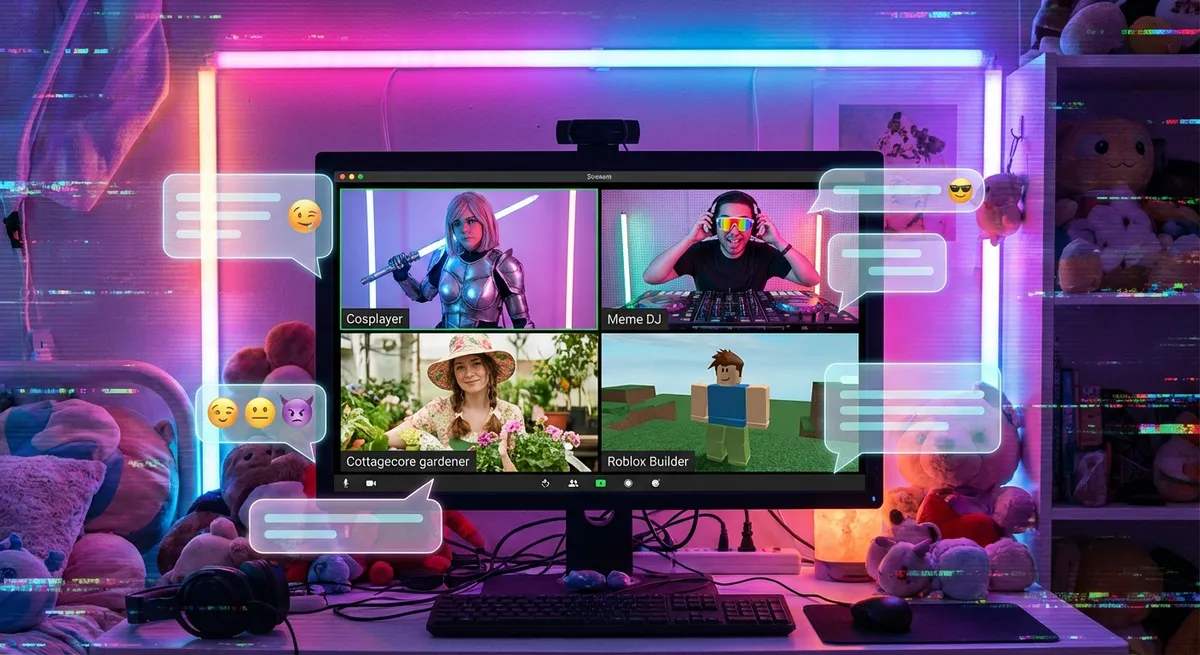
2. Micro-Communities: The Internet Is Turning Into A Million Tiny Clubs
The internet used to feel like one giant hallway where everyone tried to shout the loudest. Now? It feels like a maze of secret rooms—and Gen Z is obsessed with finding the niche corner that feels like home.
Welcome to the age of micro-communities: hyper-specific spaces for oddly specific people. Think: “people who annotate everything,” “indoor girl summer,” “chronically online book club,” “people who rewatch the same 3 shows forever,” or “night-walk enjoyers.”
Platforms are evolving right alongside this. Reddit subcommunities, highly specific TikTok sides (like “cleaning motivation,” “grad school chaos,” or “small business packing orders”), Discord servers, and private group chats are where the real energy lives. These spaces are safer to be unfiltered, and users can fully lean into their weird interests without trying to please everyone.
This micro-club energy makes content more shareable because people love tagging friends with: “Wait, this is literally us” or “You need to be in this corner of the internet.” Instead of chasing mass appeal, creators are going ultra-niche—and blowing up inside those tight circles. Viral now doesn’t always mean “everyone saw it,” it means “the right people won’t stop talking about it.”
3. Chaos With a Purpose: The New Wave of “Snackable Smart” Content
For years, online learning meant long videos and heavy lectures. Gen Z took one look at that and turned it into chaotic TED Talks at 1.25x speed.
Information now comes wrapped in memes, jump cuts, subtitles, reaction duets, and “here’s what nobody tells you about…” hooks. We’re seeing finance explained with Sims, climate change through Minecraft builds, history via messy storytime vlogs, and science broken down in 30-second mini-rants.
This trend works because it respects attention spans without dumbing things down. People want to feel like they’re learning something while scrolling—but it has to be fast, funny, and saveable. “Snackable smart” content spreads like wildfire because it hits three buttons at once:
- “I didn’t know that.”
- “Why did no one teach me this in school?”
- “I’m sending this to three friends right now.”
Creators who can drop real value—facts, tips, frameworks, mindset shifts—inside chaos-coded, meme-ready packaging are becoming the new internet professors. Sharing knowledge is no longer cringe; it’s clout.
4. The Alt-Influencer: Internet Fame Without the Polished Persona
The classic influencer template—perfect skin, perfect home, perfect brand deals—is starting to feel… copy-paste. The new wave of internet famous people doesn’t always look like influencers, and that’s exactly the point.
Enter the alt-influencer: the creator who looks like your chaotic roommate, tired coworker, older sibling, or that one unhinged friend who somehow always has a story. They don’t talk at you—they talk with you. They answer DMs, overshare, show their Ls, and admit when they’re confused too.
These creators win because they feel less like “aspirational icons” and more like internet besties. Their sponsored content hits differently because it sounds like a real recommendation, not a script. Their rants, routines, and random life updates feel so real that people binge-watch them like comfort shows.
Shareability here is emotional. People send these creators’ videos with messages like “This is my real life,” “Why is this me,” or “I feel so seen.” Internet fame is shifting from being admired from a distance to feeling deeply familiar—even weirdly intimate.
5. Real-Time Nostalgia: The Internet Is Archiving the Present in HD
Old-school nostalgia was about looking back years later. Now, the internet has created real-time nostalgia: documenting moments as they happen, knowing future-you will scroll back and feel everything all over again.
Gen Z is filming ultra-specific, low-stakes memories: late-night drives to nowhere, empty campus hallways after finals, the last shift at a boring job, playing games with siblings, roommate dinners in tiny apartments, or just walking home with your headphones in and “that one song” playing. The captions say it all: “POV: you don’t know it yet, but this is a core memory.”
These videos go viral because they make people pause and realize, “Wow, this is what life actually looks like right now.” No huge milestones. Just tiny, ordinary scenes that will hit like a truck in five years. It’s nostalgia in 4K, happening live.
Users share them because they want to freeze similar moments in their own lives. The comments are full of “I didn’t know I needed to see this,” “Why am I crying over a parking lot,” and “I’m saving this to remember this feeling.” The internet isn’t just distracting us anymore—it’s quietly becoming our emotional scrapbook.
Conclusion
The internet’s energy is shifting—from performance to presence, from being “iconic” to being honest, from broadcasting to belonging.
Gen Z isn’t rejecting social media; they’re remixing it. They’re building tiny corners of the internet where it’s safe to be tired, weird, curious, emotionally chaotic, and still figuring it out. Side character eras, micro-communities, snackable smart content, alt-influencers, and real-time nostalgia all point to the same thing:
The new flex isn’t looking perfect online.
It’s being real enough that people see themselves in you—and feel compelled to hit share.
Sources
- Pew Research Center – Teens, Social Media and Technology 2022 - Data on how younger users are shaping and using major platforms
- McKinsey & Company – True Gen: Generation Z and its implications for companies - Analysis of Gen Z values, authenticity, and digital behavior
- MIT Technology Review – The TikTok-ification of Everything - Explores how short-form, high-engagement content is transforming internet culture
- Harvard Business Review – How Gen Z Is Changing the Tech World - Discusses Gen Z expectations around online communities and digital experiences
- BBC Future – Why nostalgia is so powerful in the digital age - Breaks down the psychology behind nostalgia and why it thrives online
Key Takeaway
The most important thing to remember from this article is that this information can change how you think about Internet Trends.