There’s a new kind of internet energy taking over your feed—and no, it’s not just “aesthetic TikTok” or another meme cycle. It’s a whole vibe shift in how people show up online: louder, sharper, more chaotic, but also strangely more honest. Think: group chats going public, niche obsessions going mainstream, and people treating their timelines like live reality shows instead of highlight reels. This isn’t just content—it’s a whole new culture of how we perform, confess, and connect on the internet.
Let’s break down the 5 most shareable, conversation-starting parts of this new Net Gen Alpha energy that your friends will definitely be tagging each other in.
Hyper-Niche Feeds: The Era of “I Only Post About One Weird Thing”
The new flex isn’t having a perfectly curated lifestyle feed—it’s going all-in on something oddly specific and refusing to post anything else. One account is entirely dedicated to rating convenience store snacks. Another? Just videos of anonymous people’s keyboards. Someone else is documenting every single sunset from the same street corner for a year.
This “hyper-niche” wave runs on a simple rule: the more specific, the better. Instead of trying to impress everyone, creators lock in on the tiny overlap of people who are obsessed with one oddly satisfying micro-interest. Platforms like TikTok, YouTube Shorts, and Instagram Reels supercharge this, because their algorithms reward repeatable, recognizable content formats. Once a niche catches, the feed becomes a rabbit hole—viewers binge, comment inside jokes, and feel oddly bonded over something they didn’t even know they cared about five minutes ago.
It feels personal because it is. Hyper-niche feeds let people say, “This tiny corner of the world is mine, and I’m going to document it aggressively.” And the wild part? The internet keeps showing up for it.
Chaos Honesty: Oversharing, But Make It Cinematic
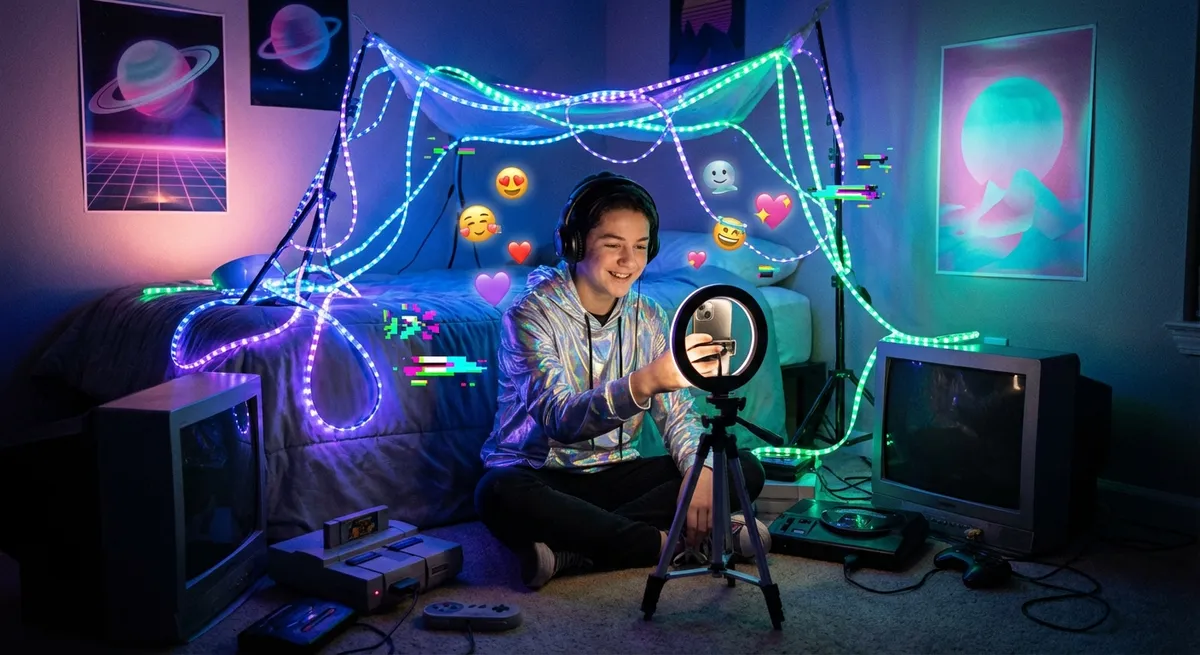
Remember when social media was all filters and pretend perfection? That’s dissolving in real time. The new trend is “chaos honesty”—posting the unpolished, way-too-real parts of life, but with creative flair. It’s crying in the car with neon lighting and a trending audio. It’s turning your worst week into a mini-documentary in three parts. It’s screen-recording your group chat meltdown and editing it like a movie trailer.
This isn’t just venting; it’s performance. People are narrating their lives like main characters in a drama-comedy series, with jump cuts, subtitles, and meme references. Instead of hiding their mess, they’re staging it. Viewers respond with: “Wait, why is this EXACTLY my life?” and suddenly the comment section becomes a group therapy session with jokes, solidarity, and follow requests.
There’s a deeper shift here: audiences are burnt out on fake perfection. They want reality—but stylized reality. Not raw footage, but directed honesty. The internet is becoming a stage where your worst moment might secretly be your most viral content, if you frame it right.
Live-Chat Culture: Turning Every Scroll Into a Massive Group DM
Social media is quietly mutating from “watch and like” into “watch and talk instantly with thousands of strangers.” Lives, premieres, co-watching streams, and communal comment storms are the new hangout spots. People don’t just see content; they experience it simultaneously with others—spamming emojis, asking questions, stitching reactions in real time.
This “live-chat culture” has one goal: kill the feeling of scrolling alone. Whether it’s a spontaneous Q&A, a chaotic game stream, a watch party for a new music video, or someone studying on camera for accountability, the pull is the same: you’re not just a viewer, you’re part of the moment. The chat becomes the real show.
Brands, creators, and everyday users are leaning into this by scheduling live “events,” turning regular posts into premieres, and using polls and comment prompts to keep the energy moving. Even short-form platforms are experimenting with features that feel like group texting at scale. It’s the digital version of yelling at the TV with your friends—except your “friends” are now whoever shows up at the same time as you.
Remix Reality: When Everyday Life Becomes an Ongoing Collab
Another massive shift: nothing exists online as a “finished” moment anymore. Everything is content waiting to be remixed. A stranger posts a tiny clip of their morning walk—three days later, thousands of people have added their own sounds, captions, duets, stitches, edits, and memes on top of it. One person posts a random phrase. It becomes an audio. Then a trend. Then a template. Then a whole mood.
This “remix reality” culture is powered by tools that make editing, captioning, lip-syncing, and repurposing content stupidly easy. Users don’t just consume trends—they upgrade them. They add a plot twist, flip the vibe, or send the original joke into a different genre entirely (romantic, horror, satire, motivational, you name it).
The result: ownership becomes collective. No one really “owns” a trend once it escapes into the wild; the internet as a whole co-writes it. Your job as a creator is less “make something from scratch” and more “jump into the existing stream, but add something no one else has.” The real flex is not going first—it’s remixing the best.
Algorithm Aware: Users Know They’re Being Watched—and They’re Playing Back
The final, underrated trend: people now act like the algorithm is another viewer in the room. Users don’t just post—they post at the algorithm. You’ll see captions like “If this reaches the right side of TikTok…” or “POV: the algorithm finally put this on your FYP at 3am.” People are testing keywords, timing, watch length, and hooks not just for fun, but because they know: attention is a game, and the rules are visible.
This “algorithm awareness” means creators are writing content like mini puzzles for the platform to solve. They’ll start videos mid-sentence, ask questions they answer at the end, or design loops that trick you into rewatching. Thumbnails, sounds, and topics are treated like levers to pull, not random choices. Even casual users are in on it—deleting and reposting flops, experimenting with formats, and openly talking about “pushing this out of my friend bubble.”
Instead of pretending the feed is organic and magical, people are acknowledging the machine behind it—and learning to work with it. The internet is becoming half stage, half science experiment, and everyone’s a low-key strategist now.
Conclusion
The new internet isn’t just about what we post—it’s about how we play. Hyper-niche pages, chaos honesty, live-chat culture, remix reality, and algorithm awareness are all part of one big shift: people are done being passive users. They want to shape the vibe, narrate their own mess, and turn scrolling into a shared, evolving story.
If you’re trying to ride this Net Gen Alpha wave, the move isn’t to copy trends frame-for-frame. It’s to pick your weird corner, tell the truth with style, join the live chaos, remix what you love, and treat the algorithm like a tool—not a mystery. Screens aren’t just windows anymore—they’re stages, labs, and diaries all at once.
Send this to the friend who’s “thinking about posting more this year” and tell them: the internet is wide open. Pick a lane and floor it.
Sources
- Pew Research Center – Social Media Fact Sheet - Data on how different demographics are using social platforms and how habits are shifting over time
- MIT Technology Review – How TikTok’s Algorithm Figures You Out - Explains the recommendation mechanics that power hyper-niche and viral content
- Harvard Business Review – How Social Media Shapes Identity - Explores how online performance, self-presentation, and authenticity trends influence user behavior
- BBC Future – Why We Love Watching Things in Real Time - Looks at the psychology behind live content and shared digital experiences
- NYTimes – The Endless Life Cycle of a TikTok Trend - Breaks down how online audio, formats, and trends are constantly remixed and reimagined
Key Takeaway
The most important thing to remember from this article is that this information can change how you think about Internet Trends.