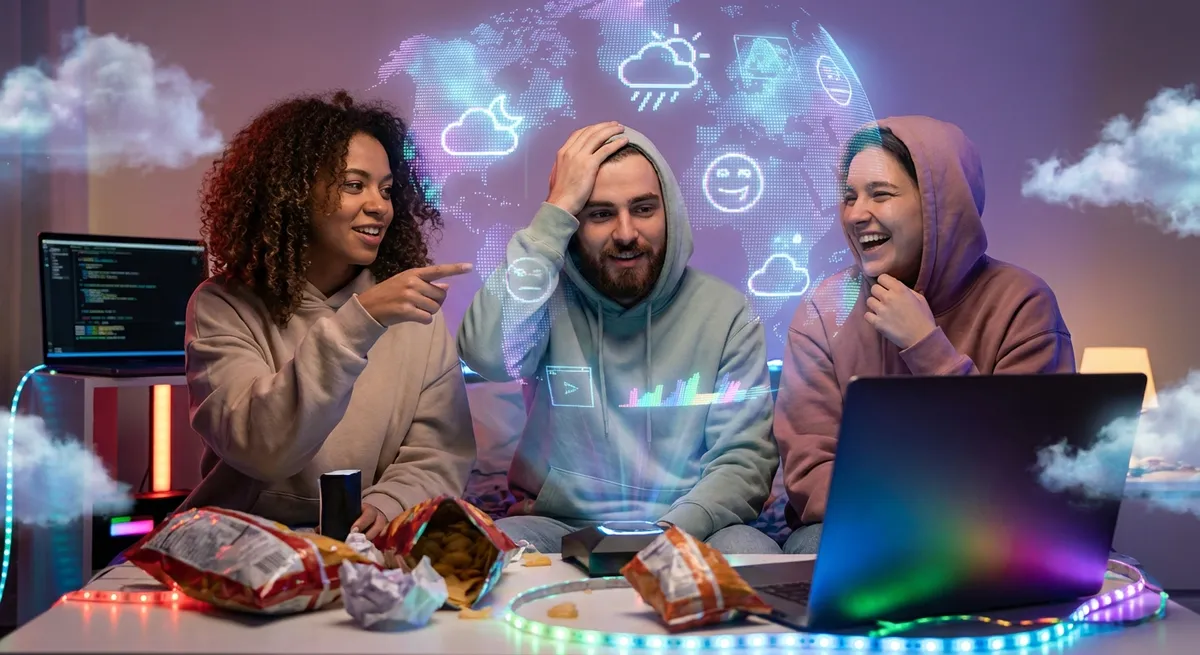
Memes aren’t just jokes anymore—they’re the unofficial weather report of the internet. One minute your feed is sunny with wholesome cat videos, the next it’s total chaos with niche references only 0.1% of the planet gets… and somehow you’re in that 0.1%.
Memes decide what we quote, how we text, and even how we process real-world news. If you feel like you live inside a meme half the time, same. Let’s break down the 5 trending meme vibes shaping how we talk, laugh, and even think online right now.
1. Reaction Memes Are the New Body Language
If you’re not sending reaction memes, are you even communicating?
That one photo of Pedro Pascal eating a sandwich. The “blinking white guy.” Michael Jordan crying. These aren’t just images—they’re emotional shortcuts. Instead of typing “I’m mildly offended but also low-key impressed,” you just drop a meme that says it for you in 0.3 seconds.
Reaction memes work because your brain decodes images faster than text, so they feel instant and satisfying. They also let you be dramatic without fully committing—like saying “I’m dead” with a meme instead of actually explaining why you laughed. Gen Z and Gen Alpha basically speak in JPGs and short clips now, especially in DMs, Discord servers, and group chats.
Expect this to keep evolving into hyper-niche formats: the same template used for sarcasm, grief, joy, and “I can’t believe I just did that” regret—context is everything. You’re not just replying anymore; you’re curating a tiny performance every time you hit send.
2. “Screenshot Culture” Turned Our Feeds Into Meme Scrapbooks
You know the drill: a wild text, an unhinged group chat moment, a cursed dating app bio—screenshot, crop, post, instant meme.
Instead of polished graphics, today’s viral memes often look like receipts: blurry screenshots, messy notes apps, half-cut notifications. It feels raw and real, which is exactly why people share it. Behind the chaos is a big shift: platforms like X, Instagram, and TikTok reward fast, relatable content over “perfect” visuals.
We’re also seeing screenshots turn into ongoing meme series:
- Random “Notes app apology” parodies
- Hilarious “My mom texting like this” compilations
- Fake-but-too-real-looking group chats dramatizing daily life
Screenshot memes are basically the scrapbook of the collective internet brain. They blur the line between private and public, real and dramatized—and that tension is part of why they spread so fast. They feel like you “overheard” the internet talking to itself.
3. Hyper-Specific Memes: So Niche They’re Somehow Universal
There’s a special kind of joy in seeing a meme so specific you think, “How is this about me?” That’s the magic of hyper-specific memes.
Instead of broad jokes like “mood” or “adulting is hard,” we now get stuff like:
- “That one specific anxiety when you send a risky text and see ‘typing…’ for 30 seconds”
- “POV: You said ‘no worries!’ but you’re actually spiraling internally”
- “When the group chat plans something and you’re already rehearsing excuses not to go”
These memes work because the internet has become incredibly good at zooming in on micro-experiences we all secretly share but rarely say out loud. Subreddits, niche TikTok communities, stan Twitter, and oddly specific Instagram pages feed this trend.
The wilder part? Hyper-specific memes are often more shareable than generic ones. People tag friends like, “This is literally you.” The more targeted they feel, the more viral they go—because everyone wants to feel weirdly seen.
4. Meme Audio Is Quietly Running TikTok and Reels
You might not remember who originally said it, but you definitely know the sound. Meme audio runs short-form video culture right now.
One line from a vlog, podcast, or random livestream becomes a sound, then:
- Someone lip-syncs it
- Someone remixes it
- Someone flips it into a skit
- Brands jump in and use it for ads or product jokes
By the time it hits your feed, it’s not just a quote, it’s a full-blown meme language—used for thirst traps, pet videos, gym clips, and unboxing hauls all at once.
Platforms like TikTok even show you trending sounds to use, which basically turns the audio into a template for infinite memes. Your For You page ends up being the same line delivered 100 different ways, and somehow you’re not tired of it yet.
Audio memes blur the line between music, jokes, and formats. That one sound you’re sick of hearing? It probably did millions of views worth of work.
5. Memes Are Becoming the Internet’s Coping Mechanism
Underneath the chaos, a lot of memes are actually doing emotional heavy lifting.
When there’s stressful news, economic anxiety, relationship drama, burnout, or just the usual “what is life” spiral, the first thing many people do is… turn it into a meme. Dark humor, absurdist jokes, and “I laugh so I don’t cry” posts are everywhere—for a reason.
Psychologists have noted that humor can be a legit coping strategy when used in moderation. On the internet, that looks like:
- “We are so back” / “It’s so over” memes reacting to literally everything
- Jokes about job hunting, rent, and student loans that hit a bit too hard
- Collective clowning over situations we can’t personally control
Memes turn overwhelming topics into something small enough to share, laugh at, and process with others. It’s not a fix, but it’s a way of saying, “This is a lot… anyone else?” And when those posts go viral, it proves people aren’t spiraling alone.
Just remember: it’s valid to both meme about it and log off, touch grass, or talk it out for real.
Conclusion
Memes used to be just funny pictures on forums. Now they’re a whole language, emotional outlet, and culture engine—with reaction images as our facial expressions, screenshots as our diaries, hyper-specific jokes as therapy, audio clips as our catchphrases, and dark humor as our shield.
You don’t just scroll memes anymore—you live in them.
Screenshot your favorite line, tag that friend who “is this meme,” or drop this link in the group chat that communicates exclusively in cursed images. The forecast is clear: 100% chance of memes, all week.
Sources
- Pew Research Center – Internet & Technology: “Memes, Videos, GIFs and More” – Data on how people use visual content like memes and GIFs in daily communication
- BBC Future – Why do we share memes? – Explores the psychology and social reasons behind meme sharing
- MIT Technology Review – How memes got weaponized – Background on the evolution and power of memes in online culture
- American Psychological Association – Is laughter the best medicine? – Research-based look at humor as a coping mechanism
- TikTok Newsroom – Inside the 2023 TikTok Trends – Official breakdown of trending sounds, formats, and content styles on TikTok
Key Takeaway
The most important thing to remember from this article is that this information can change how you think about Memes.