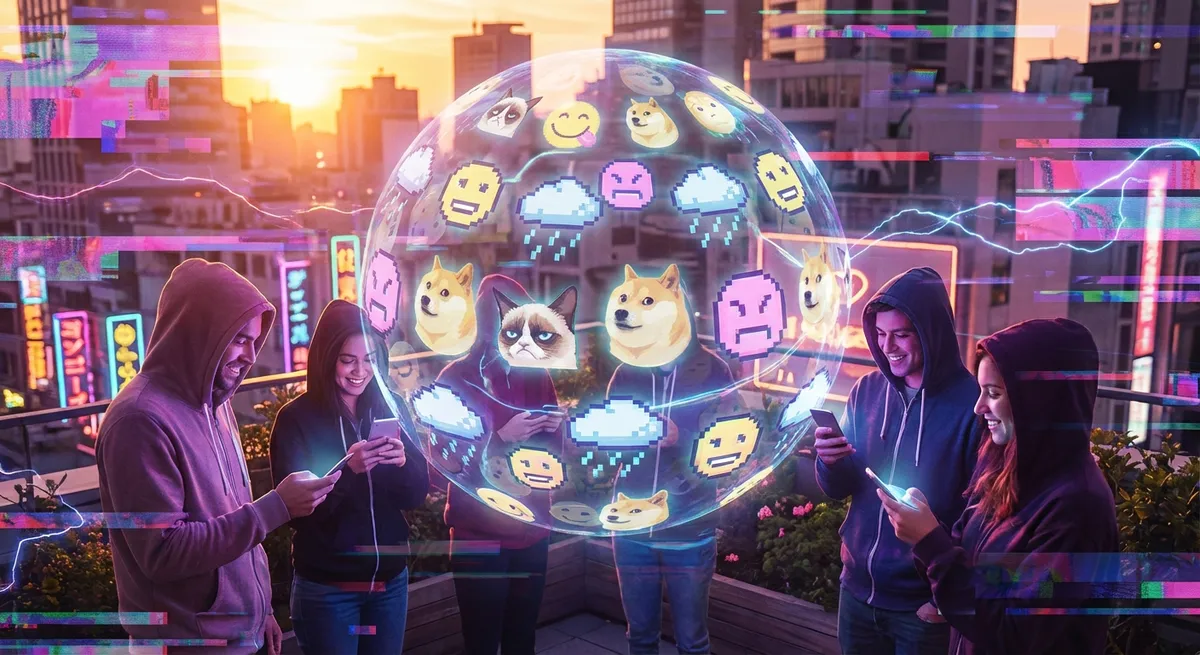
Memes aren’t just throwaway jokes anymore—they’re the internet’s mood ring. Every time your feed explodes with the same template, sound, or cursed screenshot, you’re basically watching a global group chat react to life in real time. From niche fandom drama to worldwide news, memes have become the fastest way to say, “We’re all feeling this… right?”
Let’s break down how today’s meme culture works like emotional weather—five trending dynamics that explain why some jokes die in a day while others become a whole cultural season.
1. Reaction Memes Are the New Emotional Language
We used to type out “I’m dead” or “I cannot handle this.” Now we just drop one image: a screaming hamster, Pedro Pascal crying-laughing, or that kid squinting at a computer screen. Reaction memes have turned our emotional lives into a visual language that’s faster than typing and way more dramatic.
These memes work because they’re plug-and-play. One template, infinite feelings. The same crying face can mean “this show finale ruined me,” “my bank account after brunch,” or “me when my alarm goes off.” Different captions, same vibe.
They’re also super shareable in group chats, comments, and stories—meaning one good reaction meme doesn’t just go viral once; it quietly lives forever as emotional shorthand. When a new reaction format drops, it spreads fast because everyone wants their version of the same feeling. It’s not just about being funny; it’s about being instantly understood without saying a word.
2. “We’re All In This Together” Memes Hit Hardest
Some memes go viral not because they’re the cleverest, but because they scream: “Oh wait, we’re all suffering through this?” Think jokes about being permanently tired, zoom fatigue, rent prices, student loans, or trying to eat healthy when your soul just wants fries. These jokes feel less like content and more like group therapy.
When people share these memes, they’re low‑key saying, “Please tell me I’m not alone in this chaos.” And the comments prove it: thousands of “THIS,” “too real,” and “why is this so accurate.” That’s the secret—relatability becomes a bonding ritual.
These memes also adapt fast to current events. New policy? New price hike? New app feature nobody wanted? Expect the meme machine to spin up in hours. Memes become the collective eye-roll, the coping mechanism, and the unofficial commentary rolled into one. It’s emotional crowd-sourcing with punchlines.
3. Audio Memes Rule: Sounds Are the New Templates
If image memes are the captions of the internet, audio memes are the hooks. One sound on TikTok or Reels—whether it’s a movie quote, a random scream, a sped-up song, or someone’s chaotic rant—can become the backbone of hundreds of thousands of videos overnight.
What makes audio memes explosive is how they invite creativity. The same 8-second sound can be:
- A POV of your pet being dramatic
- A reenactment of your toxic relationship with your alarm
- A fake trailer for “my motivation vs my procrastination”
Creators don’t need to be expert editors; they just need a funny idea that fits the beat. And people watching can instantly recognize the vibe from the audio alone. You don’t even have to look up—if you hear a certain sound, you know the joke format before you see it.
This audio-first meme culture makes trends more immersive and addictive. You’re not just seeing a joke—you’re hearing it on loop, across videos, across platforms, until it’s permanently living rent-free in your brain.
4. Hyper‑Niche Memes Turn Tiny Fandoms Into Loud Cultures
Once upon a time, memes had to be broad to spread. Now? The most chaotic, hyper‑specific memes can go insanely viral within a micro‑community. There are memes only nurses get. Only gamers get. Only K‑pop stans get. Only grad students in one specific field get. And those are some of the loudest, most dedicated sharers on the internet.
These ultra‑niche memes feel like a secret handshake. If you understand the reference, you’re instantly “one of us.” That sense of insider status makes people more likely to tag friends, repost, and build entire pages around that one niche.
What’s wild is how often niche memes escape their original circle and enter the mainstream. A screenshot from some obscure show or a line from a random livestream can become the meme of the week. Internet culture is always mining small corners for its next big thing—so the weirdest, deepest niche today might be tomorrow’s global in-joke.
5. Meme Lifespans Are Shorter—But The “Core Feelings” Never Die
Trends move so fast now that a meme can go from “everyone is posting this” to “please never use this again” in a matter of days. By the time brands discover a meme, the internet has already quietly moved on. But here’s the twist: while the templates change, the feelings almost never do.
Every year, we recycle the same emotional categories with new paint jobs:
- “I’m tired of adulting”
- “My pet owns my entire life”
- “I have social anxiety but also FOMO”
- “Me vs my to-do list”
- “The world is on fire but I still have to answer emails”
New format, same core mood. That’s why memes from 10 years ago still feel weirdly familiar—we’re all reacting to slightly updated versions of the same human problems. The internet just keeps finding fresher, funnier ways to package the same existential meltdown.
So while yes, the specific meme you’re obsessed with right now might be “cringe” in three weeks, chances are the emotional slot it filled will get replaced by a newer, hotter, slightly shinier version. The content changes. The feelings stay trending.
Conclusion
Memes aren’t background noise anymore—they’re a live feed of what the internet is thinking right now. Reaction pics as emotional subtitles. “We’re all suffering together” jokes as digital group hugs. Audio memes as shared brainworms. Niche memes as fandom ID cards. Fast‑dying formats built on never‑dying feelings.
If you want to understand the culture, don’t just scroll past the jokes—study them. Memes are how the internet laughs, vents, protests, flirts, and panics… all at once.
And the next time you share a meme that hits a little too close to home, remember: you’re not just posting content—you’re checking in with the global group chat and saying, “Yeah… same.”
Sources
- Pew Research Center – Teens, Social Media and Technology - Data on how young people use social platforms and consume digital culture
- MIT Technology Review – How memes got weaponized - Explores the cultural and political power of memes online
- BBC – The secret rules of internet humour - Breaks down how meme culture shapes modern humor and communication
- The New York Times – TikTok and the Evolution of Viral Content - Looks at how sounds and audio clips become viral templates on TikTok
- Harvard University – The Psychology of Social Sharing - Discusses why people share content and how it connects to identity and emotion
Key Takeaway
The most important thing to remember from this article is that this information can change how you think about Memes.