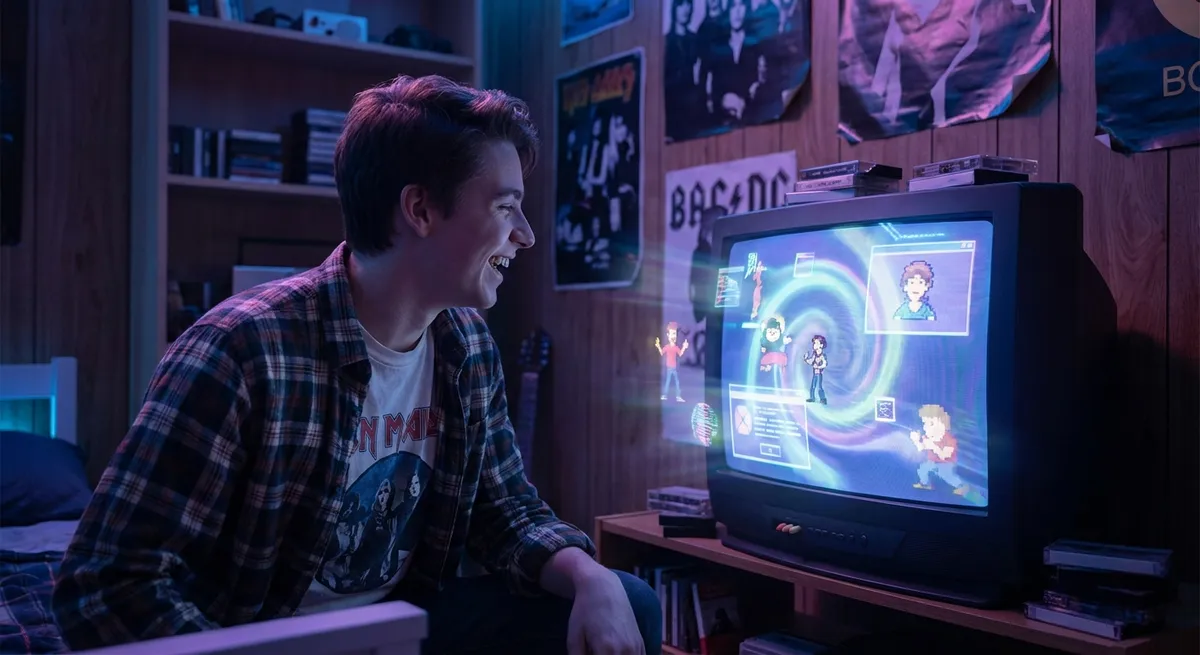
Memes don’t die—they respawn with better lighting, chaotic captions, and a soundtrack that makes zero sense but absolutely slaps. The internet has quietly slipped into a meme time warp, where old formats, ancient screenshots, and forgotten reaction images are getting reborn as the loudest content on your feed.
If you’ve ever thought, “Wait, didn’t we meme this in 2016?” you’re not crazy—the culture just hit replay. Let’s break down how meme nostalgia is running the internet right now and why it’s the most shareable trend on your timeline.
The Glow-Up of Old Formats
Remember Impact font, top-and-bottom text, and blurry screenshots? The stuff we used back when Wi-Fi screamed if you opened three tabs? Those “ancient” meme formats are back—and they’re finally in on the joke.
Creators are intentionally using low-res images, crusty fonts, and clunky layouts to give their memes a throwback feel. It’s part irony, part nostalgia: the worse it looks, the more it hits. You’ll see people using old-school rage comic style, 2010 reaction faces, or classic “Advice Animal” templates—but now they’re captioned with hyper-specific, painfully relatable 2025 problems.
The magic: it makes everyone feel like an internet OG while still feeling brand new. That mix of familiarity and novelty is perfect for shares, quote tweets, and reposts across platforms.
Reaction Faces Are the New Meme Currency
If memes are the language of the internet, reaction faces are the punctuation marks—and the old ones are having their renaissance moment. Screenshots from shows like The Office, SpongeBob, Keeping Up With the Kardashians, and old YouTube clips are getting clipped, zoomed, and remixed into fresh emotional shorthand.
Instead of writing “I’m stressed,” people send the same three tired reaction faces from 2013—but now with modern captions like “Me checking my screen time after saying I’d be ‘productive this year.’” We’ve collectively decided that certain faces just are specific feelings online.
What’s trending hard right now is layering: users pile multiple reaction faces into one meme, like a timeline of emotions in a single post. That emotional stack makes it hyper-shareable—everyone can see themselves somewhere in that spiral from “chill” to “full meltdown.”
Audio + Caption Memes Are Creating Turbo Nostalgia
It used to be image first, caption second. Now, the most viral memes are audio-driven clips with captions doing half the comedy. An old quote, soundbite, or song becomes the backbone—and people pile on modern visuals or text to twist its meaning.
You’ll see:
- Retro songs from the 2000s slapped over ultra-modern chaos
- Movie lines from the ’90s captioned with “me in 2025 when…” setups
- Vintage interview clips synced to painfully current situations
The trend that’s exploding: pairing “serious” or emotional audio with absolutely unserious visuals or subtitles. That contrast is comedic gold and ridiculously rewatchable. And because many of these sounds come from older media, the nostalgia factor makes it feel like a generational inside joke.
Hyper-Specific Relatability Is the New Inside Joke
Old memes were broad: “When you’re tired.” Now it’s “When it’s 2:37 a.m., you’ve doomscrolled for 4 hours, your phone is at 3%, and you just remembered that email you didn’t send.” The rise of hyper-specific, niche memes is giving everyone a weirdly accurate mirror—and that’s exactly why they go viral.
Memes today feel like they’re reading your diary. People remix old templates—with familiar faces, screenshots, or formats—but caption them with oddly detailed micro-moments. It makes users think, “How is this so exactly me?” and that’s the moment they hit share.
This trend also fuels “micro-communities” of people bonding over super-specific experiences—remote workers, students, night-shift grinders, gamers, binge-watchers—each claiming their own version of the meme. One format, thousands of tiny, hyper-relatable spins.
Remix Culture Is Turning Every Meme Into a Franchise
What used to be “one meme, one joke” is now “one meme, infinite seasons and spin-offs.” A single iconic image, line, or clip can run for weeks or even months because the internet refuses to let it rest. Old memes come back as templates, then get recaptioned for every scenario imaginable.
What’s trending hardest is chain remixes:
- One creator posts the original joke
- Another stitches or duets it with their twist
- A third adds a layer (new audio, new caption, split-screen)
- Suddenly there’s a whole meme universe around one tiny idea
This “franchise” effect makes memes feel more like communal projects than one-off posts. People don’t just share them—they participate. That co-creation energy is what keeps certain formats alive way past their expiration date and pulls older memes back into the spotlight with fresh momentum.
Conclusion
We’re living in the meme multiverse where nothing truly disappears—it just respawns with a better caption and a more chaotic context. Old formats, familiar faces, nostalgic sounds, way-too-specific scenarios, and endless remixes are driving a time-warped meme wave that’s equal parts throwback and brand new.
If you want to ride it, don’t just chase the latest format—dig into the past, dust off an old template, over-share a hyper-specific moment, and let the internet do what it does best: remix your joke into something even wilder.
Sources
- Know Your Meme - Comprehensive archive and history of meme formats, origins, and evolutions
- Pew Research Center – Social Media & Tech Use - Data on how people use social platforms and engage with online content
- BBC Future: How Memes Became the Language of the Internet - Explores cultural impact and spread of memes across platforms
- MIT Technology Review – The Secret Life of Memes - Analysis of how meme culture evolves, spreads, and influences online behavior
- The Atlantic – The Meaning of Memes - Context on memes as modern communication and shared cultural references
Key Takeaway
The most important thing to remember from this article is that this information can change how you think about Memes.