Memes don’t die anymore—they respawn. That picture you laughed at in 2016? It’s probably back in your feed right now wearing a new caption, a new font, and 10x the chaos. We’re living in the age of meme reboots, where the internet takes old formats, slaps on fresh context, and turns nostalgia into engagement gold. Let’s break down the remix era of meme culture—and why your feed is suddenly starting to feel like a hilarious déjà vu.
Why Meme “Recyclables” Hit Harder Than New Jokes
Here’s the wild thing: the memes that travel the farthest lately often aren’t brand new—they’re glow-ups of formats we’ve seen before. That “guy staring at another girl” meme? It started as a stock photo, then became a relationship meme, then a political meme, then a productivity meme, and now it’s a whole meme archetype.
Our brains love patterns, so when we recognize a format, we’re already halfway in on the joke. You don’t need the backstory, you just need the twist. That familiarity makes people more likely to like, comment, and—most importantly—share. The reboot formula is simple: take an old meme template, add hyper-current context (AI panic, niche fandom drama, oddly specific daily struggles), and you’ve got a format that feels both nostalgic and new-school.
The “Hyper-Specific Relatable” Meme Wave
General relatability is out; painfully specific is in. Memes used to say, “When you’re tired.” Now they say, “When you reopen the same app you just closed because your brain is running on 3 pixels of energy.” The more oddly specific the scenario, the harder it hits—and the funnier it feels to share with people who “get it.”
Creators are using text-heavy screenshots, tweet crops, and low-effort Canva edits to turn niche experiences into viral screenshots: ultra-specific astrology takes, micro-niche job struggles, regional jokes, or hyper-personal chaos like “POV: you said ‘no worries if not’ and actually did worry.” These memes travel fast because they tag people’s entire personality in one image. Sharing them becomes a subtle way of saying, “This is literally me, but make it aesthetic.”
Low-Res, High-Chaos: The Anti-Polished Meme Aesthetic
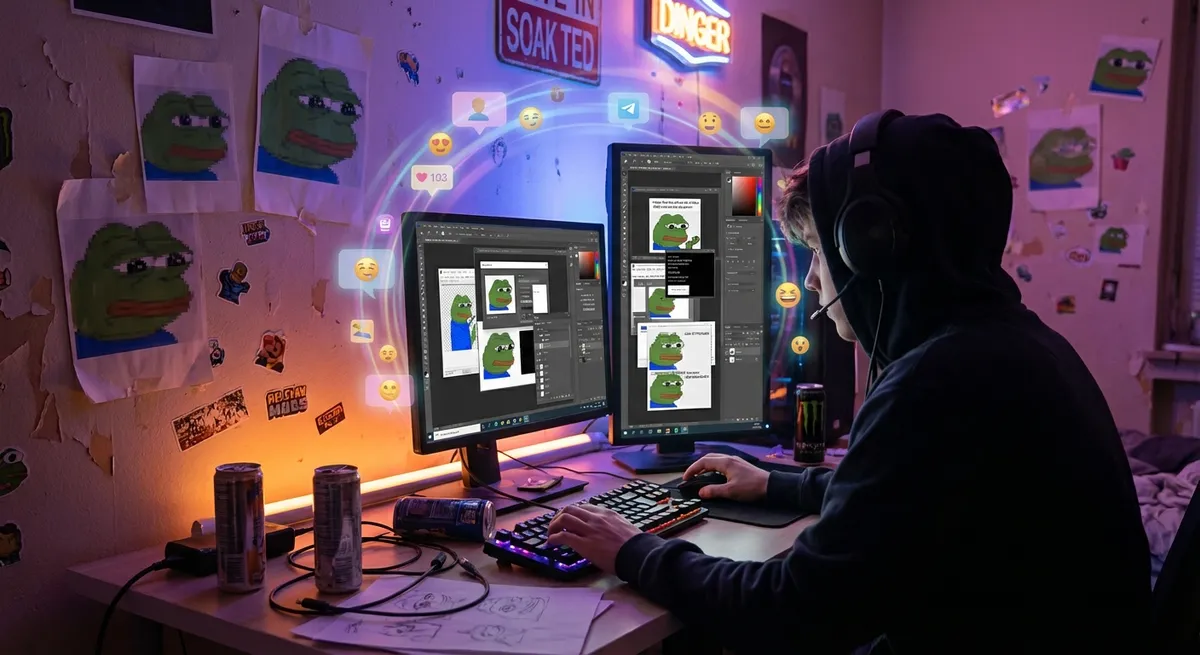
Your feed might be full of cinematic content, but memes? They’re thriving in the low-res gutter—and that’s the point. Blurry screenshots, cursed crops, unhinged filters, and that classic “saved from WhatsApp 47 times” quality give memes their own rebellion against perfectly curated content. The worse the quality, the more “internet-native” it feels.
This scrappy vibe signals authenticity and speed. It looks like something made in 30 seconds at 2 a.m.—because often it was. That energy travels: people trust memes that look like they came from group chats, not brand decks. Even big brands are leaning into this by faking screenshot memes, using chaotic fonts, or mimicking fan-made posts. The message is clear: if it’s too clean, it feels like an ad; if it’s a little unhinged, it feels like culture.
Screenshot Culture: Memes That Look Like Your Phone
One of the biggest meme moves right now? Making content that looks exactly like what people already see on their lock screen. Think fake text threads, cropped Notes app confessions, Google search bars with chaotic queries, or TikTok comment section screenshots promoted to main-character status.
These formats work because they feel sneaky and intimate—like you’re getting a peek into someone else’s phone. They also tap into real habits: doomscrolling through comments, lurking in group chats, saving random notes you’d never show anyone. Turning those private behaviors into public memes makes the audience feel seen and lets them share without oversharing. It’s not “this is my life,” it’s “haha, totally not me… unless…”
Crossover Chaos: When Fandoms and Formats Collide
The most shareable memes right now don’t stay in one lane—they smash worlds together. Anime frames with corporate life captions. Sports screenshots used for relationship drama. Historical paintings turned into “soft launch” or “hard launch” scenarios. This crossover chaos is basically meme multiverse energy: one format, infinite dimensions.
Fandoms, stan Twitter, and niche communities have mastered this. They take a template everyone knows and remix it with their own inside jokes, turning general internet culture into hyper-targeted in-jokes. That’s why the same meme template might be blowing up in K‑pop circles, then reappearing on finance TikTok, then resurfacing in booktok with totally different meanings. Each community bends the format to its own reality—and that remixability is exactly what keeps the meme alive.
Conclusion
We’re in meme reboot season, and there’s no finale in sight. Old templates are coming back with better captions, low-effort edits are outperforming studio-level content, and the most shareable memes feel like they were stolen straight from your notifications. If you want to ride the wave—not just scroll past it—pay attention to three things: recycled formats, oddly specific relatability, and chaotic, phone-native visuals.
The internet isn’t just making new jokes anymore; it’s remixing its entire past in real time. And if history keeps looping like this, your 2012 meme folder might be one clever caption away from a 2026 comeback.
Sources
- [Know Your Meme](https://knowyourmeme.com) - Comprehensive database tracking the origin, evolution, and spread of meme formats and trends
- [Pew Research Center – Teens, Social Media and Technology](https://www.pewresearch.org/internet/2023/11/16/teens-social-media-and-technology-2023/) - Data on how younger users engage with social platforms where many meme trends start
- [MIT Technology Review – How memes got weaponized](https://www.technologyreview.com/2018/08/24/140948/how-memes-got-weaponized-a-short-history/) - Background on the cultural and social power of memes online
- [The Atlantic – The Internet Meme Is Evolving](https://www.theatlantic.com/technology/archive/2018/11/the-evolution-of-the-internet-meme/575211/) - Explores how meme formats mutate and recycle over time
- [Harvard Business Review – What Marketers Can Learn From the World of Memes](https://hbr.org/2021/09/what-marketers-can-learn-from-the-world-of-memes) - Insight into why certain meme styles and formats generate high engagement and sharing
Key Takeaway
The most important thing to remember from this article is that this information can change how you think about Memes.