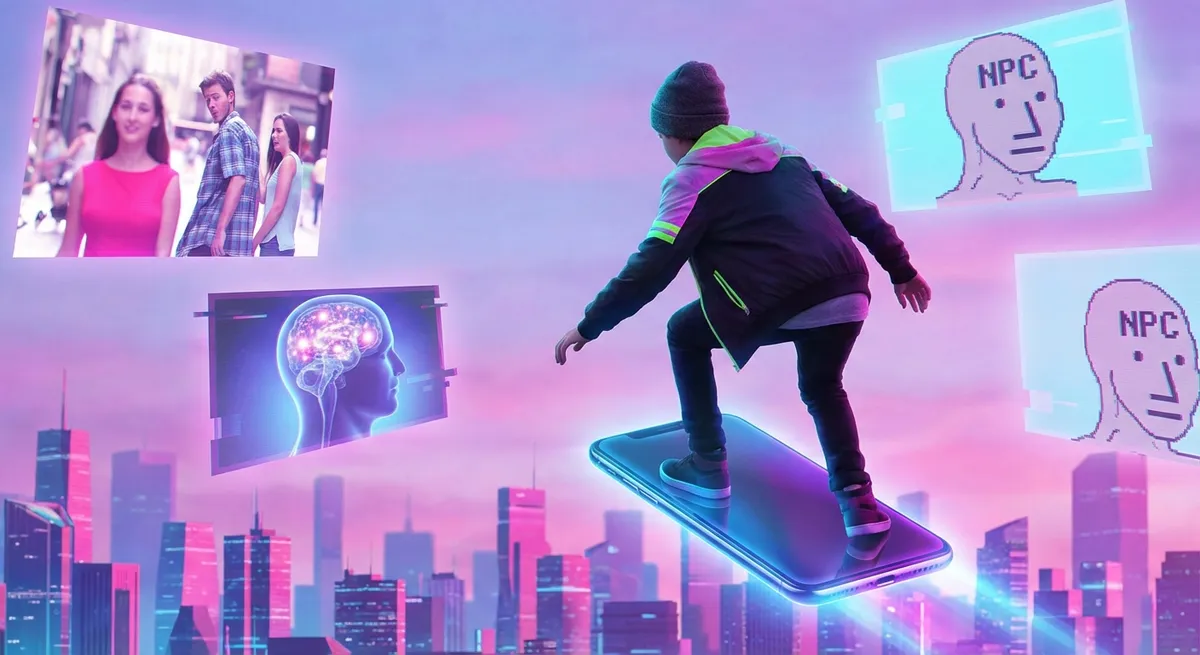
Memes don’t just live on your feed anymore—they shape your feed. One swipe you’re in “delulu” relationship TikTok, the next you’re deep in NPC livestream memes, and three scrolls later you’re suddenly emotionally invested in a capybara sitting in a hot tub. We’re not just consuming jokes—we’re hopping across tiny internet universes 24/7.
This is your cheat sheet to the meme multiverse right now: the vibes, the formats, and the five trending shifts that are quietly rewriting how memes work—and how you use them.
The Era of Hyper‑Niche Meme Worlds
The internet used to have one “main meme” at a time. Now? Every micro‑community is running its own cinematic universe of inside jokes.
You’ve got fan edits for shows you’ve never watched, “core” aesthetics for moods you didn’t know you had, and ultra‑specific memes like “corporate cringe,” “therapy speak,” or “male living space” that feel like they’re subtweeting your entire life. Instead of one big viral moment, there are hundreds of mini‑virals happening at once.
Hyper‑niche memes work because they make people feel seen in oddly specific ways. They target ultra‑tiny experiences—like the feeling of closing your laptop after pretending to be productive for three hours—and turn them into communal events. On TikTok and X (Twitter), this is powered by algorithms learning your micro‑obsessions frighteningly fast, so your “For You” page becomes a custom meme universe nobody else fully understands.
Translation: if your group chat memes don’t make sense to anyone outside the chat, you’re doing the internet right.
Templates Are Out, Remix Culture Is In
Old‑school memes were all about static templates: top text, bottom text, Impact font, done. Today’s meme energy is pure remix culture—videos stitched into videos, audios ripped from interviews, screenshots layered with chaotic captions.
One sound clip can spawn thousands of interpretations. A random quote from a podcast becomes the backdrop for outfit checks, pet chaos, and relationship drama. People aren’t just sharing memes; they’re modding them like gamers mod a favorite game. Every repost adds a twist: new context, new punchline, new target.
This remix loop makes memes spread faster and last longer. Instead of dying out, they keep evolving—shifting from “funny” to “relatable” to “ironic about the people still using it.” If a meme format feels “over,” give it a week—someone will flip it into something fresh again.
The move now is to think less “Can I share this?” and more “How can I remix this so it feels like mine?”
Reaction Memes Are the New Emotional Language
If you’ve ever replied to a serious text with a totally unserious meme and somehow still communicated exactly how you feel—you already speak fluent reaction meme.
Memes have become emotional shortcuts. Instead of typing “I’m tired but I’ll survive,” you drop a photo of a raccoon holding a Starbucks cup. Instead of saying “I’m in danger but it’s kind of funny,” you send that shaky dog video. These aren’t just jokes—they’re micro‑emotions delivered in 0.3 seconds.
On platforms like Instagram, TikTok, and Discord, reaction memes function like emotional emojis with backstory. The same image can mean “I’m devastated,” “I’m dramatically overreacting,” or “I’m fine but I want attention”—and your friends instantly know which one based on context.
The new flex: building a personal “reaction meme library” that matches your full personality range—from “feral at 2 a.m.” to “Monday 9 a.m. pretending everything is fine.” Screenshots, saved audios, and favorite clips are basically your emotional toolkit now.
Memes as Social Armor: Laughing Instead of Crashing
Modern life is chaotic, expensive, and low‑key exhausting—so the internet did what it always does: turned it into content. Memes about burnout, rent, political drama, and mental health struggles are everywhere, and they’re weirdly comforting.
This isn’t just “dark humor for the sake of it.” It’s social armor. Turning stress into memes gives people a way to feel less alone while still keeping it light enough to share publicly. You can’t always say, “I’m overwhelmed by everything happening in the world,” but you can repost a meme of a cartoon dog calmly sipping coffee in a burning room.
Researchers and mental health experts have actually noticed that memes can sometimes help people process heavy topics—especially when they see others laughing at the same chaotic realities. It’s not a cure, but it’s a coping mechanism, a way of saying, “Are we all seeing this? Because this is wild.”
When you forward a meme about “being on your last three brain cells,” you’re not just sharing a joke—you’re sending out a flare: “Same?” And when everyone replies “LOL,” that’s a tiny, low‑pressure version of support.
The New Status Symbol: Meme Timing, Not Meme Knowledge
Knowing about a meme isn’t cool anymore. Being early to a meme? That’s the currency.
The new social status symbol is timing. You want to be the friend who drops a meme in the group chat right before it invades everyone’s For You Page, not the one using it three weeks after brands start posting it. Early adopters are the unofficial trend scouts of every friend group—and yes, people notice.
This is why platforms like TikTok feel like speed‑running the internet. A sound goes from niche to everywhere to cringe in what feels like 48 hours. The lifecycle is so fast that timing becomes a flex: “Oh, I was using that audio when it only had 3k videos.”
But here’s the twist: reviving a “dead” meme at the right moment can hit just as hard. Using an old Vine quote or a resurrected reaction image is like dropping a nostalgic inside joke. Peak meme timing in 2024 isn’t just about being first—it’s about sensing when the moment is emotionally right.
So the real game isn’t just knowing the memes. It’s playing the timing like a DJ.
Conclusion
Memes used to be something you looked at. Now they’re something you live inside. They’re your emotional language, your social armor, your group chat icebreakers, your tiny acts of rebellion, and your favorite way to say, “I get you” without writing an essay.
The meme multiverse is messy, fast, and constantly mutating—but that’s the magic. You don’t have to understand every reference on your feed. You just have to find the corners of the internet where the jokes feel like they were written directly about you.
Save the ones that hit. Remix the ones that almost do. And when you see a meme that feels like it crawled out of your brain? Share it. That’s how the next universe starts.
Sources
- Pew Research Center – Teens, Social Media and Technology – Data on how young users interact with social platforms and online content
- BBC Future – Why memes matter – Explores the cultural impact and evolution of memes
- MIT Technology Review – How TikTok became a global platform for memes – Analysis of TikTok’s role in amplifying and accelerating meme culture
- American Psychological Association – The digital environment and mental health – Discusses how online interaction and digital content (including humor) affect mental health and coping
- The New York Times – How memes got weaponized – Looks at how memes evolved into powerful tools for communication and influence
Key Takeaway
The most important thing to remember from this article is that this information can change how you think about Memes.