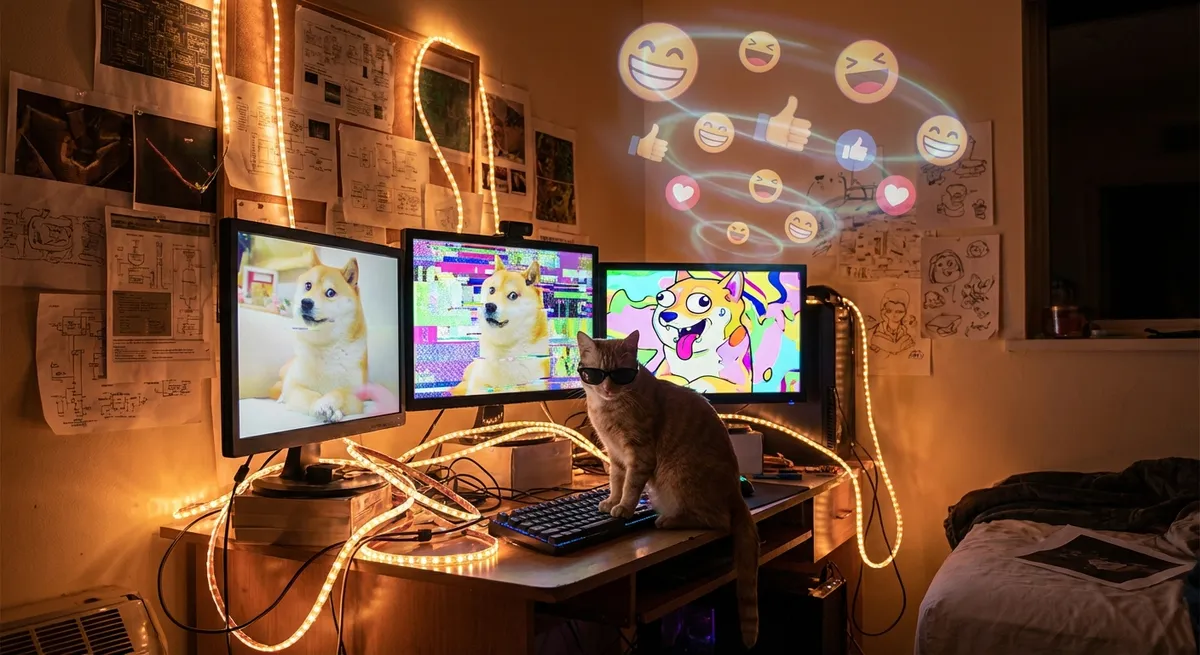
Memes aren’t just punchlines anymore—they’re entire universes. One format drops on a random Tuesday, and by Friday it’s been screenshot, remixed, duetted, stitched, AI-flipped, and turned into an inside joke in corners of the internet that don’t even speak the same language. Welcome to the Meme Multiverse, where one idea doesn’t just go viral—it spawns infinite versions of itself.
Let’s dive into the wild ways memes are mutating right now: from AI-powered glow-ups to hyper-local chaos that only 300 people on Earth truly “get.” These are the trends your feed is quietly obsessed with—and the ones you’ll want to send to the group chat immediately.
1. The “Same Meme, New Timeline” Effect
You’ve seen it: a meme that was huge years ago suddenly reappears on your feed, but it feels… different. That’s the “Same Meme, New Timeline” effect—where old templates keep respawning with brand-new context.
Today, memes don’t really die; they go into hibernation until reality serves up a perfect moment. A reaction GIF from 2013 becomes the face of a 2026 scandal. A forgotten image macro gets resurrected with a hyper-specific caption that only people who lived through a certain app update truly understand.
This trend hits because nostalgia + novelty is a cheat code. We recognize the format instantly, so our brains do zero work to “learn” it—and all the energy goes into the shock of the new caption. That fast recognition is exactly what makes people smash share, repost, and quote-tweet. It’s like the internet saying, “Remember this? Now look how cursed it’s become.”
2. AI-Remixed Memes Are the New Fan Edits
AI didn’t just enter meme culture—it kicked the door down and started rearranging the furniture. Tools that used to feel like sci-fi are now one tap away in mobile apps, and meme creators are using them like filters.
We’re seeing:
- Face-swapped reaction memes featuring celebrities, fictional characters, or even your own face dropped into iconic images
- AI-extended screenshots that show “what’s outside the frame” of legendary memes, turning a single panel into a whole cinematic universe
- Text-to-image joke prompts where people type chaotic ideas (“a raccoon CEO firing the moon”) and let AI spit out cursed perfection
What makes AI-driven memes so shareable is the “wait… this can’t be real” factor. Even when everyone knows it’s AI, the blurred line between reality and generated chaos gives each meme a double punchline: the joke itself, and the fact that tech is now ridiculous enough to make it happen in seconds.
3. Hyper-Local Chaos: Memes Only 300 People Understand
Not every meme aims for planet-wide virality—some are designed to hit like a jump scare for a tiny, specific crowd. That’s the wave of hyper-local chaos: memes so niche that if you get them, you really get them.
Think:
- Inside jokes about one apartment building’s broken elevator
- Memes about a specific university dining hall’s cursed food combinations
- Screenshots roasting the vibes of a tiny Discord server or one very particular bus route
These memes often live in private stories, closed groups, small subreddits, or friends-only feeds. But when they leak out, the rest of the internet watches from the sidelines like, “I don’t get it, but I support the drama.”
Hyper-local memes thrive because they feel like digital campfire stories—if you’re in the circle, it’s legendary. If you’re not, you still sense the energy. And let’s be honest: nothing makes you feel more online than laughing at a meme that half the planet would scroll past in confusion.
4. Screenshot Soap Operas: Turning Captures Into Storylines
Screenshots used to be receipts. Now they’re storyboards. People are building entire meme “series” out of screencaps—turning chat logs, comment threads, dating app DMs, and random app interfaces into ongoing sagas.
Some of the hottest formats:
- Episode-style dumps: “Previously, on My Group Chat…” followed by a cascade of unhinged screenshots
- Meme comics: three or four-panel stories built entirely from rearranged screenshots and captions
- Fake-but-feels-real conversations: staged DMs that blur the line between reality show energy and internet theater
This trend works because it combines two addicting things: drama and familiarity. We all recognize the apps, the fonts, the notification bubbles—so when things go off the rails, it feels like it could’ve happened on our phones. That “this could easily be me” vibe makes people instantly hit share, tag friends, and quote it with “you would 100% do this.”
5. Meme Mashups: When Two Jokes Collide and Go Nuclear
The internet used to run on single-format memes. Now? It’s all mashups. Creators are constantly smashing two (or more) formats together—audio from one trend, visual from another, caption style from a third—and the results are pure chaos in the best way.
Some iconic mixes you’ve likely seen:
- A dead-serious inspirational quote slapped onto an absolutely ridiculous reaction image
- Viral TikTok sounds paired with completely unrelated video clips, flipping the original meaning on its head
- Old-school impact font memes updated with 2026-level hyper-specific captions
Meme mashups work like genre-blending in music: familiar enough to recognize, but surprising enough to feel fresh. When formats collide, you get layers of humor—if you know both references, it hits twice as hard. That double-layer recognition is social media rocket fuel, because people want to be the first in their circle to “get it” and spread it.
Conclusion
The meme game isn’t just about being funny anymore—it’s about being flexible. One image, one audio clip, one screenshot can now spawn thousands of versions across different platforms, languages, and subcultures. That’s the Meme Multiverse: endless remixes, infinite inside jokes, and a constant feeling that the internet is writing fanfic about itself in real time.
If you’re creating memes, the move isn’t to chase the exact format everyone’s copying—it’s to ask, “How can this evolve?” AI remixes, hyper-local chaos, storyline screenshots, and wild mashups are all proof that the most shareable content right now isn’t just clever; it’s transformable.
Memes aren’t just reflecting the culture anymore. They are the culture—spreading, mutating, and dragging all of us deeper into the multiverse with every share.
Sources
- [Know Your Meme](https://knowyourmeme.com) - Comprehensive database documenting meme origins, variations, and spread across platforms
- [Pew Research Center: Social Media and Online Trends](https://www.pewresearch.org/internet/) - Data on how people use social media and participate in online culture
- [MIT Technology Review – How memes got weaponized](https://www.technologyreview.com/2020/01/07/130823/how-memes-got-weaponized-an-explainer/) - Explores the evolution and influence of memes in digital spaces
- [The Atlantic – The secret lives of memes](https://www.theatlantic.com/technology/archive/2018/11/meme-politics/575217/) - Analysis of how memes spread, mutate, and shape modern communication
- [NYU Center for Social Media and Politics](https://csmapnyu.org) - Research on how content spreads and transforms in online ecosystems
Key Takeaway
The most important thing to remember from this article is that this information can change how you think about Memes.