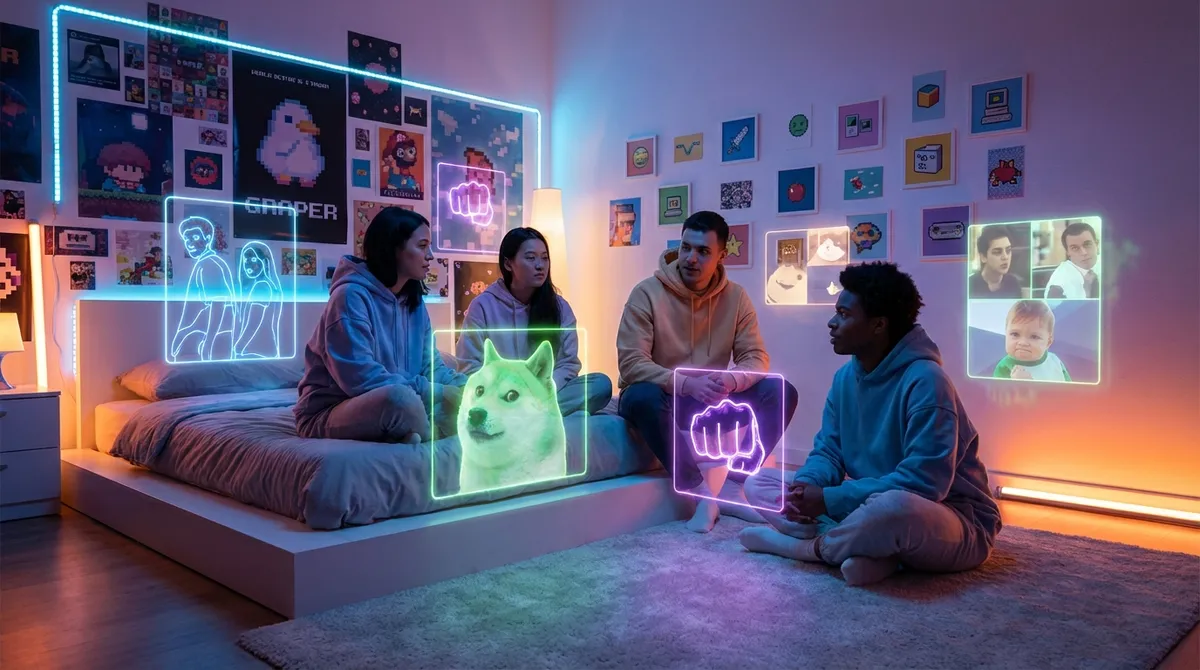
Memes aren’t just jokes anymore—they’re a whole language. The meme you send at 2 a.m. in the group chat, the one you quietly save to your camera roll, the one you repost with “this is so me” in the caption… all of it is low-key a personality test.
Today’s internet isn’t just using memes—it’s living through them. And the wild part? The formats you gravitate toward are basically broadcasting your vibe to anyone paying attention.
Let’s decode the meme mood ring—and hit 5 ultra-shareable truths about what your meme style reveals.
1. Reaction Memes: The Emotional Extroverts of the Timeline
If your camera roll is 90% reaction memes—side-eyes, dramatic gasps, unbothered queen moments—you are the emotional broadcaster of your friend group.
You don’t just reply “LMAO,” you send a three-part reaction trilogy: one for the initial shock, one for the chaos, one for the aftermath. Your meme game says: “Feel this with me, right now.”
Reaction meme lovers tend to:
- Narrate their life like a reality show in the group chat
- Turn every minor inconvenience into a dramatic Netflix episode
- Speak fluent “screenshot + reaction image” instead of paragraphs
- Use memes as emotional shorthand: happy, petty, chaotic, overwhelmed
These are the people who can run a whole conversation with just memes and still make their point crystal clear. If that’s you, you’re not “too online”—you’re just emotionally bilingual.
2. Deep-Fried & Cursed Memes: The Agents of Chaos
If your favorite memes look like they’ve been re-saved 47 times, stretched to 144p, and soaked in neon saturation, we need to talk. Deep-fried and cursed memes are the internet’s glitch in the matrix—and you live there rent-free.
You’re drawn to anything that makes zero sense but somehow feels spiritually accurate. A distorted SpongeBob? A zoomed-in cat with glowing eyes? A caption that reads “VIBE CHECK” for no reason? That’s your art.
Deep-fried meme enjoyers usually:
- Love humor that hits “this is so stupid I can’t stop laughing”
- Are chronically online, but in a “my brain is cooked and I accept it” way
- Use absurdity to cope with actual stress and real-life chaos
- Send memes that leave people saying, “I don’t get it, but I’m crying”
Your meme mood: unhinged but relatable. You’re the friend who keeps the group chat slightly feral—and everyone secretly loves you for it.
3. Text Post & Screenshot Memes: The Overthinkers With WiFi
If your go-to memes are clean text posts, Notes app screenshots, or tweets that drag you a little too accurately, you are the reflective main character of the digital age.
You like your memes wordy, specific, and oddly therapeutic. You’re not just here for the laugh—you want that “call-out but make it healing” energy. Those hyper-specific memes about sleeping with the TV on, re-reading old conversations, or avoiding your to-do list? You feel seen.
Text meme addicts tend to:
- Screenshot posts like they’re building their own private meme archive
- Caption them with “ok but why is this so accurate” or “I feel attacked”
- Use memes to express thoughts they don’t know how to say out loud
- Share memes that spark real conversations about feelings, mental health, or relationships
You’re the subtle soul of meme culture. Less chaos, more “wow, this is literally my inner monologue.”
4. Nostalgia & Throwback Memes: The Sentimental Time Travelers
If you live for memes about early 2000s cartoons, old-school text tones, flip phones, or “only real ones remember this”—you’re the nostalgic curator of the timeline.
Nostalgia memes hit you harder than they should. A screenshot of an old game menu? Instant teleportation back to your childhood bedroom. A meme about typing “brb” on MSN or using T9 to text? You’re already halfway to tears and laughter.
Nostalgia meme enjoyers often:
- Love revisiting old trends, songs, and aesthetics “ironically”… but not really
- Use humor to process how fast everything is changing
- Bond with people over “remember when” moments in the comments
- Find comfort in the shared memory of simpler, pre-algorithm days
Your meme vibe is warm, cozy, and a little bittersweet. You’re not just laughing—you’re time-traveling through shared internet history.
5. Hyper-Niche & Inside-Joke Memes: The Community Builders
If you’re obsessed with memes that only make sense to people in a specific fandom, hobby, or subculture, then you’re basically running micro-internet universes.
Maybe your feed is full of oddly specific memes about your favorite streamer, K-pop group, game, or niche corner of TikTok. To outsiders, it’s nonsense. To your people, it’s pure serotonin.
Hyper-niche meme fans usually:
- Live in group chats, Discord servers, and fandom corners
- Use memes to instantly recognize who’s “one of us”
- Turn tiny details from shows, games, or creators into full meme ecosystems
- Feel more connected to online communities than random IRL small talk
Your meme personality is tribe-focused. You’re not just posting for “everyone”—you’re posting for your people. And that’s why your content hits so hard inside your circle.
Conclusion
Memes aren’t random—they’re reflections. Every format you love, save, and share is giving away tiny hints about your humor, your coping mechanisms, your nostalgia, and your communities.
From unhinged deep-fried chaos to hyper-specific screenshot therapy, your meme diet is basically your digital fingerprint. And the best part? There’s no “wrong” meme vibe—just different flavors of extremely online.
So the next time you hit share, ask yourself: what did I just tell the world about me… without saying a single word?
Sources
- Know Your Meme – Comprehensive database documenting meme origins, formats, and evolution across the internet
- Pew Research Center – Social Media and Online Trends – Data on how people use social media, online communication, and digital culture
- BBC Future – Why We Share Memes – Explores the psychology and social dynamics behind meme sharing
- The New York Times – How Memes Became the Language of the Internet – Overview of how memes evolved into a dominant form of expression
- MIT Technology Review – The Science of Memes – Analysis of how memes spread and shape digital culture
Key Takeaway
The most important thing to remember from this article is that this information can change how you think about Memes.