The internet has spoken: we’re all main characters now, and memes are our unofficial PR team. From hyper‑relatable screenshots to blink‑and-you-miss-it video clips, memes aren’t just jokes anymore—they’re tiny cultural broadcasts that tell the world what we’re feeling, hating, loving, and low-key spiraling over. On Viral King, we’re zooming in on the meme energy ruling your feed right now: chaotic, hyper-specific, and dangerously shareable.
Let’s break down the meme vibes everyone’s riding this moment—and why you keep smashing that share button without even thinking twice.
1. Hyper-Specific Relatable Memes: When It Feels Personally Targeted
We’re way past “me vs. Monday” memes. The new wave is hyper-specific relatability: memes that feel so niche, it’s like someone bugged your inner monologue. Think screenshots captioned with oddly precise situations like, “POV: you said ‘no worries if not’ but there were, in fact, many worries,” or ultra-targeted scenarios about group chats, work Slack chaos, or that one friend who always shows up late but with iced coffee.
These memes work because they hit that sweet overlap of “that’s so me” and “how are we all living the same life?” The more specific they get, the more universal they feel. They spread fast in DMs and close-friend stories because they’re perfect for soft-calling out your squad without starting actual drama. The subtext: “I see you, I am you, let’s laugh instead of cry.” Hyper-specific memes have become mini therapy sessions—except the co-pay is just a like, a share, and a “LMAO this is literally us.”
2. Screenshot Culture: Texts, Notes Apps, and the Era of Meme Confessionals
Screenshots are the new meme canvas, and absolutely nothing is safe: text threads, calendar reminders, weather apps, banking notifications—if it shows up on your screen, someone’s turning it into a punchline. Notes app memes became their own era: fake “public statements,” dramatic “I’m leaving social media” jokes, and emotional essays that end in pure chaos. This format feels raw, personal, and “maybe I shouldn’t be seeing this,” which is exactly why it pops off.
Text-message memes turn everyday chaos into episodic content. That one unhinged group chat convo becomes a whole storyline, complete with plot twists, screenshots in carousel posts, and comment sections full of “Part 2??” The vibe is lo-fi, unpolished, and suspiciously relatable. It blurs the line between real and staged, and audiences honestly don’t care—the entertainment value is the point. If it looks like something that could’ve happened to you last weekend, the share rate goes through the roof.
3. Micro-Reaction Memes: One Second of Video, Unlimited Uses
Some of the strongest memes right now aren’t full clips—they’re micro-reactions. One raised eyebrow, a half-second side-eye, a single “oh.” These tiny video moments get ripped from interviews, reality shows, vlogs, or livestreams, then recycled a million times with new captions. You see them as GIFs, stitched TikToks, green-screen overlays, and “use this sound” audios that everybody builds their own joke around.
These reactions are digital body language: a way to respond without typing a word. Instead of writing a paragraph in the group chat, you just drop a micro-reaction meme that screams “I told you so” or “I cannot believe this” without spelling it out. They’re quick to consume, easy to remix, and perfectly algorithm-friendly. Platforms love looping them; viewers love sending them; creators love repurposing them. One throwaway facial expression can quietly become the emotional mascot of the internet for a whole month.
4. Nostalgia Remix: Turning Old Internet Into New Inside Jokes
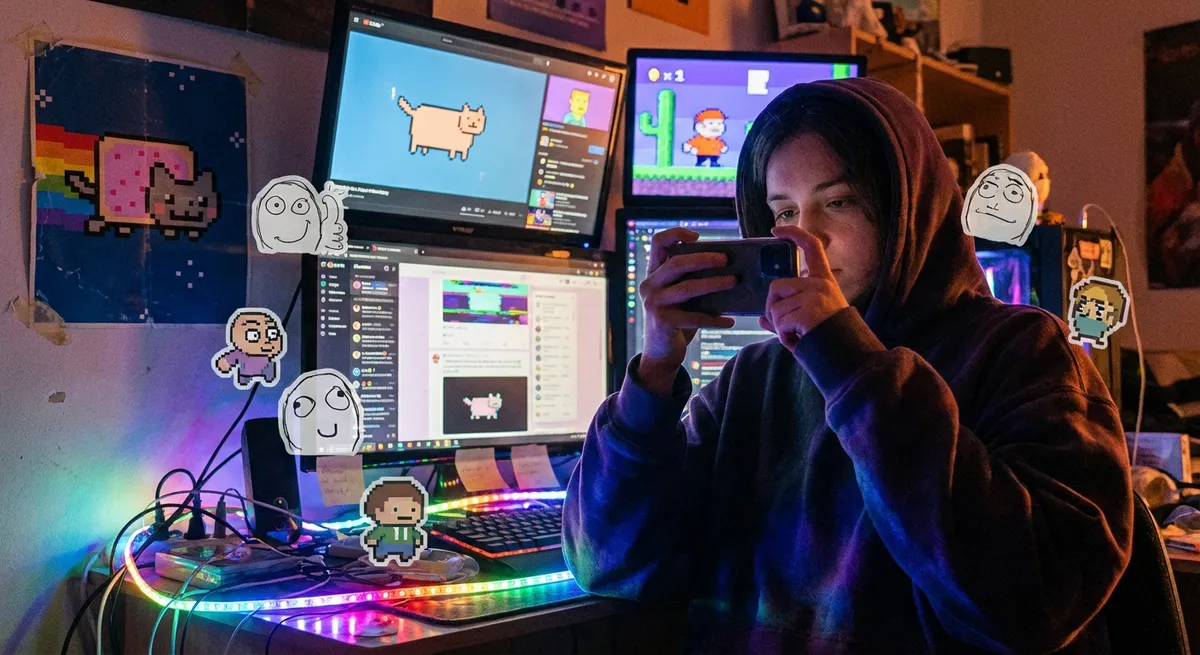
The internet is obsessed with itself, and nostalgia memes are proof. We’re constantly remixing old content—early 2000s shows, ancient viral YouTube clips, childhood cartoons, outdated websites—and slapping on 2020s humor. The joke isn’t just what is in the meme, it’s when it’s from. People love seeing something they grew up with rebranded as an unhinged grown-up mood.
You’ll see screenshots from old video games labeled as “my brain trying to load on 3 hours of sleep,” or early meme characters suddenly reappearing with fresh captions. It’s a double-hit of satisfaction: the comfort of remembering, plus the thrill of a new joke. Nostalgia memes spread fast because they’re cross-generational—you tag your older sibling, your younger cousin, and your friend who only knows the reference from TikTok compilations. The internet never fully lets go of its past; it just keeps giving it a chaotic 202X update.
5. Meme Templates as Social Armor: Joking Through Real Feelings
Underneath all the chaos, memes have turned into emotional armor. People are using familiar formats—like the “me vs. also me,” “how it started / how it’s going,” or dramatic movie stills—to talk about real anxiety, burnout, money stress, relationships, and identity… without it sounding like a diary entry. It’s confession, but make it screenshot-friendly.
This is why so many memes feel like “crying but make it funny.” Instead of posting, “I’m overwhelmed,” someone shares a meme of a cartoon character melting into the floor with the caption, “Me agreeing to plans knowing I’ll cancel day-of.” There’s vulnerability in there, disguised as a joke. That relatability builds community: people flood the comments with “too real,” “I felt this in my soul,” and “why is this so accurate??” Memes become tiny shared safe spaces where everyone can admit they’re not okay—but they’re also online making fun of it together.
Conclusion
Memes are no longer just background noise in your feed—they’re active characters in the story of how we talk, feel, and drag ourselves through the week. From hyper-specific call-outs to recycled nostalgia, from one-second reaction clips to screenshot confessionals, memes are the unofficial language of the internet right now. They’re how we say “same,” “help,” and “this is insane” in three seconds or less.
If you’re laughing, cringing, and low-key feeling exposed by what you see on your scroll, that’s exactly the point. Memes are how the internet looks in the mirror—and then posts it to the group chat anyway.
Sources
- Pew Research Center – Social Media and Online Humor - Data and reports on how people use social media, including trends in online expression and sharing.
- BBC – How Memes Became a Serious Cultural Currency - Explores the rise of memes as a key part of digital culture and communication.
- Harvard Business Review – The Dark Psychology of Social Networks - Discusses why emotionally charged content (like memes) spreads quickly online.
- MIT Technology Review – The Real History of Viral Content - Covers the evolution of viral media and how formats like memes developed over time.
- The New York Times – When Memes Become the Language of the Internet - Style and culture coverage on how memes shape modern communication and identity online.
Key Takeaway
The most important thing to remember from this article is that this information can change how you think about Memes.