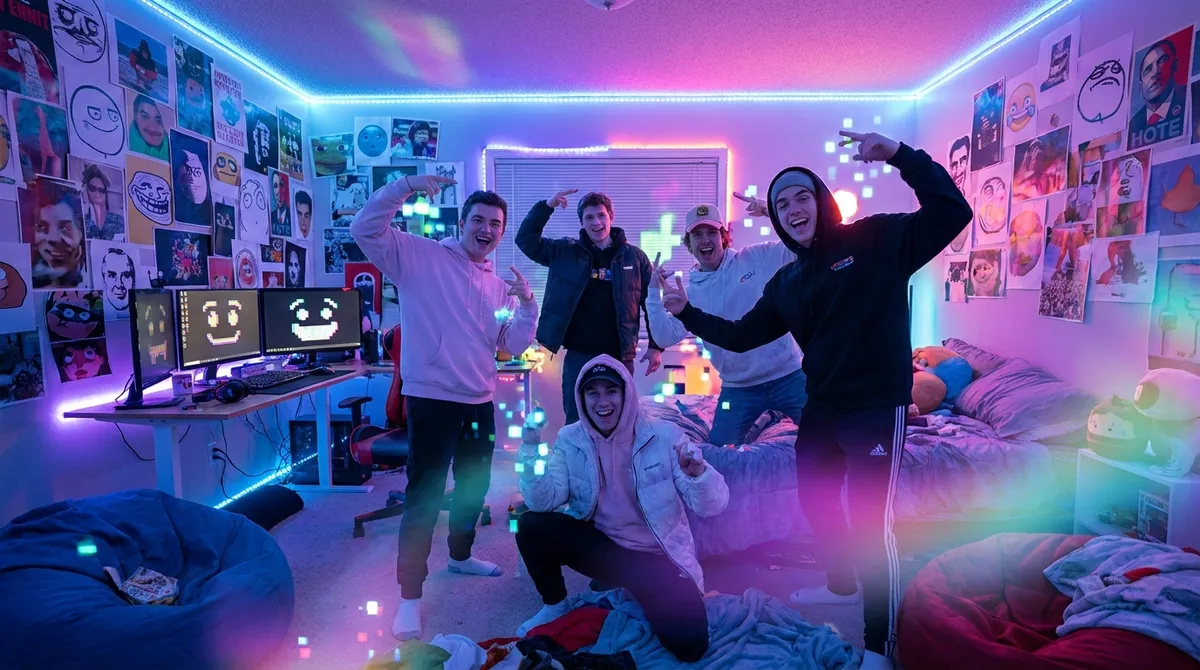
If the internet was a movie, memes would be the plot twists—and every week, the main character changes. One day it’s a crying mascot, the next it’s a random raccoon with a suspiciously relatable expression. Memes don’t just entertain us anymore; they set the mood of the entire feed. Let’s break down the new wave of meme culture that’s dominating timelines right now—and why it’s so insanely shareable.
The “Hyper-Relatable Screenshot” Era
Memes used to be bold text on top of a random picture. Now? It’s all about screenshots that look ripped straight from your camera roll or chat history.
People are turning:
- Text conversations
- Calendar reminders
- Notes app confessions
into punchline-ready meme templates.
What hits hardest is how unfiltered it feels. A blurry screen recording of someone typing-and-deleting in a chat, paired with “me trying to be normal,” can rack up more shares than a polished skit. The vibe is “too real to be fake,” and that authenticity is addictive. These memes spread fast because everyone sees themselves in them—they’re not about a specific fandom or niche reference, they’re about pure, shared human chaos.
On TikTok, creators screenshot their own DMs, group chats, and notification bars and drop them over trending audio, making a hybrid meme format that’s half video, half screenshot, and 100% repost bait. The more “accidentally exposed” it looks, the more viral it goes.
NPC Energy: When Acting Weird On Purpose Becomes The Joke
The internet’s newest obsession: acting like a video game NPC (non-player character) in real life—and turning it into a meme. TikTok lives, short clips, and prank videos now lean into stiff movements, repeating phrases, and glitchy reactions as a whole aesthetic.
What started as people joking about “NPC behavior” (doing the same routine daily, giving basic answers, walking the same route) has morphed into a full meme language. Comments like “bro is an NPC,” “side quest unlocked,” and “this is background character energy” show up under everything from travel vlogs to random street interviews.
This is meme gold because:
- It’s instantly recognizable (everyone’s seen NPCs in games).
- It’s easy to copy and remix.
- It lets people poke fun at themselves without getting too serious.
Creators are building entire characters around NPC behavior—giving themselves catchphrases, fake game missions, and “dialogue options” in captions. Viewers love it because it turns mundane life into fake gameplay, and suddenly going to the grocery store feels like a side quest worth screen-recording.
The Rise of “Core” Aesthetics as Meme Fuel
It’s not just cottagecore, goblincore, and normcore anymore. The internet now slaps “-core” on every vibe possible—and that’s exactly what makes it memeable.
You’ve probably seen:
- “Delulu-core” for unhingedly optimistic behavior
- “Rot-core” or “bed rotting” memes for doing absolutely nothing
- “Corporate-core” for the painfully office-coded life
People use these “cores” as labels to exaggerate their identity for the joke. A pic of someone in bed at 4 p.m. with a laptop open and zero work done? “Fully locked into rot-core rn.” A friend who packs their own snacks into different labeled containers? “Meal-prep-core.”
These memes travel easily because:
- They make niche habits feel like a whole aesthetic.
- They’re simple: image + label = instant punchline.
- They invite participation—users invent their own “core” in the comments.
Brands have quietly joined in too, slipping “-core” language into campaigns to seem in tune with internet culture. When even a fast-food drop is being marketed as “chaos-core,” you know the meme has officially escaped the niche.
AI-Assisted Chaos: Memes Powered by Machines
AI isn’t just for serious tools and productivity apps—it’s now a meme engine. People are using AI image generators and voice tools to create wildly specific, hyper-niche scenarios that would’ve taken hours to produce before.
Trending AI-powered meme styles include:
- Fake historical images (“medieval peasants reacting to Spotify ads”)
- AI voiceovers making cartoon characters read unhinged texts
- Unreal crossover scenes (“Barbie in a cyberpunk office job meltdown”)
What makes AI memes hit so hard is how absurdly accurate and wrong they feel at the same time. The images are just realistic enough to be confusing on first glance, then hilarious once your brain catches up.
There’s also a meta-layer: people now make memes about AI itself—like jokes about chatbots writing breakup texts, or “POV: AI trying to understand why you’re sad at 3 a.m.” As AI tools become easier to use, meme creativity is going vertical. Anyone with a prompt can generate something surreal enough to go viral.
Micro-Memes: Inside Jokes That Escape The Group Chat
Not every meme starts on a massive platform. Some of the most viral formats now begin in tiny corners of the internet—group chats, Discord servers, niche subreddits—and then escape into the mainstream.
A throwaway phrase in one friend group becomes a TikTok caption format. A random mis-typed word becomes a recurring character reference. A screenshot from a private story gets reposted, remixed, subtitled, and suddenly the whole internet is in on what was once a tiny inside joke.
Micro-memes blow up because:
- They feel exclusive at first, which makes people curious.
- They’re flexible enough to apply to wildly different situations.
- The “you had to be there” energy makes people want to be there.
This is also why you’ll often see a meme and think, “Wait, why is everyone saying this?” Then two days later, you’re using it in your own captions. Micro-memes live fast—some burn out in a week—but the ones that survive become part of the meme vocabulary for months.
Conclusion
Memes aren’t just random jokes on the timeline anymore—they’re how the internet talks to itself. From NPC behavior and AI chaos to “core” aesthetics and hyper-relatable screenshots, every new format is basically the internet inventing a new way to say, “same.”
If you want your content to ride the current meme wave:
- Lean into real, unpolished moments.
- Treat everyday life like it’s a game with side quests.
- Play with aesthetics and “cores” to exaggerate a mood.
- Experiment with AI for surreal, scroll-stopping visuals.
- Watch tiny inside jokes—they’re often the next big thing.
The main character of the meme world changes daily. The only question is: are you just watching the feed, or are you about to become the next meme people won’t stop sharing?
Sources
- Pew Research Center – Teens, Social Media and Technology – Data on how young users interact with social platforms and digital culture
- MIT Technology Review – AI-Generated Memes – Explores how AI tools are reshaping meme creation and visual culture
- BBC – Explainer on Internet Meme Culture – Background on how memes evolve and spread online
- The New York Times – TikTok NPC Trend Coverage – Breaks down the NPC-style content trend and its impact
- Stanford University – Social Media and Identity – Insight into how online trends and language shape digital self-expression
Key Takeaway
The most important thing to remember from this article is that this information can change how you think about Memes.