Memes aren’t just jokes anymore—they’re basically a whole language. From “it’s giving” to “ratio,” the way we talk online has officially leaked into everyday life, work emails, dating apps, and even brand campaigns. If you’ve ever said “I fear” or “this is so me-coded” out loud… congrats, you’re fluent.
Let’s break down how meme language turned into the internet’s most chaotic (and low-key powerful) communication tool—plus five ultra-shareable trends that are running every group chat right now.
From Inside Jokes to Global Dialect
Memes used to be niche: you had to be Extremely Online to catch the reference. Now, your parents text “mood” and your boss drops “low-key” in meetings. That shift didn’t happen by accident. Short-form video, stan culture, and constant remixing turned meme phrases into a living, evolving dialect that spreads at warp speed.
What makes meme language so sticky is how efficient it is. One phrase like “it’s giving” can communicate tone, context, and attitude in two words. “I can fix him” instantly signals delusional optimism. “Let people enjoy things” shuts down over-critical hot takes in a single line. These phrases travel fast because they don’t just say something—they feel like something. They carry in-group identity, humor, and mood, and that makes them addictive.
At the same time, meme phrases now move across platforms instead of belonging to just one. A TikTok sound becomes a Twitter catchphrase, then shows up as an Instagram caption, then gets printed on a T-shirt. By the time brands are using it in ads, that meme language has already done a full world tour.
Point 1: Reaction Memes Are the New Facial Expressions
You don’t just reply anymore—you respond with a meme. That Pedro Pascal laughing, Keke Palmer “sorry to this man,” or “girl math” clip? Those are basically digital facial expressions. Reaction memes have become emotional shortcuts that hit way harder than “lol” ever could.
Instead of describing how you feel, you drop a screenshot, a GIF, or a micro-clip that everyone already understands. Panic? Insert the man typing aggressively meme. Pure chaos? Cut to a cat flying across the screen. These visuals function as emotional templates: you plug in your situation, and the meme does all the heavy lifting.
This is why the same few reaction templates keep coming back in different eras. The image (or clip) stays the same, but the captions and context evolve with the moment. It’s like a shared emotional keyboard the whole internet is using—one that keeps expanding every time a new viral face enters the chat.
Point 2: “Core” Culture Turned Everything Into an Aesthetic
Welcome to the age where anything can be a “core.” You’re no longer just tired—you’re “feral little goblin core” or “cozy little grandma-core.” People are building tiny lifestyle identities out of memes, and “-core” language is the glue that holds it all together.
“Clean girl,” “tomato girl summer,” “mob wife era,” “office siren”—these memeable micro-aesthetics aren’t just vibes; they’re scripts. They tell you what to wear, what to drink, what songs to put on a playlist, what to post on your Story. Even if you don’t fully commit, the language alone lets you try on a persona for a day.
What makes this so shareable is how easy it is to remix. You can post “I’m in my ✨unserious little guy era✨” and your friends instantly get the whole mood. “Core” talk turns daily chaos—studying, commuting, cleaning your room—into something theatrical and hilarious. It’s life, but branded like a meme.
Point 3: Hyper-Specific Memes Are Calling You Out (Lovingly)
The timeline has moved way past generic “this is so me.” The funniest memes now are painfully specific, and that’s exactly why they travel so far. Think TikToks like “POV: you’re the eldest daughter with anxiety planning everyone’s trip” or “That one friend who says ‘I’m five minutes away’ while still in the shower.”
These callout-style memes go viral because they make people feel weirdly seen. You don’t just tag your best friend—you @ three friends, your sibling, and your entire group chat. Hyper-specific content thrives on that “how is this so accurate?” feeling. The more niche it gets, the more it feels like a secret camera into your life.
This also lets people find micro-communities. Students, retail workers, gamers, youngest siblings, long-distance couples—everyone has a category, and every category has memes that perfectly describe the unspoken rules of that experience. That relatability is meme rocket fuel.
Point 4: Corporate Meme-Speak Is a Whole New Circus
Brands have realized meme language prints engagement—but it’s a dangerous game. Sometimes you get a hit: a fast-food chain roasting a competitor, a streaming service live-meming its own show, a snack brand using “bestie” and “I fear” in a way that actually feels natural. Other times it’s pure secondhand embarrassment: “Hello fellow youth, we are very slay and so based.”
What’s wild is how quickly audiences can tell whether a brand gets it or not. Good meme-speak from a company usually has three things: super current references, an understanding of the platform’s in-jokes, and just enough self-awareness to laugh at itself. Bad meme-speak feels like someone’s manager forced “rizz” into a tweet after a 10-minute TikTok crash course.
But when it works? Screenshots fly, quote-tweets stack up, and suddenly everyone’s talking about a product they hadn’t thought about in years. Meme literacy has basically become a marketing skill, and the internet is grading in real time.
Point 5: Meme Phrases Are Rewriting Real-Life Conversations
The wildest part: we’ve fully started talking like the internet offline. People casually say “hard launch” for new relationships, “this is a safe space” when they’re about to judge, or “this cleared” about a really good coffee order. The boundary between URL and IRL language is basically gone.
These phrases do something older slang didn’t: they come pre-loaded with entire scenarios. “Hard launch” isn’t just debuting a partner—it implies soft launches, secret situationships, and Instagram reveal strategies. “Main character energy” doesn’t just mean confidence; it implies cinematic drama, soundtrack, and ego all in one.
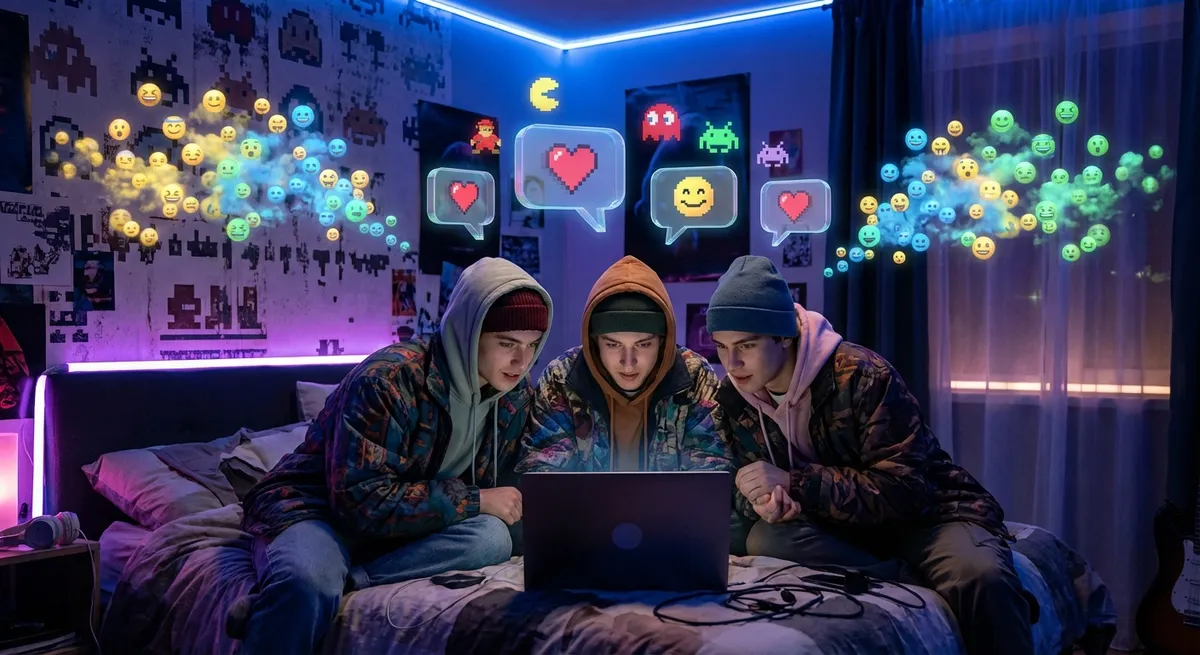
The result is that meme language makes real-world conversations feel like they’re happening inside a group chat. You’re not just talking to your friends; you’re co-writing a feed that doesn’t exist. That’s why it feels so natural to drop “this is not very girl dinner of you” mid-sentence—your brain is permanently half-online.
Conclusion
Meme language has leveled up from background noise to the internet’s dominant dialect. It’s changing how we joke, flirt, argue, advertise, and even describe our lives to ourselves. Whether you’re deep in stan Twitter, casually scrolling TikTok, or just trying to decode your friends’ IG captions, you’re swimming in a sea of phrases that didn’t exist a few years ago.
And that’s the real power of memes now: they’re not just content—they’re the code we’re all using to talk. Learn the language, and the internet suddenly makes a lot more sense. Ignore it, and every “it’s giving” and “be so for real” is going to feel like a glitch in the matrix.
Share this with the friend who speaks in 90% memes and 10% actual words. You might not fix them… but at least you’ll understand them.
Sources
- MIT: How Memes Became the Language of the Internet - Explores how memes evolved into a core form of digital communication
- BBC Future: The Secret Rules of Internet Language - Breaks down how online slang and tone shape the way we talk
- Pew Research Center: Teens, Social Media and Technology - Data on how young people use social platforms and online expression
- Harvard Business Review: How Brands Can Use Memes Effectively - Looks at why memes work in marketing and when they backfire
- Oxford English Dictionary: New Words and Meanings - Shows how digital slang and meme language are entering formal dictionaries
Key Takeaway
The most important thing to remember from this article is that this information can change how you think about Memes.