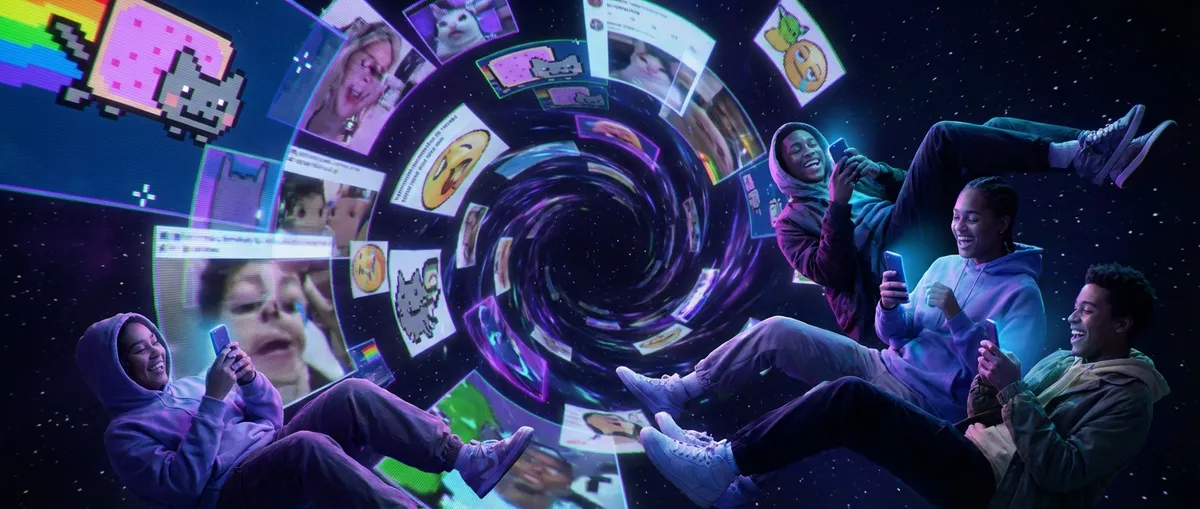
Memes don’t just “go viral” anymore—they become digital gravity wells, pulling entire timelines, brands, and even news cycles into their orbit. One random screenshot, side‑eye, or caption can flip from inside joke to global language in a matter of hours. If you’ve ever watched a meme appear on your FYP in the morning and in a brand ad by night, you’ve seen meme gravity in action.
Let’s break down what’s actually happening when a meme starts bending the internet around it—and hit five trending meme moves that social media users are obsessed with right now.
The Era of Meme Gravity: When One Joke Owns the Timeline
We’re in a moment where a single meme format can dominate the internet for days, sometimes weeks. Think of it like a trending sound on TikTok—but for visuals, punchlines, and entire narratives. The moment a format hits critical mass, you see the same reference jumping from:
- Private group chats
- Twitter/X timelines
- TikTok edits
- Instagram Reels and story stickers
- Brand campaigns and official statements
Instead of a thousand random jokes, the internet starts remixing one mega‑joke from every possible angle. It’s like everyone’s doing improv with the same line—different delivery, same template. That shared format is what makes it insanely shareable: you don’t have to explain the premise, you just plug in your twist and hit post.
Meme gravity turns casual scrollers into creators, because it’s way easier to add your spin to a known format than invent something from scratch. And the more people remix it, the stronger that meme’s pull becomes.
Point 1: “Main Character Energy” Memes Are Now a Whole Genre
We’ve officially left the “relatable” era and entered the “I am the storyline” era. Main character energy memes are everywhere, and they’re giving people a way to dramatize entirely normal moments like they’re in a movie or TV show.
You see it in posts like:
- Captioning a blurry pic: “POV: The side character realizing they were actually the main character the whole time.”
- TikTok edits turning a grocery run into a cinematic trailer.
- Reels with text overlays like “When you realize you’re not in their story arc anymore…”
Why it hits:
Everyone secretly feels like the lead in their own show, and these memes let people lean hard into that fantasy. They’re half self‑drag, half power move. It’s also wildly adaptable—you can use the same joke template for breakups, job hunts, gym arcs, or just waking up and choosing chaos.
Share appeal:
Tagging someone as “the main character” is basically the new compliment, and turning boring life moments into dramatic edits is prime repost material. These memes tell your followers: “My life is messy, extra, and somehow iconic—same as yours.”
Point 2: Silent Reaction Memes Are Louder Than Any Rant
The most powerful meme format right now might be the quietest: screenshots of facial expressions, subtle side‑eyes, or cinematic stills used as pure reaction material with almost no text. One perfectly timed frame can say what a paragraph never could.
Examples you keep seeing:
- That one frame from a TV show where a character looks spiritually exhausted.
- A paused interview still that accidentally catches the most judgmental facial expression possible.
- Animals giving “you cannot be serious” energy—especially cats, always cats.
Why it hits:
Everyone is tired of over‑explaining, and these memes do emotional shorthand. You don’t need context; the face is the context. They also cross language barriers, so the same screenshot can go viral on TikTok, Weibo, Instagram, and Reddit without translation.
Share appeal:
These are quote‑tweet gold. Drop a silent reaction under viral drama, an unhinged hot take, or a bizarre headline and it instantly becomes funnier. People love saving them to their camera roll as universal responses—like digital reaction emojis, but upgraded.
Point 3: Hyper‑Specific “Oddly Accurate” Memes Hit Too Close
The internet is obsessed with memes that are insanely specific—but somehow still apply to half your timeline. These memes zoom in on tiny details of human behavior and blow them up into a whole bit.
Think:
- “This is how dudes named Tyler stand in photos.”
- “When you say ‘no worries’ but you are, in fact, full of worries.”
- Screenshots of random objects with captions like, “This is such a ‘my mom said I can’t hang out today’ door.”
Why it hits:
Hyper‑specific memes work like digital astrology: they make you feel “called out” in a way that’s weirdly comforting. You realize the small habits you thought were uniquely strange are actually shared by millions of people.
Share appeal:
People love being tagged in these. “This is literally you” is one of the fastest routes to engagement. Saving, sharing to story, and sending in group chats becomes automatic when a meme catches your exact personality, mood, or friend dynamic with scary precision.
Point 4: Screenshot Lore – Turning DMs and Notes Apps Into Storytime
Another meme move with massive gravity right now: taking raw screenshots (texts, Notes apps, group chat snippets) and turning them into chaotic storytelling. The format is simple: post a screenshot with just enough context in the caption to let everyone fill in the rest.
You’ll see:
- “He really had the audacity to send this…” followed by an unhinged text thread.
- Notes app lists like “Ranking the red flags I ignored in order.”
- Group chat chaos where one line—“GUYS I DID SOMETHING”—becomes the whole meme.
Why it hits:
We’re in the era of “oversharing as content,” but people still want things to feel candid and raw. Screenshots feel like you’re getting backstage access to someone’s life. It blurs the line between meme, confession, and mini‑soap opera.
Share appeal:
Screenshot memes are extremely shareable because they’re narrative-driven. People want to send them like, “This is so us,” or “I know someone exactly like this.” They also invite spin‑offs—others copy the format with their own chats, turning a single post into a full-blown trend.
Point 5: “Low‑Effort Chaos” Memes Are Beating Polished Content
While brands are out here spending big budgets on polished visuals, the internet keeps proving it will always choose unhinged, low‑effort chaos if it feels real. The scrappier the meme looks, the more people trust it.
You’re seeing this in:
- Sloppy Canva slideshows with cursed fonts and insane captions.
- Horribly cropped images and MS Paint drawings that somehow go viral.
- Blurry zoomed‑in pics with captions like “this image has the same energy as ___.”
Why it hits:
Low‑effort chaos feels “anti‑algorithm.” It looks like something a friend would throw together at 2 a.m., not a marketing team. That makes it feel more authentic, more relatable, and honestly, more fun. The rough edges are the point.
Share appeal:
Because the bar is low by design, everyone feels like they can join in. You don’t need editing skills or ring lights—just a wild idea and a half‑baked execution. That “I could’ve made this” feeling is exactly what inspires more people to repost, remix, and keep the trend snowballing.
Conclusion
Memes aren’t just jokes—they’re the unofficial operating system of the internet. Main character edits, silent reactions, hyper‑specific callouts, screenshot lore, and low‑effort chaos are all different ways we’re telling the same story: “This is how it feels to be alive right now.”
The next time you see a meme take over every app in a single weekend, watch how meme gravity works: the format appears, the reactions stack up, the remixes explode, brands awkwardly jump in, and suddenly it’s not just content—it’s culture.
And if you’re looking for your next viral moment? Don’t overthink it. Tap into one of these trends, add your own weird, specific POV, and let the internet’s gravity do the rest.
Sources
- Pew Research Center – Social Media and News Fact Sheet – Data on how people interact with content and culture on social platforms
- MIT Technology Review – The complex dynamics of internet memes – Explores how memes spread and evolve online
- BBC Future – How memes became a serious business – Looks at the cultural and commercial impact of memes
- NYU – Memes, Meaning, and the Media – Academic perspective on memes as a form of communication
- The Atlantic – The Internet Meme as a Form of Communication – Discusses how memes function as a modern language online
Key Takeaway
The most important thing to remember from this article is that this information can change how you think about Memes.