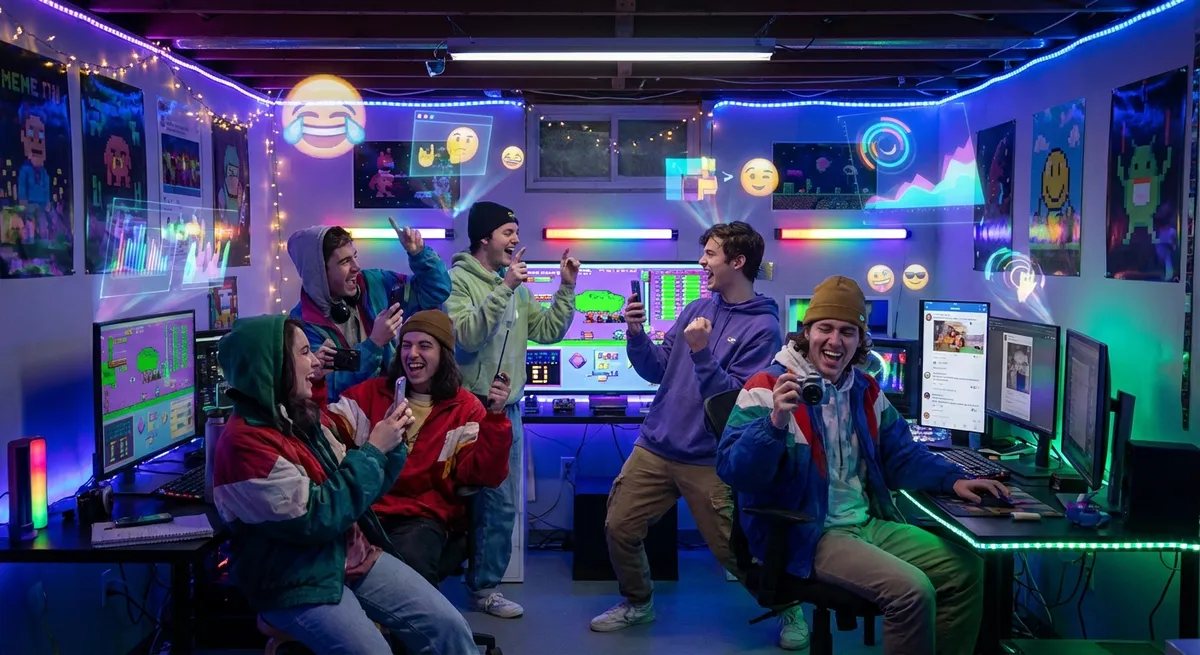
Memes aren’t just jokes anymore—they’re the internet’s native language. They decide what’s funny, what’s cringe, what’s cool, and what gets buried in the group chat with no replies. If you’ve ever watched a meme format explode across TikTok, then quietly morph on Instagram, then get absolutely overused on Twitter (sorry, X), you’ve seen meme culture in real time.
This is your cheat sheet to the five big meme energy shifts driving what blows up right now. Read it, steal it, share it with your group chat, pretend you “just noticed this trend on your own.” We won’t tell.
1. Reaction Memes Are Replacing Full Opinions
The internet used to write think pieces. Now it drops a single image of a confused cat and calls it a day—and honestly, that’s an upgrade.
Reaction memes are doing the emotional heavy lifting for entire conversations. Instead of typing out “I’m overwhelmed but also low-key living for this drama,” people just post a meme of Pedro Pascal crying while laughing, or a perfectly timed side-eye from a reality show contestant. One screenshot = 14 sentences of emotional nuance.
This shift matters because it changes how we communicate:
- People are using reaction memes as replies instead of text
- Group chats spin entire discussions out of one image
- Brands are quietly jumping in, using reaction memes as “safer” humor
If you’re trying to ride this wave, think in faces, not essays. Grab high-impact angles: confusion, chaos, fake calm, villain era satisfaction. The more “this is exactly how I feel but I didn’t know how to say it,” the more shareable it gets.
2. Hyper-Niche Memes Are Becoming Social Passwords
“Relatable” used to mean “everyone gets it.” Now it means “only the chosen few get it, and that’s the point.”
Hyper-niche memes hit tiny corners of the internet—K‑pop stans, plant parents, software engineers, astrology addicts, gym bros, fanfic writers—and they hit hard. These memes feel like secret handshakes: if you get it, you’re in. If you don’t, scroll on.
Why this is everywhere right now:
- Niche fandoms and subcultures are massive, organized, and always online
- Algorithm feeds reward content that locks in specific, loyal audiences
- People want identity-based humor, not just random “lol” moments
The magic formula:
inside joke + oddly specific detail + visual chaos = instant sharebait in that niche.
Want your content to travel? Don’t aim for “everyone.” Aim for “my people.” The more specific you go, the more your target audience will tag friends with “THIS IS SO US.”
3. Screenshot Culture Is Turning Everyday Life Into Meme Templates
That random notes app apology, the chaotic iMessage thread, the unhinged group chat, the calendar reminder that says “DO NOT SELF-SABOTAGE TODAY”—all of it is meme material now.
Screenshots are the new meme canvas because they feel raw and real. They look like something straight from someone’s phone, not a polished graphic made in a design app. That “this could be your chat” vibe makes them super shareable.
You’re seeing:
- Fake group chats that feel painfully realistic
- Screenshot “conversations” between brands and customers (real or staged)
- Notes app confessions, rants, and life updates turned into memes
- Calendar and reminders screens used for chaotic affirmations
The trick is playing with recognizable interfaces: iOS messages, Instagram DMs, Google Calendar, Spotify playlists. Meme the tools people use every day. If it looks like their screen, they’ll stop scrolling and read it—and maybe screenshot your screenshot.
4. Audio-Driven Memes Are Taking Over Visual-First Platforms
The loudest memes right now? You hear them before you see them.
On TikTok, Instagram Reels, and YouTube Shorts, audio clips are the new meme templates. One sound—whether it’s a dramatic movie line, a viral interview moment, or a chaotic viral rant—spawns thousands of versions: pets, POVs, glow-ups, disasters, you name it.
Why this works so well:
- People recognize the sound instantly (“oh THIS audio”)
- The same sound ties together totally different visuals
- Trends are easier to join: just slap the sound on your clip with a clever caption
Audio memes are basically collaborative inside jokes. Once a sound hits a certain level of saturation, it becomes a challenge: “What’s my version of this?” That itch to participate is exactly why it spreads.
If you’re trying to catch the wave, don’t just scroll—listen. When you start hearing the same sound over and over with different captions, that’s your cue: plug in your own twist before it’s everywhere.
5. “Unpolished” Meme Aesthetics Are the New Flex
We’ve hit the era of intentional low-effort. Blurry screenshots. Bad crops. Chaotic collages. Fonts that look like they came from 2010 PowerPoint. And somehow… it slaps.
The new meme flex isn’t looking clean—it’s looking unbothered. That messy, low-res, “I made this in 12 seconds” energy actually signals confidence and authenticity. It feels more like something a friend would send you than a brand trying to go viral.
You’ll notice:
- Overuse of basic fonts and bright clashing colors
- Old-school internet graphics and retro emojis
- Slapped-together edits with text overlapping images
- Intentionally ugly layouts that still read clearly at a glance
This aesthetic thrives because it screams, “I’m not trying too hard (even though I absolutely am).” On feeds packed with perfect carousels and gorgeous edits, a chaotic meme graphic is a scroll-stopper. It breaks the pattern—and the pattern is what people are tired of.
Conclusion
Memes are no longer just bonus content—they are the culture. Reaction pics are our emotional subtitles. Hyper-niche jokes are our social passports. Screenshots turn daily chaos into shareable stories. Audio clips script our lives. Unpolished visuals prove we’re in on the joke.
If you want to surf meme culture instead of constantly chasing it, tap into these five shifts and ask one question before you post:
“Would I send this to at least one friend right now?”
If the answer’s yes, you’re already speaking fluent internet.
Sources
- [Know Your Meme – Internet Meme Database](https://knowyourmeme.com/) - Tracks the history, origin, and spread of thousands of meme formats and trends
- [Pew Research Center – Teens, Social Media and Technology 2022](https://www.pewresearch.org/internet/2022/08/10/teens-social-media-and-technology-2022/) - Data on how younger users engage with visual and social platforms where memes thrive
- [Harvard Business Review – When Memes Are Marketing](https://hbr.org/2022/07/when-memes-are-marketing) - Explores how brands tap into meme culture and why it works
- [The New York Times – How Memes Got Weaponized](https://www.nytimes.com/2020/01/10/us/politics/memes-2020.html) - Looks at the cultural and political power of memes online
- [MIT Technology Review – The Viral Internet Aesthetic That’s Taking Over](https://www.technologyreview.com/2022/05/19/1052624/the-viral-internet-aesthetic-that-no-one-can-see/) - Discusses how evolving online aesthetics shape what goes viral
Key Takeaway
The most important thing to remember from this article is that this information can change how you think about Memes.