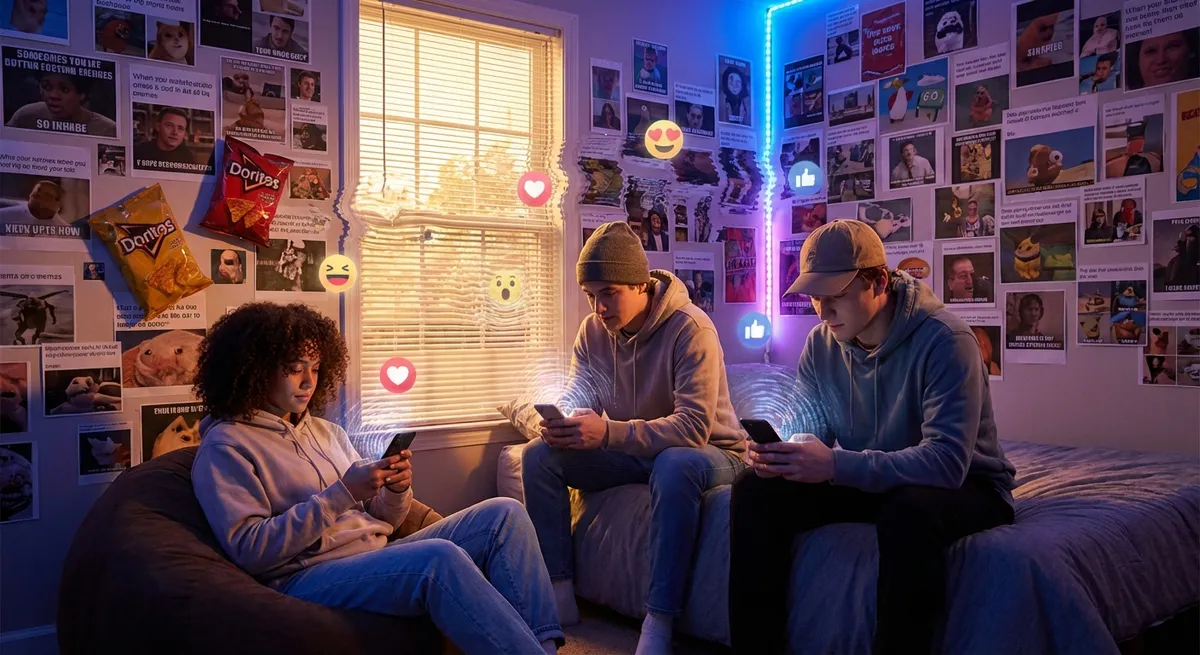
The internet doesn’t “do” quiet eras anymore—every week feels like a brand‑new meme season. One sound, one screenshot, one unhinged caption, and suddenly your entire feed is recycling the same joke in 900 different formats. Memes aren’t just jokes now; they’re mini-languages, social signals, and yes, low-key personality tests. If your group chat hasn’t dropped at least three memes today, are you even online?
Let’s break down the five biggest meme waves that are wrecking everyone’s screen time right now—and why people cannot stop reposting them.
The “Hyper-Relatable Screenshot” Takeover
The new king of the timeline isn’t a perfectly designed graphic—it’s a chaotic screenshot with unhinged energy.
You’ve seen the format: a blurry Notes app confession, a half-charged battery icon, a messy group chat argument, or a random calendar reminder that absolutely did not need to be written down. What makes these explode?
First, they feel stolen from someone’s actual phone, so they hit that “this is too real” nerve. Second, the stakes are low, the relatability is high—stress about work, awkward crush behavior, late-night spirals, and “I’m fine” lies. Third, they’re insanely remixable: change the caption, swap the context, boom—same template, brand-new punchline.
Brands are even faking “screenshot leaks” as memes, because nothing travels faster than drama that looks personal but is secretly very calculated. The more it looks like something you weren’t supposed to see, the quicker people smash share.
Trending point: Screenshots are the new meme canvas—raw, messy, and scarily relatable.
Audio-First Chaos: When One Sound Owns the Entire Week
On TikTok and Reels, video is almost secondary now—the sound is the real star.
One dramatic line from a reality show, a three-second “nah, ’cause why is this so accurate,” or a sped-up song chorus can go full takeover mode. People aren’t just watching; they’re thinking, “How do I twist this sound into my joke?” That remix energy is what makes audio memes wildfire material.
Creators use the same sound across relationship skits, pet chaos, workplace drama, and completely unrelated storytimes. By the time it hits your feed, the sound carries built-in context. You don’t even need text—just hearing the first note already tells your brain what kind of joke is coming.
Platforms lean into this by pushing trending audio charts, so once something pops, it gets algorithmically boosted into oblivion. Miss one viral sound for 48 hours and suddenly every other video feels like an inside joke you weren’t invited to.
Trending point: One viral sound can unite millions of people in completely different jokes—audio is the new inside joke factory.
“Main Character” Meme Culture: Life, But Cinematic and Delusional
Being the “main character” used to be a self-help vibe; now it’s a meme format with endless irony.
People film themselves doing the most mundane things—grocery runs, crying in the car, scrolling at 2 a.m.—and overlay dramatic captions like, “POV: you’re the protagonist in a coming-of-age movie with no budget.” It’s half-sincere, half-joking, and fully shareable.
This hits because everyone low‑key narrates their life in their head anyway. Memes just make that internal monologue public, funny, and stylized. The twist: the “main character” now is often the most unglamorous version of you—stressed, awkward, overthinking, and incredibly online.
The format also lets people talk about mental health, burnout, and loneliness without sounding like a lecture. Wrap it in a cinematic joke, and suddenly it’s safe to share and tag friends like, “This is literally us.”
Trending point: “Main character” memes turn everyday chaos into a movie moment, making oversharing feel cool instead of cringe.
Reaction Faces 2.0: From Single Image to Whole Emotion Library
Reaction images have graduated from single screenshots to full-blown emotional toolkits.
Instead of one iconic face, users now keep whole folders of “me when,” “absolutely not,” and “trying to act normal” expressions. A celebrity side-eye, an anime frame, a reality show meltdown, a cartoon shrug—these images become emotional shortcuts you can drop into any convo.
On X, Instagram, and Discord, the right reaction meme is basically a one-picture essay. No long response needed—just the perfect eye-roll or disaster stare. The more specific the emotion (“me pretending to be okay after seeing the menu prices”), the harder it hits.
Creators are even building mini “reaction packs”—carousels of faces for every mood in a situation. People save them, repost them, and stitch them into new contexts, turning one human expression into a thousand hilarious situations.
Trending point: Reaction memes are your emotional keyboard—why type a paragraph when one chaotic face says everything?
Micro-Fandom Memes: Niche Jokes Going Shockingly Mainstream
The internet used to keep fandom jokes in their own corners. Not anymore.
Now, extremely specific memes from K‑pop, gaming, booktok, sports, and even hyper-niche TV shows suddenly blow up beyond their original community. Someone posts a clipped moment, adds a universal caption like “me at 7 a.m. trying to be a functional human,” and boom—it travels way outside the fandom.
This crossover happens because the emotional core is universal: obsession, cringe, delusion, heartbreak, and the pure drama of caring too much about something. People who have zero idea who the characters are still relate to the vibe and share the meme anyway.
The result: memes become accidental gateways. One week you’re just laughing at a random clip, the next week your FYP is full of that show, that artist, that game, and you’ve somehow been recruited. The algorithm sees engagement, assumes you’re in the fandom, and locks you into that universe.
Trending point: Hyper-niche fandom memes are escaping their bubbles and turning casual scrollers into obsessed newcomers.
Conclusion
Memes aren’t just “funny pictures on the timeline” anymore—they’re the way the internet talks, flirts, vents, and trauma-dumps without getting too serious. From chaotic screenshots to trending sounds, from cinematic “main character” edits to reaction libraries and micro-fandom crossovers, each new wave is faster, more remixable, and way more personal.
If you want to stay shareable, you don’t have to chase every trend—but you do need to understand the language. Watch the sounds. Save the screenshots. Learn the reactions. Because on today’s internet, fluent meme-speak isn’t just culture—it’s social survival.
Sources
- Pew Research Center – Internet & Technology: Social Media Fact Sheet - Data on how widely social platforms are used, helping explain why memes spread so fast
- MIT Technology Review – How TikTok’s Algorithm Figures You Out - Explains recommendation systems that supercharge viral meme sounds and formats
- BBC Future – Why Memes Matter - Discusses memes as cultural artifacts and how they reflect online behavior
- Harvard Business Review – What Makes Online Content Viral - Breaks down psychological factors behind why people share certain memes and posts
- The New York Times – TikTok and the Evolution of Viral Content - Looks at the rise of audio-driven memes and how they shape online trends
Key Takeaway
The most important thing to remember from this article is that this information can change how you think about Memes.