The internet used to be about scrolling one main feed. Now? It’s all about side quests. Micro-communities, blink-and-you-miss-it trends, and niche obsessions are turning everyone’s online life into a choose‑your‑own‑adventure. From anonymous confession zones to AI-generated alter egos, the way we show up online is getting stranger, smarter, and way more personal.
Let’s dive into the 5 biggest “internet side quests” quietly taking over your timeline—aka the trends you’ll definitely start seeing everywhere (if you aren’t already part of them).
The Rise of “Alt Internet”: Private Worlds Behind Public Profiles
Your main account is starting to feel like a LinkedIn profile with filters—and that’s why “alt internet” spaces are exploding. Think private Discord servers, Close Friends lists on Instagram, locked X accounts, Finstas, and invite-only group chats where the real personality shows up.
Instead of broadcasting to everyone, people are building tiny, curated audiences where they can share unfiltered thoughts, half‑baked ideas, and inside jokes without worrying about being screenshot into oblivion. Gen Z especially is shifting from public clout to private comfort: smaller circles, deeper bonds, less performance. Platforms are catching on too—features like Instagram’s “Close Friends,” Snapchat’s private stories, and Discord’s server roles are designed to give you multiple “layers” of identity.
What used to be “going offline” is now just logging into a more private version of the internet. The real tea, the unhinged memes, the messy voice notes—they’re not disappearing. They’re just going behind digital velvet ropes.
AI Besties & Digital Clones: Talking To The Internet Version of You
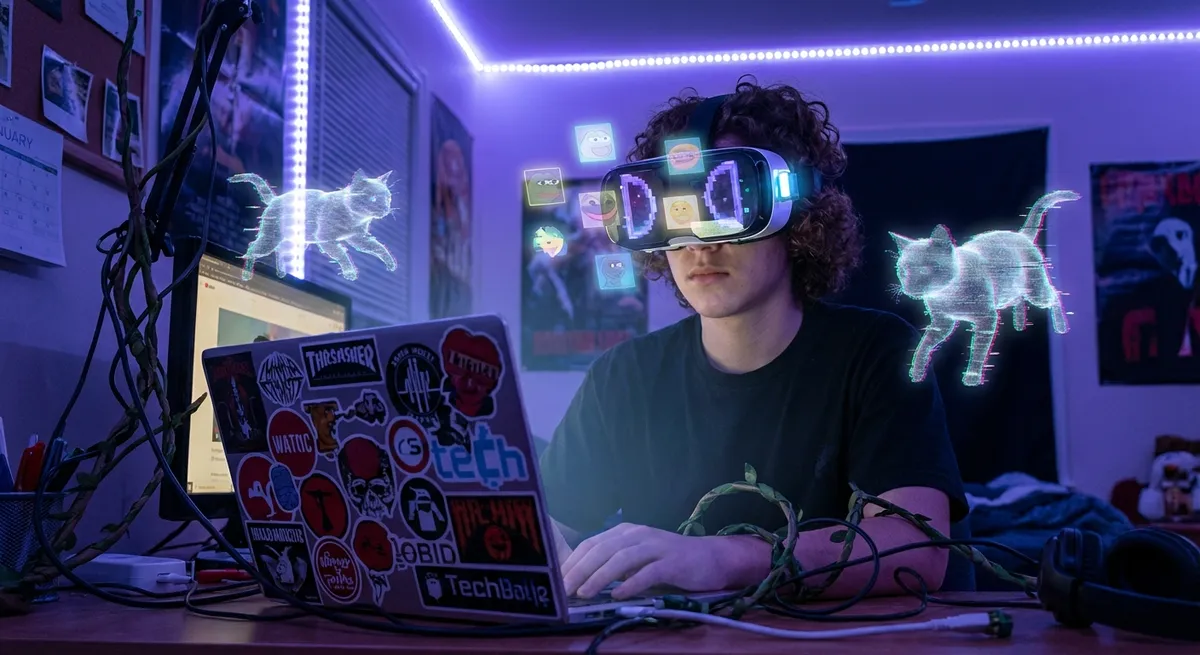
AI isn’t just a tool anymore—it’s starting to feel like a character in the group chat. People are using AI chatbots as vent buddies, brainstorming partners, story co‑writers, and even as digital clones of themselves. With tools that can mimic your writing style, face, or voice, your “online you” can now exist… even when you’re not there.
Creators are training AI avatars to reply to fans, brands are testing AI influencers, and regular users are spinning up “second selves” that live entirely on‑screen. Think: AI-generated face filters, cloned voices reading your posts, and custom chatbots that talk like you, think like you (kinda), and respond 24/7.
It’s both mind-blowing and a little eerie. On the fun side, it means more creativity, faster content, and super personalized experiences. On the scary side, it raises questions about consent, authenticity, deepfakes, and who actually owns your “digital self.” Either way, the new internet main character might not be human—it might be your algorithmic twin.
“Slow Virality”: The Internet’s New Long Game
Not everything has to explode in 24 hours to be viral anymore. A new kind of trend is taking over: slow virality. Instead of overnight fame, we’re seeing songs, creators, and aesthetics quietly simmer online for weeks—or even months—before they go supernova.
A random sound might sit unnoticed on TikTok, then suddenly become the soundtrack to an entire trend. Old YouTube videos, forgotten tweets, and archived TikToks are resurfacing and getting more attention years later than they did on day one. Algorithms on platforms like TikTok and YouTube increasingly recommend older content if it fits what users are into right now, giving past posts a second (or third) life.
For creators, this means the grind looks different: consistent posting > one lucky hit. For viewers, it means the internet feels less like a timeline and more like a time loop. Your next favorite trend might already be out there—you just haven’t scrolled into it yet.
Screenshot Culture: When The Group Chat Becomes the Main Stage
The hottest content on your feed lately? Half of it started somewhere else.
Private messages, niche posts, random comments, and anonymous confessions are being screenshot, cropped, and blasted into the main feed as “relatable content.” A wild text exchange becomes a meme template. A random review becomes a viral joke. A throwaway DM suddenly turns into a discourse thread with thousands of takes.
This “screenshot culture” turns every corner of the internet into potential content—group chats, Reddit threads, close friends stories, even Notes apps. But it also blurs lines: what feels personal can suddenly go public. That’s why more people are using disappearing messages, anonymous apps, and platforms with stronger privacy controls to keep things from escaping into the wild.
Still, the screenshot pipeline isn’t slowing down. If it can be cropped, captioned, and shared—it’s one step away from becoming the next viral post on your explore page.
Hyper-Niche Fame: Going Viral Inside Tiny Digital Universes
Forget “internet famous.” The new flex is being legendary in one oddly specific corner of the web.
You might not recognize their name, but inside certain micro-communities—booktok, slime creators, speedrunning gamers, tiny cooking channels, study vloggers, cottagecore, or hyper-specific fandom edits—some creators are treated like celebrities. Their content doesn’t always cross into mainstream feeds, but inside their digital universe, they’re massive.
Algorithms reward this kind of ultra‑niche content because it keeps people watching, commenting, and obsessing. The more specific you get—“late-night productivity girlies,” “obscure horror movie breakdowns,” “miniature diorama artists”—the stronger the connection. Fans don’t just follow; they identify with the niche.
This shift means almost anyone can build a loyal audience, not by chasing everyone, but by going all-in on their weird, wonderful thing. On today’s internet, your “too specific hobby” is probably someone else’s entire personality.
Conclusion
The internet is no longer one big party—it’s a maze of side quests, secret rooms, and alternate realities, all running at the same time. We’re getting more private and more public, more AI and more human, more niche and more connected, all at once.
Whether you’re building an AI version of yourself, quietly going viral three months late, or becoming iconic in a community most people don’t even know exists, one thing’s clear: the future of being online isn’t about fitting into the main feed. It’s about finding (or building) the weird little world where you actually feel at home—and maybe screenshotting it for the rest of us.
Sources
- Pew Research Center – Teens, Social Media and Technology 2022 - Data on how younger users are shifting their online behaviors and preferred spaces
- MIT Technology Review – The Future of AI Companions - Explores the rise of AI chatbots and virtual companions in everyday digital life
- The New York Times – How TikTok Chooses What You See - Breakdown of TikTok’s recommendation engine and how older or niche content can resurface
- BBC – The Dark Side of Viral Fame - Discusses privacy, screenshot culture, and the unintended spread of personal content
- Harvard Business Review – The Power of Niche Communities Online - Analyzes how micro-communities and ultra-niche audiences are reshaping online influence
Key Takeaway
The most important thing to remember from this article is that this information can change how you think about Internet Trends.