There’s a new main character on your For You Page, and it’s not an influencer, a couple doing a dance challenge, or even a nepo baby ranting in her kitchen. It’s… your Uber ride.
From the viral @overheard–style Instagram accounts to TikToks secretly documenting chaotic late‑night convos, ride-share content is exploding right now. A recent feature on an Instagram account that only posts wild “overheard in Uber” conversations has pushed the trend into full‑on social media takeover mode — and the screenshots, voice notes, and reenactments are everywhere.
Let’s break down why ride-share stories have suddenly become the internet’s favorite genre — and what that says about the way we use social media in 2025.
1. Overheard Uber Accounts Are the New Confession Booths
You’ve heard of Overheard LA and Overheard New York. Now we’ve officially entered the “Overheard in Uber” era. The Instagram account highlighted in today’s news — dedicated entirely to real conversations people overhear during their Uber rides — taps into the exact same energy: anonymous, unfiltered, painfully relatable.
These posts read like mini TV scripts: couples breaking up in the back seat, friends hyping each other before a date, someone panic‑calling their boss with a lie that everyone in the car knows is fake. Screenshotted DM submissions get turned into bite‑sized posts, perfectly formatted for Instagram carousels and easy sharing on Stories. The anonymity makes it safe to laugh, but the details feel real enough that you instantly think, “Oh, I’ve been in this car.” Social media users are eating it up, tagging friends like, “This is literally us after bottomless brunch.”
2. Uber Drivers Just Became the Internet’s Most Underrated Storytellers
While some passengers are busy oversharing, drivers are becoming unlikely content creators — and a lot of them are going viral in their own right. On TikTok, creators like @itsdanielmac paved the way by interviewing people in cars; now you’re seeing more Uber and Lyft drivers posting their POVs: chaotic group rides, emotional heart‑to‑hearts, terrifyingly bad directions, and the occasional wholesome “you changed my day” moment.
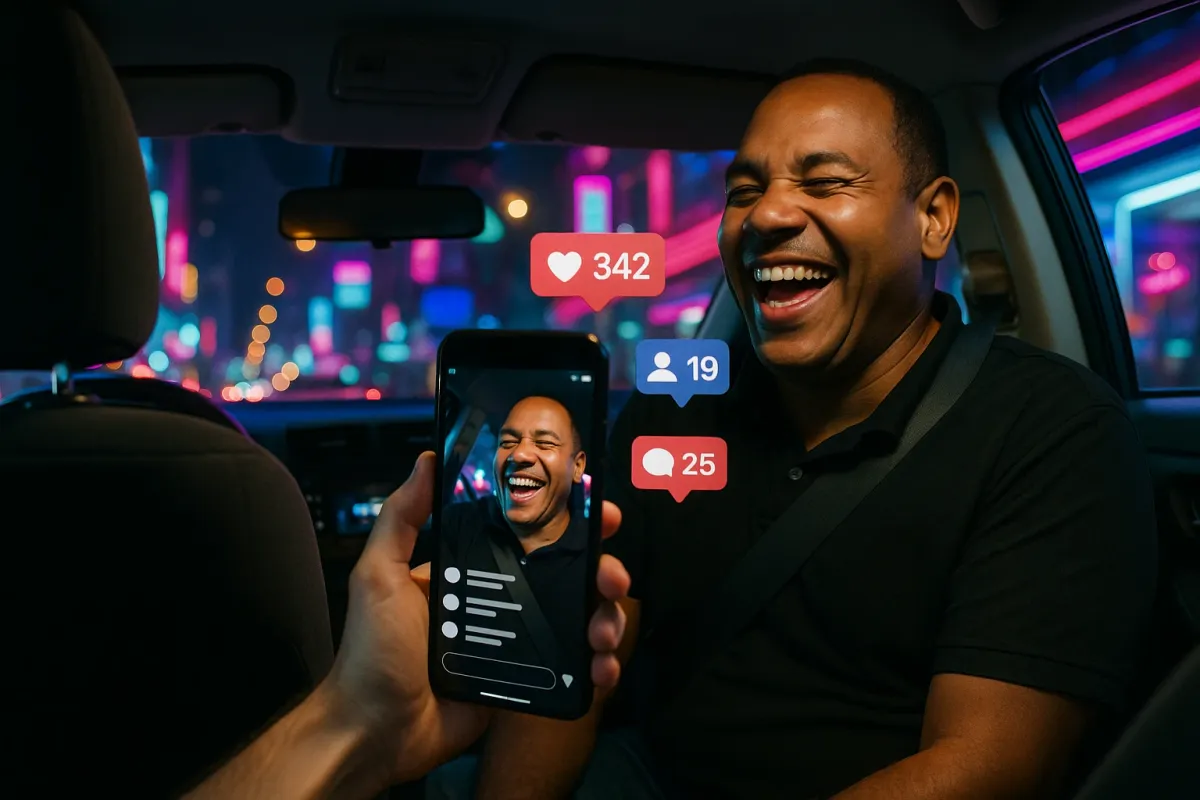
The ride-share ecosystem is perfect for storytelling: strangers, time limits, zero context, and a guaranteed beginning, middle, and end (pickup, ride, drop‑off). Social media loves that structure. Short‑form video thrives on it. You’ll see stitched videos where drivers reenact weird convos, duet passengers’ stories, or react to “driver rating confessions.” It’s reality TV without a producer — just an iPhone, a car mount, and way too much human drama compressed into 12 minutes of drive time.
3. Screenshots > Selfies: How Ride-Share Texts Became Peak Shareable Content
The most powerful content in this trend isn’t filtered photos — it’s screenshots of texts and captions. People are posting:
- Their group chat chaos when someone’s Uber goes wildly off‑route
- Texts to drivers that are way too polite (or way too unhinged)
- Reviews that read like micro fanfiction (“5 stars, he let me ugly cry in silence”)
This shift mirrors what we’re seeing across platforms: text and captions are having a moment again. On X (formerly Twitter), threads about “craziest Uber experiences” go viral overnight. On Instagram, stories of bizarre rides get screenshotted, reposted, and turned into memes. Reddit threads under r/uber and r/TrueOffMyChest regularly leak into mainstream social platforms, giving people endless material to remix.
In a scroll of polished Reels and aesthetic BeReal posts, a raw, slightly chaotic screenshot feels real and shareable. It’s digital gossip — with just enough distance that you don’t feel bad laughing at it.
4. Privacy, But Make It Content: The Ethical Line Everyone’s Tiptoeing Around
Here’s where it gets messy: as this trend blows up, so do questions about privacy and consent. The Instagram account featured in today’s news keeps things anonymous, but not everyone on TikTok or Instagram is that careful. Some creators slap on a filter, change a voice, or crop faces out; others… don’t.
We’re in a weird social media moment where users simultaneously crave raw, real‑life content and drag creators for crossing boundaries. Comment sections are split: half the people are crying laughing at the stories, and the other half are asking, “Did these people even agree to be posted?” Platforms like TikTok and Instagram already have rules about doxxing and harassment, and as more “Uber content” goes viral, expect to see louder conversations about what’s fair game.
The irony? The more debates we have about it, the more the content spreads. Controversy keeps it trending, and ride-share stories sit right in that tension between relatable entertainment and ethical gray area.
5. From Late-Night Chaos to Viral Aesthetic: The Uber Ride Is Now a Core Part of the Story
Social media used to treat the Uber as dead time — a quick transition between “real” moments worth posting. Now, the ride itself is the content. Creators are turning car rides into:
- Mini podcasts: friends recording “Car Chats” about dating, jobs, or pop culture
- Storytime TikToks: “You will not BELIEVE what just happened in my Uber”
- Vlogs with structure: cold open in the back seat, main story by the second red light, emotional outro at the drop‑off
This lines up with the broader 2025 trend: social media doesn’t just want final results (the party, the date, the concert) — it wants the messy in-between. The commute, the prep, the awkward moment when the aux cord exposes your guilty pleasure playlist. Uber rides hit that sweet spot of candid + chaotic, which is exactly what the algorithm is rewarding across TikTok, Instagram Reels, and YouTube Shorts right now.
Conclusion
Ride-share content has quietly become one of the most addictive micro‑genres on social media: anonymous “overheard in Uber” accounts, drivers turned storytellers, and passengers unintentionally becoming main characters for millions of viewers. The news spotlight on that Instagram account collecting overheard Uber convos just confirms what our feeds have been telling us for weeks — we’re fully in our Ride-Share Storytime Era.
As the trend grows, expect more: more ethical debates, more hyper‑relatable screenshots, and more “I swear this actually happened” videos recorded from the back seat. For now, one thing is clear: in 2025, if it happened in an Uber and someone wrote it down, it’s probably on your Explore page already.
Key Takeaway
The most important thing to remember from this article is that this information can change how you think about Social Media.