Social media doesn’t just “keep you updated” anymore—it’s actively training how you think, scroll, shop, and even sleep. The wild part? Most of it feels totally normal… until you zoom out and realize your brain has basically become an app.
This isn’t another doom post. This is your behind-the-scenes tour of what’s actually happening every time you open your favorite app—and the 5 biggest trends shaping how you use social media right now. These are the shifts everyone is living but almost nobody is naming… yet.
Share this with that friend who says “I’m not online that much” while opening TikTok for the 12th time today.
The Infinite Scroll Trap: Why “One More Video” Never Ends
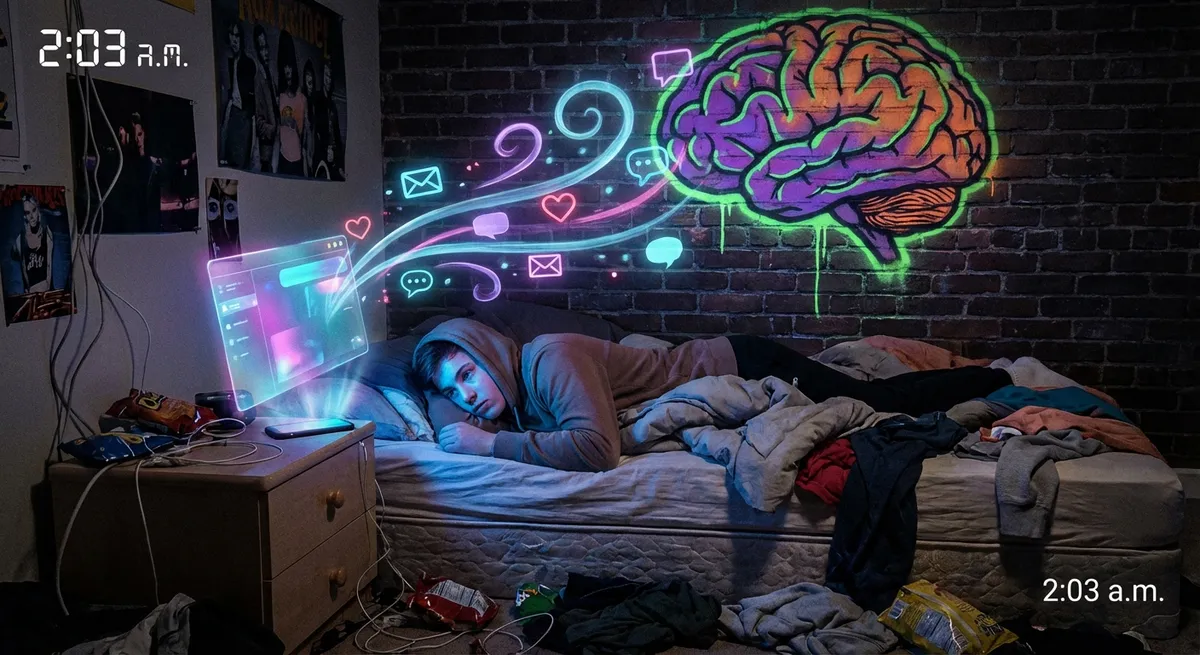
If you’ve ever opened an app “just for 2 minutes” and woken up 45 minutes later, this one’s for you.
Infinite scroll and autoplay are designed to remove friction. No page loads. No “next” button. No stopping point. Your brain never gets a natural cue to take a break, so it just… keeps going. Stanford researchers have linked this kind of multitasking and constant media switching to reduced attention control and poorer memory formation—and infinite scroll is like a 24/7 buffet for that habit.
Platforms layer on micro-rewards: a funny meme, a hot take, an aesthetic Reel, a random life hack you didn’t ask for but now need. Each tiny hit of novelty gives you a dopamine boost, training your brain to crave “just one more scroll.”
What’s trending now isn’t just doomscrolling—it’s background scrolling. People are half-watching shows, half-texting, half-working… and fully scrolling. Your feed has become white noise for your brain, and the algorithm loves that.
If you’ve noticed:
- Time warping while you scroll
- Feeling mentally “foggy” but still opening apps
- Needing more content to feel entertained
…you’re living in the infinite scroll era. And so is everyone else on your For You page.
Micro-Content Mindset: Your Brain Now Thinks in 3–15 Seconds
Your attention span isn’t gone—it’s just reprogrammed.
Short-form videos, Stories, and bite-sized carousels have trained your brain to make snap judgments in seconds: watch or swipe, like or ignore, follow or forget. A 10-minute video feels “long.” A 2,000-word article looks like a novel. You’re subconsciously asking: How fast can this give me something?
Psychologists compare this to “attention fragmentation”—your focus gets chopped into tiny pieces. Instead of deep diving into one thing, your brain is constantly hopping between dozens of mini-stimuli. Over time, this can make it harder to:
- Sit through long classes, meetings, or movies
- Read full articles without skimming
- Stay in conversations without checking your phone
Creators know this and edit content like it’s an attention Olympics: fast cuts, captions, on-screen text, sound hooks, jump transitions. They’re not just telling stories—they’re fighting for milliseconds of your focus.
What’s trending right now is “snackable everything”: micro-news, micro-vlogs, micro-lessons, micro-rants. Even long videos are basically chains of tiny moments, stitched together so your brain never gets bored enough to leave.
Your mind isn’t breaking—it’s adapting. But it is learning that if something doesn’t grab you instantly, it’s not worth your time. That mindset doesn’t stay on your phone. It follows you into your relationships, your hobbies, and your goals.
Algorithm Mirrors: Your Feed Is Quietly Reinforcing Your Identity
Social media used to be “what everyone is posting.” Now it’s “what the algorithm thinks you are.”
Every pause, replay, comment, and share is a data point that builds a version of you inside the app—a digital twin built from vibes. If you linger on gym content, your feed becomes fitness-flavored. Watch one breakup story all the way through? Suddenly, your FYP thinks you’re heartbroken. Click on one conspiracy thread? Say hello to a whole new rabbit hole.
Researchers call this filter bubbles and echo chambers—you get shown more of what you already engage with, which can intensify your beliefs and interests. It feels personal. Customized. Comforting. But it can also quietly:
- Lock you into one perspective or aesthetic
- Convince you “everyone” thinks like your feed
- Turn hobbies into identities, and identities into content
- Make it harder to discover truly new ideas
What’s trending now is the “algorithmic self”—the version of you that performs well on the feed. You might notice yourself posting what fits your lane instead of what feels real, just because you know what the algorithm tends to reward.
And here’s the twist: your feed isn’t just reflecting who you are—it’s nudging who you become. You’re being trained in real time by the content you can’t stop watching.
Quiet Comparison Culture: Measuring Your Life in Posts You Never Make
We talk about FOMO and comparison, but the current trend is more subtle: silent self-tracking.
You’re not just comparing your life to what people post—you’re comparing your life to the content you could be posting but aren’t. That trip you didn’t document. That night out you didn’t film. That hobby you’re “not good enough” to share yet.
Studies have linked heavy social media use with increased anxiety, depression, and body image issues, especially among younger users. But today’s comparison culture has leveled up:
- You rate moments by “post-worthiness”
- You feel pressure to look “naturally unfiltered,” which is its own type of filter
- You second-guess sharing anything that doesn’t fit your usual aesthetic
- You feel weirdly guilty for being offline too long
The new flex is looking effortless and curated at the same time. That contradiction is exhausting.
This is creating a trend of “internalized audience mode”—your imaginary followers are always in the room, even when you’re offline. You think in captions. You notice “aesthetic angles” of your day. You instinctively know what would do numbers, even if you never actually post it.
It’s not just that you’re living on social media. It’s that social media is living in your head, rent-free.
Digital Boundaries 2.0: The Counter-Trend Your Future Self Will Thank You For
Here’s the plot twist: the next big flex on social media… might be less social media.
We’re already seeing a quiet pushback—people:
- Taking “soft breaks” without announcing a full detox
- Turning off read receipts and activity status
- Muting everyone but a small circle
- Using app timers or Focus modes to cage the scroll
- Creating private stories / close friends lists for “real life” updates
Digital well-being isn’t just a self-care trend; it’s becoming a survival skill. The World Health Organization highlights excessive screen time as a mental health risk factor, and platforms are slowly adding tools like “take a break” reminders and screen time dashboards because users are asking for them.
The next era of social media isn’t “all in” or “fully off.” It’s intentional online:
- Following accounts that actually make you feel good or informed
- Curating your For You page instead of letting it train you by accident
- Scheduling scroll time the way you’d schedule a workout or study session
- Treating social media like a tool—not your default state of existence
Your feed is powerful. But so is your thumb. You decide what you tap, what you scroll past, and when you log off. That tiny choice is the most underrated trend of all.
Conclusion
Social media isn’t just a place you visit—it’s a system that’s actively shaping your brain, your habits, and your sense of self. Infinite scroll, micro-content, algorithm mirrors, quiet comparison, and digital boundaries are the 5 big forces running the show right now, whether you notice them or not.
You don’t have to vanish from the internet or throw your phone into a lake. But knowing how the game works gives you one massive advantage: you get to play on purpose.
If this called you out even a little, it’ll hit your friends too. Share it to your story, drop it in the group chat, and then—maybe—close the app for a minute and let your brain breathe.
Sources
- American Psychological Association – Social Media and Mental Health - Explores how social media use relates to loneliness, anxiety, and overall mental health
- Pew Research Center – Teens, Social Media and Technology - Data on how younger users are engaging with major platforms and how often they’re online
- Stanford University – Attention and Media Multitasking Research - Found that heavy media multitaskers struggle with attention and memory control
- World Health Organization – Digital Media Use and Mental Health - Discusses risks and recommendations around screen time and digital media use
- Mayo Clinic – Social Media Use and Well-Being - Provides an overview of potential harms of social media and tips for healthier usage
Key Takeaway
The most important thing to remember from this article is that this information can change how you think about Social Media.