The feed is getting weird again—in the best way. Algorithms are remixing, creators are experimenting, and the internet is quietly changing the rules while you scroll. If your timeline feels a little less “perfect aesthetic” and a lot more “chaotic real,” you’re not imagining it.
Let’s break down the 5 big shifts turning your feed into something totally new—and extremely shareable.
1. The Era of “Unpolished Posting” Is Actually Winning
Perfectly curated grids? So 2019.
Right now, the content that’s catching fire is:
- Slightly blurry
- Shot on front cameras
- Edited in 15 seconds (or not at all)
- Posted with “IDK, here” energy
People are tired of the ultra-filtered life. Instead, “casual posts” feel more trustworthy and fun—like hanging out with a friend, not watching a brand presentation. This is why you’re seeing random photo dumps, chaotic nights out, unflattering angles, and “this is going to flop but whatever” captions… and then it doesn’t flop.
Platforms are quietly rewarding this too. TikTok, Instagram Reels, and YouTube Shorts all push content that keeps people watching, not just what looks the most polished. If it hooks in 1–3 seconds and feels real, it gets boosted.
Shareable takeaway: The new flex is not trying that hard—and still going viral.
2. Micro Communities Are Outpowering Massive Followings
The big shift: it matters less how many followers you have and more how tight your community is.
You’re seeing it everywhere:
- Niche meme pages with 20k followers getting more engagement than celebrities
- Hyper-specific subcultures (booktok, gymtok, knit-tok, niche fandom corners) exploding your FYP
- Group chats and Close Friends stories becoming the real social feed
Instead of broadcasting to everyone, people are building mini-internet worlds where everyone gets the jokes, the references, and the drama. This “small but obsessed” energy is what brands, creators, and even platforms are chasing now.
Algorithms are leaning into it:
- TikTok’s “For You” page feeds ultra-specific interests
- Reddit-style communities are inspiring platform features (like Instagram Channels, Discord integrations, etc.)
- Even big creators are spinning up alt accounts to talk to their real core
Shareable takeaway: Being niche is no longer a limitation—it’s a growth strategy.
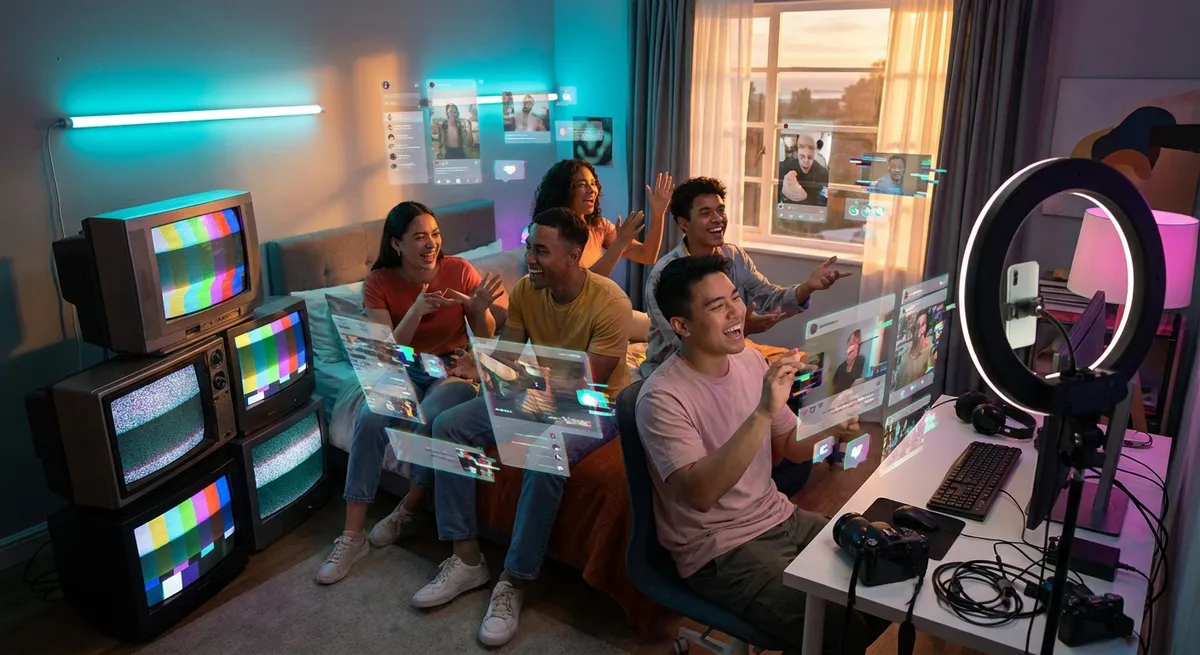
3. Silent Scrolling Is Out, “Second-Screen Social” Is In
You’re not just scrolling anymore—you’re multi-task scrolling.
Think about how you actually use your phone:
- Watching TikToks while gaming
- Bingeing YouTube while chatting on Discord
- Streaming a show while live-commenting on X, Instagram, or TikTok
- Short, punchy subtitles for when the volume is off
- Live reactions, stitches, and duets as part of how we experience a moment
- Real-time meme creation around events (award shows, sports, reality TV, breaking news)
- Live features (YouTube Live, Instagram Live, TikTok LIVE)
- Co-watching tools, watch parties, and live chats during streams
- “React” content built directly into apps
This “second-screen social” behavior is reshaping content:
Platforms know you’re doing three things at once, so they’re trying to become the one you keep open:
Shareable takeaway: The hottest takes aren’t in the group chat 3 hours later—they’re in the comments and stitches while it’s happening.
4. “SearchTok” and “Ask the Algorithm” Are Replacing Traditional Googling
You know it’s true: your first instinct isn’t always Google anymore.
People are turning to:
- TikTok for “best…” and “how to…” questions
- YouTube for deep dives, reviews, and explainers
- Reddit threads for brutally honest opinions
- Instagram for inspo-based searching (outfits, hair, travel spots)
- Real people
- Real results
- Real-time opinions
- How people discover restaurants, travel spots, workouts, and products
- How brands present themselves (more UGC, less polished ads)
- How creators structure content (tutorials, “I tested this so you don’t have to,” honest reviews)
You’re not just looking for information—you’re looking for:
This is changing:
Even major companies have noticed that users—especially younger ones—treat TikTok and social platforms like search engines. That means the most viral content now often answers a question people didn’t even realize they were asking.
Shareable takeaway: The algorithm isn’t just entertaining you—it’s becoming your default “I need to know this” button.
5. The New Flex: “Digital Boundaries” as a Status Symbol
There’s a quiet social flex rising: being chronically online is out, and having boundaries is in.
You’re seeing:
- “Phone on Do Not Disturb” aesthetics
- Weekend log-offs and “offline days”
- “Soft blocking” (muting, restricting, or archiving) for mental peace
- People bragging about screen-time cuts like they used to brag about follower counts
- Curating who they let into their daily feed
- Muting content that spikes anxiety (news overload, comparison traps)
- Following accounts that feel like comfort, not chaos
This doesn’t mean people are using social media less—it means they’re using it smarter:
Influencers are getting honest about burnout, parasocial weirdness, and the pressure to always be “on.” Fans increasingly respect—and even celebrate—creators who set clear limits and take breaks instead of grinding themselves into the ground for content.
Shareable takeaway: Protecting your attention is now as aspirational as going viral.
Conclusion
The feed is evolving fast—and quietly rewriting what “being online” even means. We’re trading perfect for real, mass reach for tight communities, passive scrolling for live reactions, basic search for creator-driven answers, and always-on grind for intentional boundaries.
You don’t have to be an influencer to ride this wave. You just have to use your feed the way the internet is moving:
- Post more real, less rehearsed
- Lean into your weird niche
- React in real time
- Ask the algorithm better questions
- Guard your screen time like it’s gold
Screens aren’t going anywhere. But how we use them? That part is totally up for grabs—and you’re already in the middle of the shift.
Sources
- Pew Research Center – Social Media Fact Sheet – Data on how different age groups are using social media and how behaviors are shifting
- Google – How Gen Z is Changing the Search Landscape – Explores how younger users are turning to social platforms for search-style queries
- Harvard Business Review – The Power of Small Communities Online – Analysis of why niche and micro-communities are so influential
- American Psychological Association – Social Media and Mental Health – Discusses the impact of heavy social media use and the importance of boundaries
- MIT Technology Review – How TikTok is Rewriting the Internet – Breaks down how TikTok’s algorithm is changing user expectations across platforms
Key Takeaway
The most important thing to remember from this article is that this information can change how you think about Social Media.