Social media isn’t just where you scroll anymore—it’s where you signal. Your taste, your values, your side hustles, your sense of humor… it’s all getting broadcast in real time. And the platforms are shifting so fast that what worked even six months ago is already giving “last season.”
These 5 feed power moves are what creators, brands, and everyday users are quietly mastering right now—and once you see them, you’ll start spotting them everywhere.
1. The “Main Character Energy” Era Is Here (And It’s Not Just For Influencers)
We’re deep in the age of “main character energy,” where people are filming their regular lives like a movie—and the internet is into it. It’s not about perfect aesthetics anymore; it’s about point-of-view storytelling. Walking home in the rain? That’s a mini indie film. Grocery run? That’s a chaotic vlog with a soundtrack.
The twist: everyday users are narrating their day like it actually matters, and audiences are responding because it feels like hanging out with a friend, not watching an ad. This POV style works across TikTok, Reels, and Shorts because algorithms love watch time, and people stick around for a story. The hook isn’t “look how cool my life is”—it’s “come with me while I figure life out in real time.”
If you’re posting, you don’t need cinematic gear. You need a mini plot: a goal, a problem, a weird moment, a small win. Framing your content like a micro-movie makes even the most normal day feel scroll‑stopping—and that’s exactly why this trend is quietly everywhere.
2. “Low-Effort, High-Relatability” Posts Are Crushing Overpolished Content
While brands are still obsessing over polished shoots and perfect graphics, the internet has moved on to “low-effort, high‑relatability” content. Blurry mirror selfies with text overlays, quick one-take rants, messy voice notes over a slideshow, screen recordings with unfiltered commentary—these are the posts getting saves, shares, and duets.
Why? Because they feel real in a feed full of curated perfection. Users have been trained to spot obvious #ad vibes and overproduced “relatable” moments from a mile away. When something looks like it took 3 hours to shoot and 4 hours to edit, it often gets skipped. But when it feels like someone posted straight from their camera roll or Notes app, people lean in.
The algorithm side is simple: low-effort formats are faster to produce, so creators can post more often, test more ideas, and catch more waves. That constant experimentation is what usually triggers those “how is this random post at 1.2M views?” moments. The new flex isn’t perfection—it’s consistency, speed, and authenticity.
3. Close Friends & Private Stories: The New VIP Internet
Public posting might be loud, but the real tea is happening in Close Friends lists, private stories, and small group chats. Social media is quietly going “smaller but deeper,” and people are building tiny, high-trust circles inside huge platforms. The public grid is the trailer; Close Friends is the full movie.
This shift is a reaction to burnout, cancel culture, and the pressure of having your entire life scored by likes and comments. In private spaces, people share hot takes, soft-launch relationships, vent about work, experiment with new content styles, and test ideas before dropping them publicly. It’s social media with less performance and more honesty.
Creators and brands are catching on too: think private broadcast channels, subscriber-only Stories, and invite-only communities where the best content doesn’t show up on the main feed at all. The feed used to be the whole game. Now, it’s just the lobby. The real “insider” internet is happening behind green circles, locked icons, and secret links.
4. Algorithm Hopping: Everyone’s Gaming Multiple Feeds at Once
The days of being “a TikTok person” or “an Instagram person” are fading. The new strategy is algorithm hopping: using each platform for what its algorithm wants most and letting them all feed each other. Creators are posting the same core idea in three or four totally different ways, optimized for each app’s vibe.
On TikTok, it might be a chaotic, fast-cut vertical video with trending audio. On Instagram, it’s a cleaner Reel with text overlays and a carousel breakdown in the caption. On YouTube Shorts, it’s the same concept but tightened and structured for replays. On X, it might start as a spicy take or thread that later turns into a video.
The power move: instead of forcing one post to go viral everywhere, smart users treat every idea like a “content seed” and let each platform grow its own version. This not only boosts discoverability; it also protects you from one algorithm randomly tanking your reach. In a world where social apps change the rules every month, algorithm hopping is the closest thing to an insurance policy your content can get.
5. The “Screenshotable Moment” Is the New Must-Have
The most shareable posts right now have one thing in common: there’s a moment made to be screenshotted. A killer one-liner in the caption, a spicy quote slide in a carousel, a mini checklist on screen, a “save this for later” tip frame—something your followers want to rip from your content and drop into their group chats and Stories.
This isn’t just aesthetics; it’s growth strategy. Posts that contain built‑in screenshot moments get a second life off-platform: dropped into Discords, friend chats, Instagram Stories, Pinterest boards, and even IRL presentations or moodboards. That creates a ripple effect where your @ or watermark quietly travels way beyond the original post.
If you’re creating, think: “What’s the one frame in this video or one slide in this carousel that someone would send to a friend at 2 a.m. with ‘this is so us’?” That’s your screenshotable moment. The algorithm pushes reach—but humans are still the ones who make something truly viral by passing it around like digital gossip.
Conclusion
Social media right now is less about looking perfect and more about feeling alive online—like you’re part of a story, a circle, a conversation that actually matters. Main character energy, messy-but-real posts, private VIP spaces, algorithm hopping, and screenshotable moments are shaping the way content spreads in 2026.
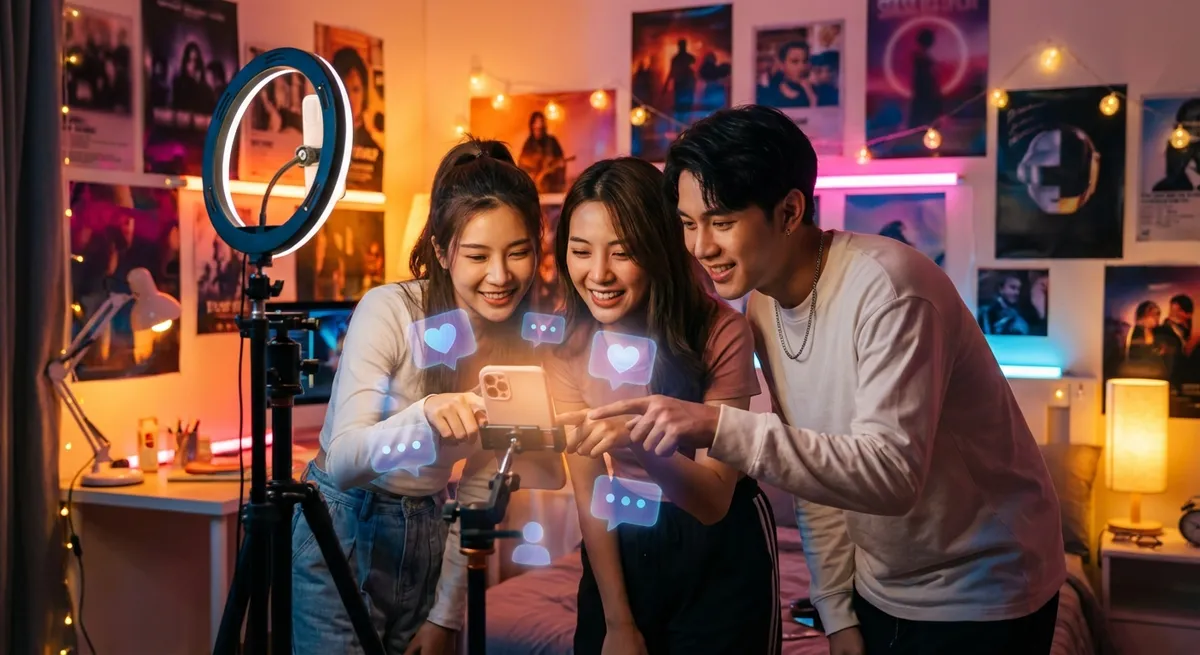
You don’t need a ring light and a brand deal to play this game. You just need a point of view, a willingness to experiment, and the courage to post before everything feels “ready.” The feeds are changing fast—but the people who move with the shifts (instead of chasing yesterday’s viral formula) are the ones taking over everyone’s screen.
Sources
- Pew Research Center – Social Media Fact Sheet – Data on how people in the U.S. use social media across platforms and age groups
- Harvard Business Review – Why Authenticity Matters on Social Media – Explores why audiences respond more strongly to authentic, less polished content
- Meta – Instagram Close Friends Feature Overview – Official explanation of Close Friends and how it changed sharing behavior
- TikTok – What is the For You feed? – Details on how TikTok’s recommendation system works and why certain formats perform better
- YouTube – How YouTube Shorts Work – Official guide to YouTube Shorts and how creators can repurpose content across platforms
Key Takeaway
The most important thing to remember from this article is that this information can change how you think about Social Media.