The apps on your home screen aren’t just stealing your time—they’re remixing your brain, your friendships, and even your money moves. Social media has gone way beyond “post and scroll.” It’s now where people build careers from their bedroom, fall in love with strangers’ aesthetics, and low‑key rewrite who they are in real time.
If your feed feels different this year, it’s not just you. The entire internet vibe is shifting—and you’re part of the experiment.
The IRL–URL Blur: When Your Online Life Becomes the Main Story
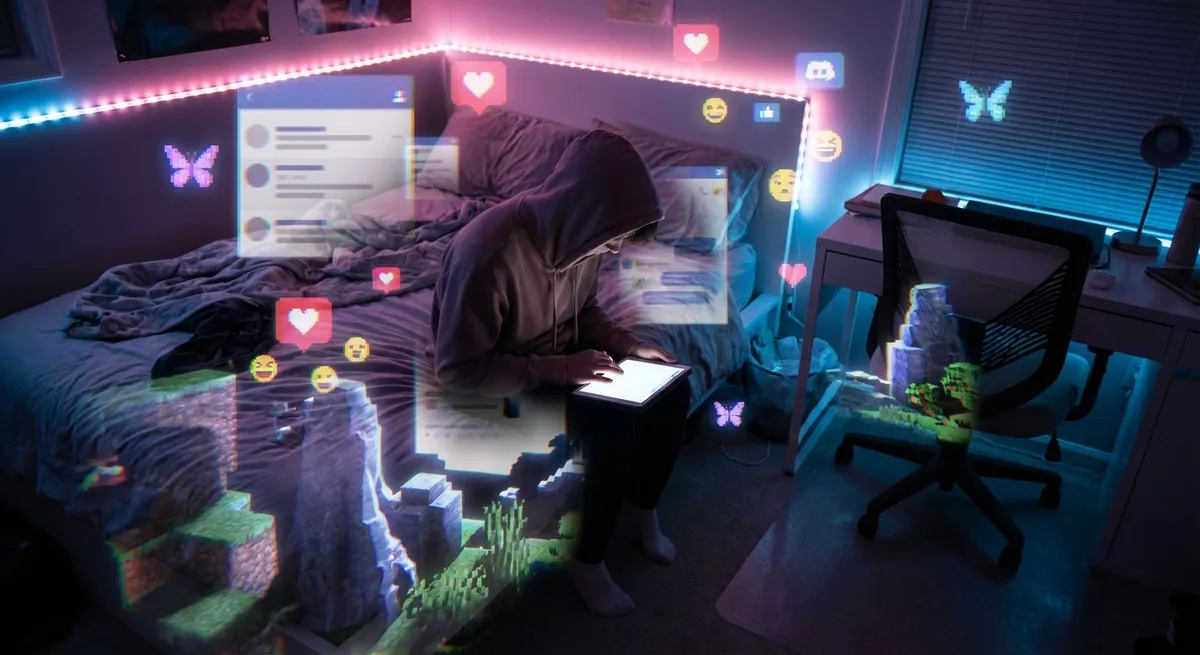
For a long time, the internet was the side quest. Now it’s the main storyline. Your group chat, FYP, and DMs shape your day more than what’s happening on your street—and platforms know it.
Algorithms don’t just show you content; they nudge your mood, your opinions, and even what you think is “normal.” Studies have shown that constant exposure to curated lives can change how you see your own reality, especially around body image, success, and relationships. Video-first platforms like TikTok and Reels collapse distance: you can feel emotionally close to a creator you’ve never met and weirdly distant from people you actually know.
The blur gets real when online clout starts affecting offline opportunities—jobs, dating, invites, even how people treat you. Your digital footprint has become a second identity, and in some cases, the more influential one. For many, the “real” version of them is the one that exists in close friends stories, alt accounts, or private servers—not in their city, school, or workplace.
The wild part? You’re constantly editing your own narrative without realizing it—choosing which parts of your life get screen time and which stay on the cutting room floor. That constant self‑directing changes how you think about yourself, not just how others see you.
From Followers to Factions: Micro-Communities Are the New Home Base
The feed used to feel like one giant town square. Now, it’s more like a million secret clubs layered on top of each other. Instead of chasing mass appeal, users are slipping into hyper‑specific micro‑communities where everyone gets the same inside jokes and niche obsessions.
Think: booktok subgenres, tiny fandom Discords, ultra‑specific Reddit threads, hyper‑local meme pages, or hobby corners like “beginner urban gardening” or “millennial learning to touch grass.” These spaces feel safer and more intimate than screaming into the main feed—and the engagement is deeper because everyone cares about the same oddly specific thing.
Psychologically, that’s powerful. Humans love belonging, and micro‑communities give you a “third place” that lives in your phone—neither home nor work, but still emotionally real. Research on online communities shows they can boost a sense of connection and support, especially for people who feel isolated offline.
This shift also changes how trends move. Instead of one big viral moment, we get hundreds of parallel trends bubbling in different pockets of the internet. Something can be “huge” in your corner and completely invisible to someone else’s. Your feed is no longer the internet; it’s your personal universe.
Creators as Life Blueprints: When Influencing Turns Into Instructions
Influencers used to be aspirational billboards: pretty, polished, and far away. Now creators are more like unofficial life coaches, stylists, therapists, and career advisors—whether they mean to be or not.
People aren’t just copying looks anymore; they’re copying lifestyles, routines, and entire belief systems. Morning routines, productivity hacks, wellness rituals, “day in my life” videos—these formats quietly turn into templates. You watch enough of them, and suddenly your own life feels like it needs a soundtrack and a Notion board.
The creator–audience line is getting blurrier too. Parasocial relationships—when you feel close to someone who doesn’t know you—are baked into modern social media design. Platforms boost content that feels intimate: eye contact, direct address, “storytime” formats. That closeness means creators can hugely influence what their audiences buy, support, or believe.
There’s a flip side: creators are under constant pressure to turn their existence into content. Burnout, anxiety, and blurred work–life boundaries are major issues, especially for people whose income depends on staying relevant in the algorithm. The creator economy is real, but so is creator exhaustion.
Still, the blueprint effect is undeniable. A single viral video can change how millions of people think about money, mental health, dating, or success. The new “thought leaders” aren’t always experts—they’re whoever shows up on your FYP with good lighting and a convincing story.
Attention as Currency: Your Scroll Is Funding an Invisible Economy
On social media, you’re not just a user—you’re an energy source. Every scroll, like, watch, and comment is data that turns into money for someone else. The more time you spend on an app, the more valuable you become.
Advertising is the obvious part, but attention goes deeper than that. Platforms rank content based on what makes you stay longer, not what’s healthiest, truest, or most accurate. That’s why extreme, emotional, or polarizing content often rises: it hooks you. Research has shown that rage, awe, and anxiety can drive higher engagement, and algorithms quietly reward that.
This attention economy is also why “going viral” can feel like winning the lottery. One moment of mass focus can lead to brand deals, sales, career boosts, or new followers. Users, brands, and media outlets all compete for that spike of concentrated eyeballs.
But here’s the twist: your attention is finite, and being constantly “on” comes with a cost. Studies link heavy social media use to increased stress, distraction, and sleep issues. You’re trading micro-slices of your focus throughout the day—often without realizing how drained you are until you log off and feel weirdly empty.
Knowing your attention is a currency turns you from a passive scroller into a more strategic one. You can decide which creators, communities, and causes you want to “invest” in—and which deserve an immediate mute.
The Remix Era: Identity, Aesthetics, and the Art of Trying On Selves
Social media has turned identity into something you can remix, test, and soft‑launch. Instead of one fixed “you,” the internet lets you have multiple versions: your public profile, your close friends persona, your anonymous comments, your alt account chaos.
Visual culture amplifies this. Aesthetic trends—whether it’s a fashion vibe, a wellness lane, or a lifestyle mood—give people pre‑packed identities to experiment with. You can slide into a new aesthetic for a week, see how it feels, and move on. It’s cosplay, but for your whole life.
This constant remixing can be freeing, especially for people exploring gender, sexuality, culture, or interests that don’t feel safe or accepted offline. It can also be confusing. When you’re always performing for an imagined audience, it’s easy to lose track of what feels authentic versus what just looks good on camera.
Psychologists have noted that adolescence and young adulthood are prime times for identity exploration; social media throws that into hyperdrive and extends it well into adulthood. The upside is you’re not locked into one storyline. The downside is the pressure to constantly refine your “brand” and keep it coherent, even as you change.
Underneath the filters and edits, though, something real is happening: people are using the internet to test out who they might be, find others who match that version, and then carry pieces of it back into their offline lives. It’s messy, chaotic—and very human.
Conclusion
Social media isn’t just a place you visit; it’s a force that’s quietly training how you think, feel, relate, and dream. Your feed is shaping your reality, but you’re not powerless in the process. You choose which communities to pour energy into, which creators to let influence you, which trends to absorb, and which to ignore.
The next time you open an app, notice what it’s doing to your mood, your thoughts, and your sense of self. If your scroll is rewriting your reality, you might as well co‑write the script.
Sources
- Pew Research Center – Social Media Fact Sheet - Data on who uses social media, how often, and for what purposes
- American Psychological Association – Social Media and Mental Health - Overview of research on social media’s psychological effects
- Harvard Business Review – The Creator Economy Needs a Middle Class - Insights into the pressures and realities of being a creator
- MIT Sloan – How the Attention Economy Is Reshaping Business - Explains why attention has become a key economic resource
- National Institutes of Health (NIH) – Social Media Use and Mental Health - Research article exploring links between social media use and mental health outcomes
Key Takeaway
The most important thing to remember from this article is that this information can change how you think about Social Media.