The wildest thing about the internet right now? It’s not the big trends everyone’s talking about—it’s the tiny ones quietly hijacking your brain, your time, and your group chats. These are the micro-trends: niche, fast, chaotic, and somehow running your entire day without you even noticing. From ultra-specific aesthetics to algorithm-made “comfort content,” the online vibe is getting weirder, sharper, and way more personal.
Let’s break down the 5 most shareable internet shifts that are shaping how you scroll, shop, and show up online—without feeling like a basic carbon copy of everyone else.
Hyper-Niche Aesthetics: The Internet’s New Personality Quiz
We’re officially past “that girl” and “cottagecore.” The new wave is ultra-specific aesthetics that feel like oddly accurate personality tests: think “office siren,” “blokecore,” “eclectic grandpa,” “clean girl with a secret side quest,” or “subway academic with wireless headphones and unhealed childhood dreams.”
Instead of one big identity, people are mixing aesthetic “patches” like a digital jacket: a little coquette here, a little normcore there, some alt-corporate energy for LinkedIn, and soft indie vibes for BeReal. These micro-aesthetics are less about perfection and more about mood—what you wear, post, and listen to changes based on the mental playlist of the day.
Brands are catching on by dropping hyper-specific campaigns (like “girl dinner,” “hot girl walk,” and seasonal aesthetics) that make you feel like they’re talking directly to your oddly particular lifestyle. The twist? You’re no longer chasing one aesthetic—you’re remixing dozens to build a personal vibe no algorithm can totally predict.
Quiet Flex Culture: When Subtle Posts Say the Loudest Things
Flexing on the internet has evolved. It’s not about flashy stacks of cash or obvious luxury anymore—it’s about understated signals that insiders recognize immediately.
Posting a blurry photo from a concert where the real flex is front-row access. Sharing a “casual” story from a restaurant that just happens to have a months-long waitlist. Posting your laptop on a plane tray table, no caption, just vibes. Wearing a “normal” hoodie that only people deep in streetwear culture know costs half a paycheck.
This new flex culture is about coded status: only people “in the know” will catch it. It matches the mood of a generation tired of loud, try-hard posting but still very aware of how online status works. The trick is making it seem like you’re not trying while absolutely, definitely trying.
Algorithm Comfort Loops: The Content You Didn’t Ask For but Can’t Stop Watching
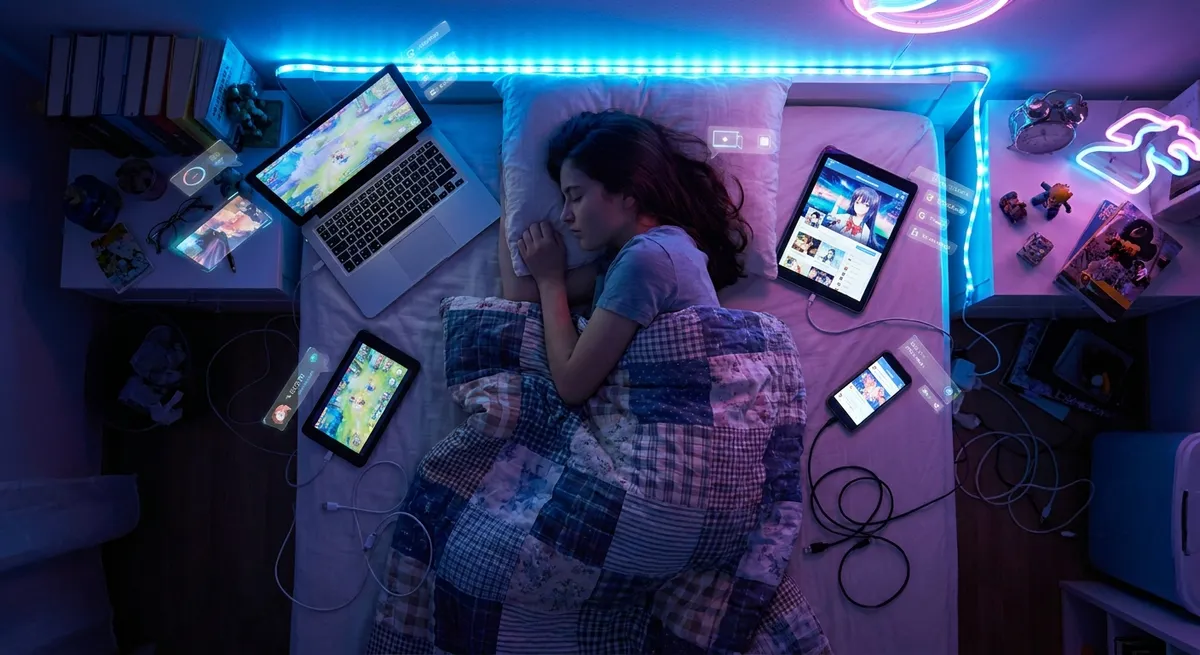
Your feed knows your emotional state better than your group chat sometimes—and it’s serving up “comfort loops” to match. These are oddly specific content spirals you get stuck in when your brain just wants something soothing, predictable, and slightly addictive.
Think:
- Satisfying restocks and pantry organization videos
- People silently cleaning their apartments at 2 a.m.
- Tiny cooking in miniature kitchens
- Study-with-me timers and lo-fi productivity streams
- Point-of-view walking tours through cities you’ve never visited
You don’t follow most of these creators. The algorithm just senses your mood and serves this content as digital background noise for your life: while you work, eat, spiral, or procrastinate. It’s not exactly escapism and not exactly productivity—it’s a new category of content: ambient internet.
And yes, it’s extremely shareable because everyone secretly has their own comfort loop addiction. Posting “my entire FYP is just people cleaning their room in silence and I’m not mad about it” hits way too many timelines at once.
Crowd-Sourced Reality: When Comments Become the Main Character
The comments section isn’t just a side dish anymore—it’s the main course. More and more, people watch videos for the comments. On TikTok, YouTube, and Instagram, the real entertainment is often the chaotic collective brain of the internet.
You’ll see:
- Strangers building entire storylines about a 3-second clip
- Crowd-diagnosing fake vs. real pranks, stories, and “surveillance” style videos
- Users fact-checking in real time and editing their top comments as new info drops
- “We were all here” culture—memes born instantly in one comment thread and then spreading everywhere
This crowd-sourced reality creates a strange new social rule: posting is only half the content; the reaction is the rest. Commenters are playing detective, therapist, comedian, and culture critic all at once. It’s the internet’s group chat energy going fully public—messy, hilarious, and sometimes brutally honest.
If you’ve ever sent a link with “come for the video, stay for the comments,” you’re part of this trend.
Digital Soft Launches: Testing Your Life in Public, Just a Little
We used to hard-launch everything online: new relationships, jobs, moves, projects—big post, big caption, big moment. Now? It’s all about the soft launch.
Some examples you’ve definitely seen:
- A mysterious second coffee cup in a story, no face, no tag
- A “new setup” pic hinting at a new job, but no announcement
- Cropped selfies that include just enough of another person’s shoulder to raise questions
- Vague “new chapter” posts with no details
Soft launching is the internet version of “I’m not ready to talk about it, but I also want you to notice.” It lets people test reactions without fully committing, and it feels safer in a world where oversharing can backfire fast.
This trend also lines up with people wanting more control over their privacy online. Instead of dropping everything at once, users are selectively leaking little pieces of their life, letting followers fill in the blanks—and fueling endless speculation.
Conclusion
The internet isn’t just about big viral moments anymore—it’s about micro-vibes, subtle flexes, weird comfort spirals, comment-section chaos, and semi-secret life updates. These trends aren’t screaming for attention, but they’re steering how we dress, post, scroll, and even think.
Next time you open your favorite app, pay attention:
Which hyper-niche aesthetic are you accidentally living?
What’s your current comfort loop?
Are you quietly flexing more than you think?
Share this with someone whose entire personality right now is “I don’t post much” but somehow still manages to be extremely online.
Sources
- Pew Research Center – Social Media Fact Sheet - Data on how people are using social media platforms and shifting behavior online
- MIT Technology Review – The TikTok-ification of Everything - Explores how short-form, algorithm-driven feeds shape trends and content loops
- Harvard Business Review – How the Algorithm Influences Behavior - Breaks down how recommendation systems steer attention and engagement
- BBC Future – Why We Love Watching Satisfying Videos - Looks at the psychology behind soothing and “satisfying” content online
- New York Times – The Age of Social Media Micro-Trends - Discusses rapid-fire aesthetics and niche trends driven by platforms like TikTok
Key Takeaway
The most important thing to remember from this article is that this information can change how you think about Internet Trends.