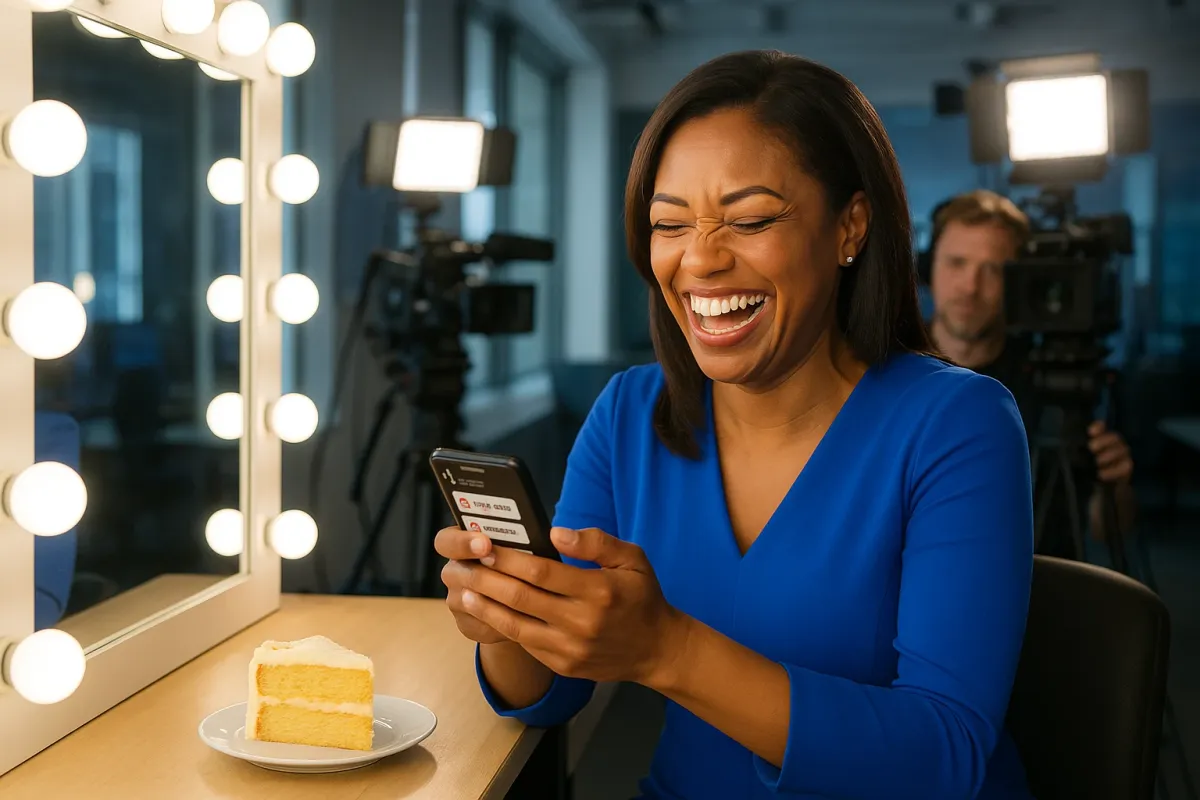
When most people get nasty DMs, they cry, vent, or hit block. This TV anchor read them out loud on-air in her full broadcast voice—and the internet cannot get enough. A curvy news anchor just went mega-viral after she flipped “mean viewer comments” into pure content, proving once again that the pettiest shade makes the most iconic clips.
Let’s break down why this one segment blew up across TikTok, X, Instagram Reels, and YouTube Shorts—and what it says about where viral video culture is headed right now.
Turning Hate Mail Into Prime-Time Performance
The original story: a local news anchor, constantly hit with body-shaming and snarky emails, decided to do the unthinkable—read those comments live, in her perfectly polished anchor voice. Instead of going off in an angry rant, she delivered every insult like it was breaking news, complete with that serious “good evening” tone. The contrast? Hilarious. Brutal. Completely shareable.
Clips of the segment jumped platforms almost instantly: stitched on TikTok, quote-tweeted on X, remixed with reaction faces on Instagram, and turned into “POV: You’re reading your ex’s texts like a news anchor” trends. The result isn’t just one viral video; it’s a whole new template for creator-style clapbacks. When she read the now-iconic “Why have fake news, when you can have cake news?” line, the internet basically said: say less, we’re streaming this on loop.
The “Broadcast Voice” Filter Everyone Wants To Copy
This anchor’s secret weapon isn’t just confidence—it’s that crisp, slightly dramatic broadcast voice that we all recognize from nightly news. On social media, creators are turning that vibe into a full-blown format: reading unhinged comments like they’re the most serious headline of the day.
We’re already seeing: text-to-speech edits that mimic newsroom tone, fake lower-third graphics (“BREAKING: User @sadboi69 Has Logged On To Be Rude Again”), and split-screen clips with creators playing both “anchor” and “offended viewer.” It taps into a trend we’ve seen all year: people treating everyday chaos like a live news event—whether it’s dating drama, HOA nonsense, or group chat meltdowns. The more serious the voice, the funnier the petty.
“Cake News” Culture: When Body-Shaming Backfires
The body-shaming angle could have gone dark fast—but instead, the internet turned it inside out. Viewers rallied behind the anchor, flooding her with support and memes. “Cake news” instantly became a catchphrase, spun into jokes like “Why have fake friends when you can have cake friends?” and “Tonight at 11: Is that outfit rude… or just curvy?”
This is a pattern we keep seeing in viral videos right now: hate comments becoming unintentional promo. The harder trolls come for someone’s looks, the more the algorithm seems to reward the clapback. People aren’t just sharing the segment because it’s funny; they’re sharing it as a kind of digital defense squad. Stitch after stitch is basically: “If this is what you call ‘too curvy’ then I’m applying for the role.” Beauty standards discourse plus tight comedic editing? That’s viral rocket fuel.
Newsrooms Are Accidentally Becoming Meme Factories
This isn’t happening in a vacuum. Over the past year, local and national news clips have quietly become some of the most remixable content on the internet. We’ve seen anchors breaking into laughter, accidentally saying memeable lines, or reacting a little too honestly—and every moment gets ripped, clipped, captioned, and turned into a trend.
What makes this new “mean comments in anchor voice” moment different is that it’s intentionally meme-ready. The segment was clearly designed to live beyond the 6 p.m. broadcast. Clear audio. Tight framing. Punchy lines. It’s like TV finally understands that half its real audience lives on TikTok, not cable. Expect more outlets to follow this blueprint: scripted-but-real-feeling moments that invite duets, remixes, and reaction videos. Your local newscast is quietly auditioning for your FYP.
POV: You, Your Haters, And The Next Viral Trend
The fastest-growing mini-trend attached to this clip? Regular people doing the exact same thing. TikTok is full of “If I read my hate comments like a news anchor…” videos. Some creators are using it to deal with serious trolling; others are having fun reading stuff like “your taste in TV shows is criminal” as if it’s a national emergency.
Why it works so well:
- It’s low effort but high payoff—just you, your comments, and a “serious” tone.
- It flips embarrassment into entertainment, which is basically the internet’s favorite magic trick.
- It fits perfectly into sub-30-second vertical video culture.
We’re also seeing spin‑offs: reading HR emails like an anchor, narrating dog drama in the neighborhood, even giving roommate complaints a full “live on the scene” treatment. The original news clip didn’t just go viral—it launched a trend that anyone with a phone and one annoying message can join.
Conclusion
One curvy anchor reading “mean” messages in her broadcast voice just reminded the internet of a powerful truth: if you control the mic, you control the narrative. What started as body-shaming and snark turned into a viral masterclass in owning your story, milking your haters for views, and turning everyday cruelty into content that actually empowers people.
If this is where viral video culture is headed—less crying over comments, more comedy, more callouts, more “cake news”—then pull up a seat. The shade has never sounded so professionally narrated.
Key Takeaway
The most important thing to remember from this article is that this information can change how you think about Viral Videos.