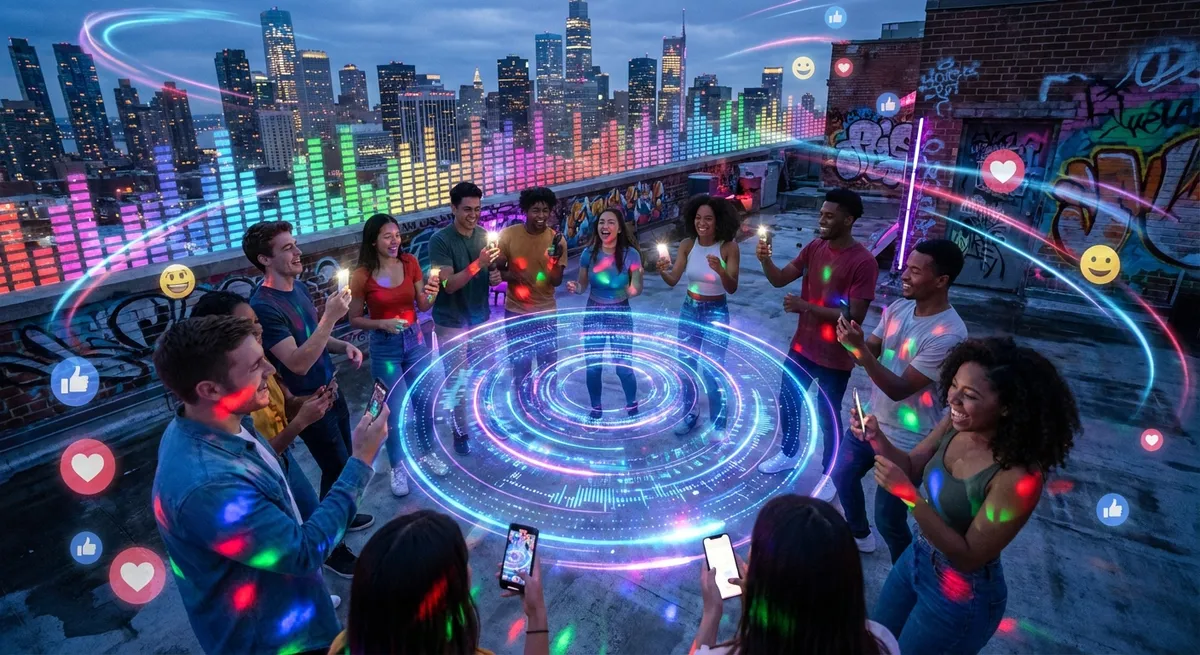
The feed is not just a feed anymore — it’s a full‑time energy field. Scroll any platform for 30 seconds and you’ll see it: people aren’t just posting content; they’re broadcasting a whole frequency. From “main character” edits to hyper‑specific aesthetics and chaotic photo dumps, social media vibes are getting louder, sharper, and way more intentional.
This isn’t about going viral “once.” It’s about building a digital presence that feels like a mood board, a group chat, and a highlight reel all at once. Here are five trending energy shifts powering the algorithm era — and how to plug into them without losing your sanity (or your personality).
1. The “Soft Flex” Era: Low-Key Wins, High-Key Relatable
The days of screaming “LOOK HOW SUCCESSFUL I AM” in every post are fading. The new flex is subtle, casual, and almost accidental.
Instead of the classic humblebrag, creators are sliding their wins into everyday content: answering emails in a café (oh, that’s my logo on the mug), talking about burnout (with a tiny “hit 100k followers yesterday” on the screen), or casually mentioning “my client” in a GRWM vlog. It feels less like an announcement and more like a conversation you walked in on.
This soft flex energy works because it dodges cringe. It taps into authenticity, which research shows audiences actually reward: people trust creators who admit their struggles and show the behind‑the‑scenes grind, not just the glossy highlight. Soft flexing pairs accomplishment with imperfection — and that contrast is exactly what makes it shareable.
If you’re posting: show your glow‑up without a press release. Screenshot a sweet message from someone you helped (with permission), show the messy desk next to your trophy, or talk about the night you almost quit before things took off. Let people see the trophy and the tears, not just one or the other.
2. Micro-Moments > Big Announcements: Snackable Reality Wins
Your followers don’t just want the big life events; they want the micro-moments in between. Think: your favorite 3‑second part of a song, your oddly specific coffee order, your 11 p.m. brain-spiral thought that’s weirdly universal.
Platforms are pushing short-form, but users are pushing something even shorter: feelings in motion. A three-second clip of your shoes in the rain with the right audio? That’s a whole mood. A one-sentence caption about “that one friend who disappears and comes back like nothing happened”? That’s a shared experience in 12 words.
These micro-moments work because they’re quick to watch, quick to repost, and insanely easy to relate to. They don’t require full attention — just a passing “me too” that turns into a like, comment, or share. And with social platforms prioritizing watch time and engagement signals, these tiny bursts of reality can trigger surprisingly big reach.
If you’re posting: stop waiting for “content days.” Capture the tiny things: your reaction before a Zoom call, the moment you finally close 74 tabs, the way your pet acts when you say “work is done.” Pair it with a trending audio or a short, punchy caption. Minimal effort, maximum resonance.
3. Chaos Curation: The New Aesthetic Is “Perfectly Unpolished”
The hyper-curated, ultra-filtered grid still exists, but it’s no longer the default flex. The internet is obsessed with “organized chaos” — content that looks random but is quietly, cleverly intentional.
Enter: chaotic photo dumps, blurry but emotional clips, out‑of‑order story slides, and captions that read like a friend’s unfiltered notes app. It’s messy, but on purpose. Underneath that chaos is strategy: creators are mixing polished shots with accidental ones, dropping in screenshots, memes, and low‑res selfies to feel human, not manufactured.
Psychologically, it works because people are overloaded with perfect. When everyone is glossy, the slightly messy stands out as real. Studies on social media and mental health have shown that highly idealized feeds can make audiences feel worse; unpolished content can feel more honest, more comforting, and easier to connect with.
If you’re posting: stop deleting every slightly weird picture. Build a “life dump” that actually feels like your camera roll: food that didn’t photograph perfectly, half‑smiles, your shadow on the sidewalk, your late-night note to self. The secret is intention — you’re not posting anything, you’re posting everything in a way that tells a story.
4. Hyper-Specific Identity: “I’m Not Just a Niche, I’m a Micro-Genre”
The internet used to ask: “What’s your niche?” Now it’s asking: “What’s your oddly specific niche energy?” It’s not just “fitness girl” or “gaming guy” anymore. It’s “chaotic cozy gamer who bakes between loading screens” or “9‑to‑5 analyst, 5‑to‑9 concert recap queen.”
This hyper-specific identity trend is everywhere: bios that read like inside jokes, ultra-targeted memes (“for people who make playlists for every minor emotion”), and content that speaks to a tiny but intense audience. That intensity is the point — niche communities drive stronger engagement, deeper loyalty, and more consistent interaction.
Algorithms love clear signals. When your content, captions, and aesthetics all scream one oddly specific vibe, platforms can more easily match you with people who binge that exact energy. That leads to better recommendations, more organic discovery, and the kind of audience that comments “HOW IS THIS SO SPECIFIC TO ME.”
If you’re posting: lean into your weird overlaps. Are you “bookworm who lifts weights,” “introvert who throws the best parties,” or “tech bro with cottagecore dreams”? Let that fusion show up in your videos, your jokes, your references. The more “too specific” it feels, the more someone out there is going to say, “Finally, someone like me.”
5. Real-Time Reactions: Posting With the Moment, Not After It
One of the biggest energy shifts online right now? People don’t just want your polished opinion later — they want your raw reaction as it happens. Reaction content is everywhere: duet chains, stitch trends, live commentary, “watch this with me” videos, and real-time story updates during events.
This style is winning because it feels communal. Watching someone react to a wild clip, shocking plot twist, or unexpected news turns solitary scrolling into a shared experience. It also feeds directly into how platforms are built: they prioritize fresh, timely content that hooks people instantly and keeps them watching just a bit longer.
There’s also a trust factor. When you react in real time, you can’t over-script. Audiences can tell when something is genuinely surprising, confusing, or emotional. That authenticity can build stronger parasocial connections — people feel like they’re right there with you, not just reading the recap.
If you’re posting: don’t wait until you’ve written the perfect hot take. Try posting your first thoughts, then follow up later with a deeper dive. Use stitches or duets to piggyback off trending videos, or do “live reaction” stories while you watch a big event, premiere, or announcement. Make your feed feel less like a museum, more like a group watch party.
Conclusion
The social media game is no longer “post the best version of your life and hope for the best.” The new energy is softer, stranger, more specific, and way more human. Soft flexing replaces loud bragging. Micro-moments beat big speeches. Curated chaos outshines staged perfection. Hyper-specific identities crush bland “personal brands.” And real-time reactions pull people into the moment with you.
Underneath all of it, one rule is rising above the noise: people don’t just want content — they want connection that feels like them. If you can show up online as a living, breathing vibe instead of a polished ad, the algorithm isn’t your enemy; it’s your amplifier.
Dial in your energy, hit post, and let the new era of the feed find you.
Sources
- [Pew Research Center – Social Media Fact Sheet](https://www.pewresearch.org/internet/fact-sheet/social-media/) – Current data on who uses social media and how usage is changing over time
- [American Psychological Association – The Social Self: How Social Media Affects Identity](https://www.apa.org/monitor/2022/09/cover-social-media-psychological-effects) – Explores how online presence, authenticity, and curation impact self-image and behavior
- [Harvard Business Review – How to Build a Personal Brand Without Being a Self-Promoter](https://hbr.org/2020/01/how-to-build-a-personal-brand-without-being-a-self-promoter) – Breaks down “soft flex” strategies and authentic self-presentation in professional contexts
- [NYU Stern – The Impact of Social Media on Consumer Behavior](https://www.stern.nyu.edu/sites/default/files/assets/documents/2021-11/The%20Impact%20of%20Social%20Media%20on%20Consumer%20Behavior.pdf) – Research report on how social content shapes attention, trust, and engagement
- [MIT Sloan Management Review – Algorithms and the Attention Economy](https://sloanreview.mit.edu/article/the-problem-with-our-data-driven-economy/) – Insight into how algorithms prioritize content and why certain formats perform better
Key Takeaway
The most important thing to remember from this article is that this information can change how you think about Social Media.