The internet has a new main character, and it’s not a celebrity, a meme, or a viral dance—it’s AI. From chatbots that flirt back to filters that redesign your entire face in one tap, “algorithm ally” energy is everywhere. People aren’t just using AI tools; they’re treating them like digital sidekicks, creative partners, and sometimes…full-on best friends. If your feed feels more AI-assisted than ever, that’s not a glitch—it’s the new normal.
Let’s break down the AI-flavored internet trends that are quietly rewriting how we post, chat, and go viral.
The Era of AI Besties in Your DMs
The old “customer support bot” is dead; AI companions are now built to be fun, unhinged, and low-key emotionally available.
People are chatting with AI “friends” late at night, using them as practice buddies for tough conversations, and even building custom bots that talk exactly like them. Platforms like Snapchat added AI chat right into the app, and suddenly everyone was posting screenshots of weird, funny, and slightly cursed convos with their digital bestie. What started as curiosity turned into a full-on culture shift: AI chat is now part therapy, part improv comedy, part secret diary.
And here’s the wild part—these convos are becoming content. Screenshots of unhinged AI replies, heartfelt “I told my AI I was sad and it answered THIS,” and chaotic roleplay threads are breaking into the main feed. Your AI isn’t just a tool anymore; it’s a character in your online story.
Filtered Reality: AI Face Mods as a New Identity
Filters used to be about smoothing skin and whitening teeth. Now? Entire AI-powered face swaps and glow-ups are normal posting behavior.
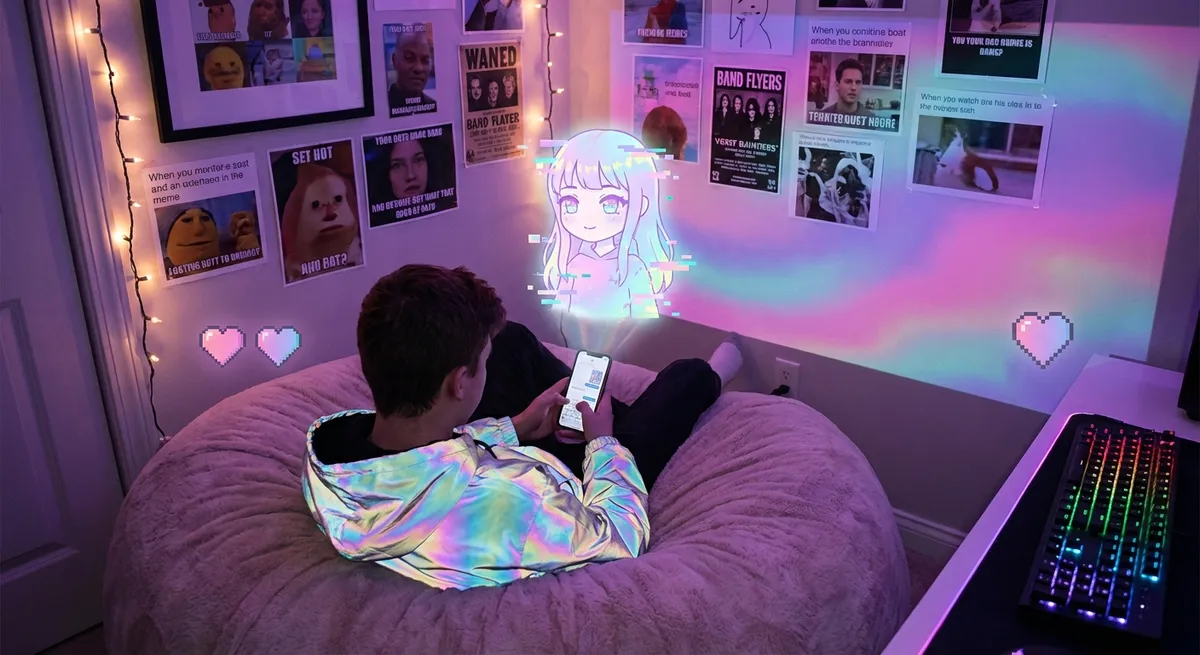
Users are letting AI imagine them as anime leads, ’90s supermodels, or characters from fantasy universes—and then actually using those pics as profile photos, dating app pics, and banner images. Instead of one “real” face and one “filtered” face, people are casually collecting multiple versions of themselves like digital skins in a video game.
This isn’t just about perfection—it’s about creativity and performance. People are doing side-by-side posts: “This is me vs. the AI version of me,” or “AI turned my mood board into my face,” and letting followers pick their favorite. The more surreal, the better. The line between selfie and art piece has officially collapsed, and AI is now the unpaid creative director of half the internet.
AI Co-Writers: From Captions to Whole Personalities
Staring at the “Add a caption…” box is a struggle, and the internet collectively decided: let the algorithm cook.
Creators are using AI to brainstorm punchy hooks, build entire story arcs for long posts, or even write comeback comments that sound perfectly unbothered. Some people are open about it—“ChatGPT helped me write this”—while others secretly feed their life into a prompt and walk away with a full-blown post that sounds way more confident than they feel.
It goes deeper: some users are building “online personas” with AI’s help. They ask tools to refine the way they talk—funnier, more chaotic, more mysterious—and then use that style consistently in their stories, posts, and replies. Instead of hiring a brand manager, they’re basically hiring an AI ghostwriter to script their internet energy.
Visual Flex: AI-Generated Worlds as Aesthetic Currency
Your feed isn’t just about what you did anymore; it’s about the worlds you can imagine.
AI art and video tools are letting people create images that could never exist in reality: outfits they don’t own, cities they’ve never visited, dream bedrooms designed from scratch, fantasy tour posters for concerts that only exist in their heads. These posts hit like a mood board and a sci‑fi movie still at the same time.
Posting AI visuals has become a new type of flex. It says: “My imagination is bigger than my budget.” People are generating fake magazine covers starring themselves, surreal vacation shots, or “if my pet ruled the world” posters. And the comment sections love it—not because anyone thinks it’s real, but because it’s hyper-aesthetic. The shareable moment is no longer “look where I am,” but “look what my brain and my algorithm just cooked up.”
Micro-Influencers, Macro AI: Everyday Users Going Pro With Tools
There’s a quiet revolution happening: regular users are running AI in the background like a secret upgrade.
You don’t need a full production studio anymore—AI can clean your audio, color-grade your clips, suggest trending sounds, and punch up your hooks. People are using AI to plan content calendars, generate post ideas tailored to their niche, and even analyze what time their audience will be the most unhinged in the comments.
The result? More polished content from smaller creators, and a blurred line between “professional influencer” and “girl with a phone and three AI apps.” The internet is full of people who look like they have a whole team—and in a way, they do. It just lives in the cloud.
Conclusion
The internet has always been about accelerating what we already do—talk, flex, joke, perform. AI just turned the dial all the way up.
From AI besties in your DMs to unreal visuals in your feed, the new online flex isn’t just having followers; it’s having an algorithm that feels like it’s on your side. Whether you’re screenshotting your wildest AI convo or letting a model rewrite your next caption, one thing is clear: the future of going viral is part human, part machine, and fully shareable.
Sources
- [Snapchat’s My AI: How It Works and What It Can Do](https://newsroom.snap.com/my-ai-for-everyone) - Official overview of Snapchat’s AI chatbot and its role in user conversations
- [OpenAI: ChatGPT Explained](https://openai.com/chatgpt) - Background on one of the most widely used conversational AI tools online
- [MIT Technology Review – How AI Generators Are Changing Online Creativity](https://www.technologyreview.com/2023/01/26/1067823/ai-image-generators-creativity-art/) - Analysis of AI art tools and their impact on digital culture
- [Pew Research Center – How Americans View Artificial Intelligence](https://www.pewresearch.org/internet/2023/08/28/how-americans-view-artificial-intelligence/) - Data on public attitudes toward AI and its expanding role in daily life
- [Harvard Business Review – How Creators Are Using AI to Scale Content](https://hbr.org/2023/11/how-creators-are-using-ai-to-scale-their-content) - Insight into how AI tools are supporting influencers and small creators
Key Takeaway
The most important thing to remember from this article is that this information can change how you think about Internet Trends.